
Resources / Financing
Barndominium Resale Value and Appraisals: The Honest Numbers
Updated July 2026 · Barndo Finder research
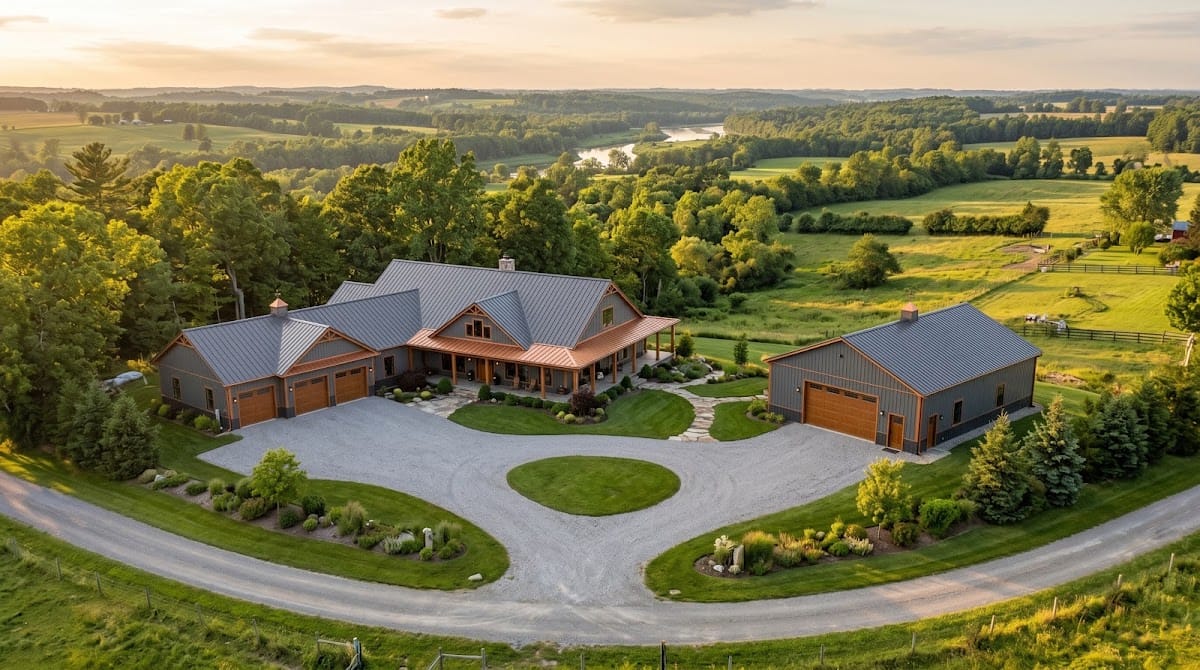
A well-built barndominium holds its value about as well as a stick-built house in the same rural market. The risk is not depreciation. The risk is the appraisal: thin comparable sales and appraisers who have never valued a metal home can produce a number 15 to 25 percent below what a buyer would actually pay, and that number controls your loan.
Key takeaways
- Barndominiums built and finished as real houses appreciate at rates close to conventional homes. Documented resales show 20 to 30 percent gains over holds under 5 years, though the sample is small and came from a hot rural market.
- The appraisal is the weak point, not the market. Rural counties often have few barndo sales on record, so appraisers stretch for comps or default to agricultural values.
- Homes that read as converted farm buildings take the hit. Market analyses put the discount at 15 to 25 percent versus conventional homes. Barndos with full residential character sell within about 5 percent of stick-built comps.
- Fannie Mae will buy loans on unique homes if the appraiser can support a reliable value. That makes your comp file and your lender choice the two things you can actually control.
- Cheap shells hurt twice. A sub-$100 per sqft "turnkey" quote is usually a shell quote in disguise, and the corners cut to hit that number are the same corners that tank resale later.
Do barndominiums hold their value?
Yes, if the barndominium was built as a house and not as a shop with a bed in it. Appraisers and agents who track these sales report that well-executed barndos appreciate at rates comparable to conventional homes in the same market. KW Appraisal Group, an appraisal firm that follows barndo resales, concludes the category holds value and cites gains of 20 to 30 percent over holds of less than 5 years in its tracked examples.
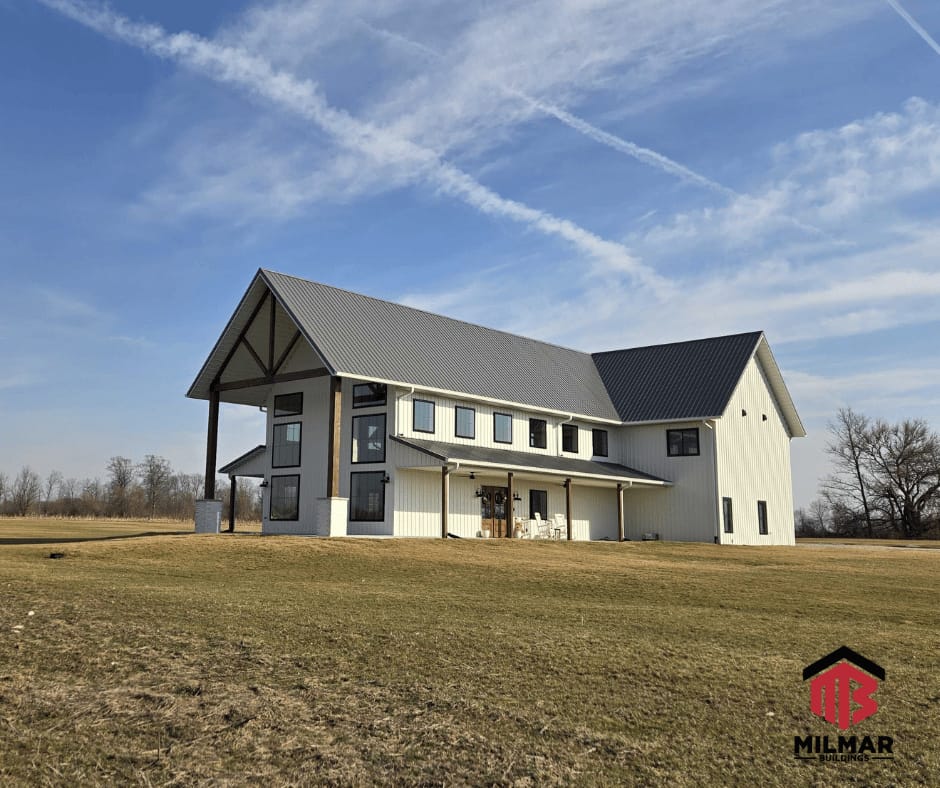 Photo: MilMar Post Buildings
The split in the data is about execution, not construction type. Analyses of resale patterns suggest barndos with intentional residential character, meaning real kitchens, drywall or finished interiors, residential windows, and landscaping, sell within about 5 percent of conventional comps on a price per square foot basis. Homes that read as converted agricultural buildings sell at 15 to 25 percent discounts. The metal frame is not the problem. The bare-bones finish level is. Our barndominium vs traditional house comparison breaks down how the two hold up on cost, insurance, and resale side by side.
One more honest caveat. Most published resale gains cover 2019 through 2023, when rural land and housing ran up everywhere. Nobody has a controlled study comparing barndos to stick-built homes over identical periods. Parity is the defensible claim. Outperformance is marketing.
Why do barndominium appraisals come in low?
Because appraisers value houses by comparing them to recent sales of similar houses, and most counties have almost no barndominium sales on record. Fannie Mae's selling guide says unique homes are eligible for conventional loans as long as the appraiser can develop a reliable opinion of market value. That is the whole game. With no clean comps, the appraiser has two options, and both cost you money.
Option one: stretch to dissimilar properties, then make large adjustments for construction type, finish, and acreage. Big adjustments make underwriters nervous and pull the value toward the conservative end. Option two: an appraiser unfamiliar with the category anchors on agricultural building values, which are cost-based and low. Either way, the appraised value can land well under what a real buyer would pay.
This is a lender problem before it is a market problem. If the appraisal comes in $60,000 under your build cost, the bank lends against the appraisal, and you cover the gap in cash or you do not close. That is why picking a lender who has closed barndo loans in your area matters as much as picking a builder. We cover the loan side in more depth in our financing overview and on our cost page, and you can request quotes from builders who know which local lenders actually close these deals.
What do real barndominium resale numbers look like?
Small sample, but the documented resales are solid. KW Appraisal Group published these tracked sales:
| Location | Purchase price | Resale price | Gain | Hold period |
|---|---|---|---|---|
| Alabama | $205,000 | $270,000 | 30% | 2 years |
| Upstate New York | $349,900 | $364,700 | 4.2% | 1 year |
| Alabama, with pool | $259,900 | $358,000 | 38% | 3 years |
| Oregon | $212,000 | $470,000 | 122% | 7 years |
Source: KW Appraisal Group resale tracking. Four sales is not a dataset, and the hold periods overlap a strong rural market. Read this table as evidence that barndos can appreciate like houses, not as a promised return.
Texas adds more signal because it has the deepest barndo market in the country. A 2020 review of Texas barndominium listings cited by Texas Real Estate Source found 87 percent sold at or above their original list price. In Hood County, an agent tracking 5 years of resales reports days on market of roughly 60 to 90 days, close to site-built homes in the same area. Where barndos are common, they trade like houses.
What hurts barndominium resale value the most?
Shop-first builds hurt the most. A 2,400 sqft building with 800 sqft of living quarters and 1,600 sqft of bare shop appraises badly and sells slowly, because appraisers count finished living area and buyers of homes do not pay house prices for shop bays. Here is the rest of the damage list, in rough order:
- Unpermitted work. No certificate of occupancy means many lenders will not touch it, which shrinks your buyer pool to cash. This is the single fastest way to lose 6 figures of value.
- Agricultural finish level. Exposed purlins, shop lighting, concrete floors with no treatment, one small bathroom. It reads as a building, not a home, and takes the 15 to 25 percent discount.
- No comparable market. A one-off barndo in a county full of colonials will sit. In barndo-dense counties in Texas and Oklahoma, the same house moves in 2 to 3 months.
- Cheap shell economics. This is where we take a stance: a turnkey quote under $100 per sqft is almost always a shell quote in disguise. The missing money reappears as thin insulation, budget windows, and unfinished rooms, and those are exactly the features appraisers and buyers dock you for. Our directory's turnkey estimates run $125 to $320 per sqft nationally for a reason.
- Insurance friction. Some carriers still rate metal homes as nonstandard. Wind and hail deductibles and cosmetic damage exclusions on metal panels can spook buyers late in a deal.
How do you build a barndominium that appraises well?
Build the paper trail and the residential character from day one. Everything on this list costs less during construction than it recovers at resale:
- Permit it as a residence and keep the certificate of occupancy, engineered plans, and inspection records in one folder. Appraisers lean on documentation when comps are thin.
- Finish it like a house. Drywall or equivalent finished interiors, residential windows and doors, a real kitchen, at least 2 full baths at typical family sizes, and landscaping. This is the difference between the 5 percent gap and the 25 percent gap.
- Keep living area dominant. If you want a big shop, fine, but understand that appraised value tracks finished living square footage. A 2,000 sqft house with a 900 sqft shop values better than the reverse.
- Budget the whole project, not the building. Real budgets carry lines for land, septic, well or water tap, driveway, and site work. Kit marketing that quotes only the steel package overpromises, and buyers who ran out of money mid-build are the source of most distressed barndo listings. Underbudgeting tops the list in our roundup of barndominium mistakes and regrets.
- Save your comp file. Track barndo sales in your county as they happen. Handing an appraiser 3 relevant sales they might have missed is legal, normal, and often worth tens of thousands.
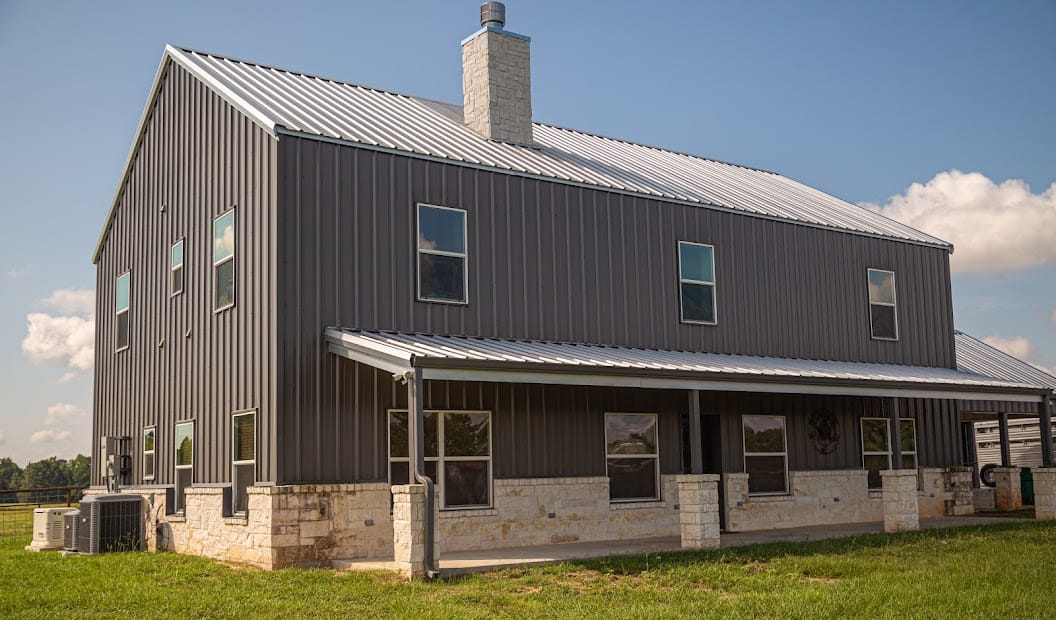 Photo: 1845 Barndominiums
Build quality varies a lot by builder, which is why we track 335 barndominium-specific builders across 40 states in our directory.
How do appraisals affect your construction loan?
The appraisal sets your borrowing ceiling twice: once at construction and again at the refinance into a permanent mortgage. On a construction loan, the lender orders an as-completed appraisal from your plans. If it comes in low, your loan shrinks and your cash requirement grows. At conversion to a permanent loan, a low appraisal can push your loan-to-value above 80 percent and stick you with mortgage insurance.
Lender choice is the lever. Lenders familiar with barndominiums report that big national banks are the most likely to decline or lowball these projects, while local banks, credit unions, and farm credit lenders close them routinely because they know the local comps. Ask any lender 2 questions before you apply: how many barndominium loans have you closed in this county, and which appraisers did you use. Weak answers to either one, keep shopping.
Are barndominiums harder to sell?
Slightly, and the gap is closing where the category is established. The honest framing: your buyer pool is narrower than for a 3-bed suburban ranch, because some buyers simply do not want a metal home and some agents have never sold one. In mature markets that penalty has mostly evaporated. Hood County, Texas data shows barndos moving in 60 to 90 days, roughly matching site-built homes nearby. Owners weigh in on the sale experience in our barndominium pros and cons roundup.
Location does most of the work. A barndo in rural Tennessee or Georgia, where the category is growing fast, sells to a real market. The same house 20 minutes from a city with no barndo sales history needs sharper pricing and better photos. If resale flexibility is your top priority and you are in a county with zero barndo comps, that is a genuine reason to think twice, and we would rather tell you that now than after you build.
Get real numbers before you build
Resale value starts with what you pay per square foot and what that money actually buys. Check our state-by-state cost table to see what turnkey and shell builds run in your area, then request quotes from vetted builders in our directory. Getting 3 real quotes is the fastest way to spot the shell-in-disguise bids, and it costs you nothing.
Common questions
Do barndominiums appreciate in value?
Yes, when they are built as real houses. Resale examples tracked by an appraisal firm show gains of 20 to 30 percent over holds of under 5 years, with one Oregon property more than doubling in 7 years. Those numbers came from a strong rural market period, so treat them as evidence of parity with stick-built homes, not proof of outperformance.
Why is it hard to get a barndominium appraised?
Appraisers value homes by comparing them to recent sales of similar properties, and most rural counties have few barndominium sales on record. When comps are thin, the appraiser either stretches to dissimilar properties with big adjustments or falls back on agricultural building values. Both paths tend to produce a lower number than the house is worth.
Do barndominiums depreciate like metal buildings?
A barndominium permitted and finished as a residence is valued as a house, not as a depreciating farm structure. The metal shell does not doom the value. What drags value down is agricultural-grade execution: bare shop interiors, no residential kitchen or baths, or a build that was never permitted as a dwelling.
Are barndominiums harder to sell than regular houses?
Slightly, and mostly in markets where they are still rare. In barndo-heavy areas of Texas, days on market now run about 60 to 90 days, close to site-built homes nearby. The buyer pool is narrower than for a standard suburban house, so pricing and residential curb appeal matter more.
Can you get a conventional mortgage on a barndominium?
Yes. Fannie Mae treats unique homes as eligible as long as the appraiser can support a reliable market value, which is exactly where thin comps cause trouble. Local banks, credit unions, and farm credit lenders close barndominium loans routinely, while big national banks are more likely to balk. Start with lenders who have closed barndo loans in your county.
What hurts barndominium resale value the most?
Shop-first builds hurt the most: small living quarters attached to a huge bare shop, unpermitted work, and agricultural finishes inside. Analyses of the market suggest homes that read as converted farm buildings sell at 15 to 25 percent discounts to conventional homes, while barndos with full residential character sell within about 5 percent of them.
Ready to price your build?
Fill out one form. We send it to builders who work in your area. It costs nothing.
Request quotes