Resources / Financing
Barndominium Insurance: Why Quotes Come Back High and Who Covers Them
Updated July 2026 · Barndo Finder research
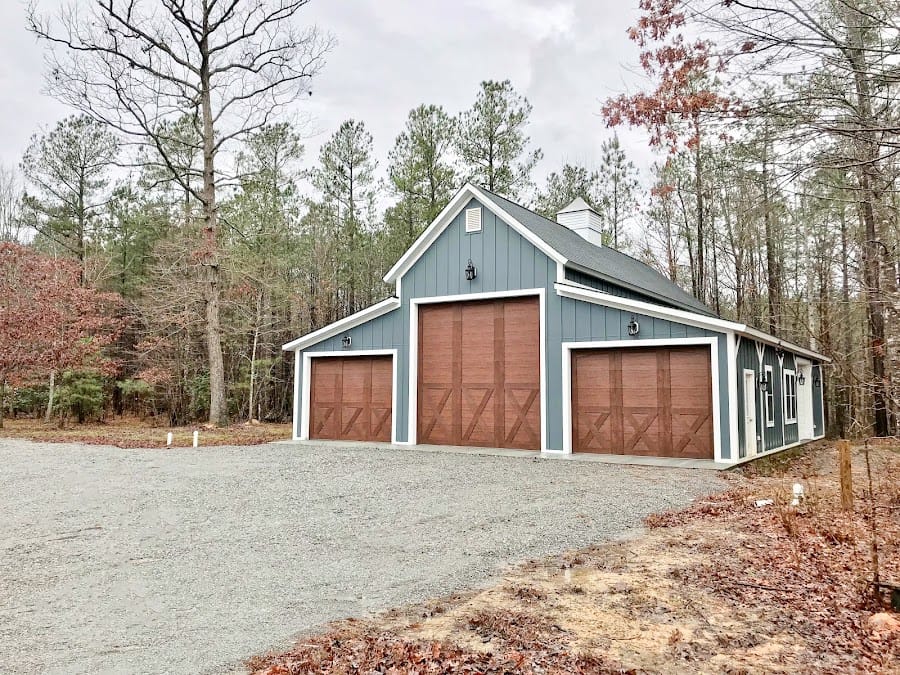
Yes, you can insure a barndominium, and most owners pay between $1,500 and $4,500 per year for a finished home. Quotes come back high because most carriers classify post-frame and steel homes as non-standard construction, and because many agents code the building as a barn instead of a house. The fix is usually the agent, not the building: Farm Bureau affiliates, Foremost, American Modern, and some State Farm agents write these homes routinely.
Key takeaways
- Typical annual premium for a finished barndominium: $1,500 to $4,500, against a national homeowners average of about $1,516. These are industry estimates, not quotes.
- The 3 things that inflate quotes: non-standard construction classification, dual use (shop, animals, business), and rural distance from a fire station.
- Carriers named most often by owners and industry guides: state Farm Bureau affiliates, Foremost, American Modern, State Farm (agent dependent), USAA, and Germania in Texas. None of them publish barndominium rates.
- During construction you need a separate builder's risk policy, typically 1 to 4 percent of the construction budget. Lenders require it.
- Never accept the first quote. Premium spreads of 2x between agents for the same building are common in owner reports.
Why do barndominium insurance quotes come back high?
Quotes come back high because insurance pricing runs on claims history, and barndominiums don't have much of one. Carriers have decades of loss data on stick-built homes. Post-frame and steel homes are a smaller, newer pool, so underwriters price the uncertainty into your premium or decline the risk entirely. We cover how the two construction types differ in our buyer's primer on what a barndominium actually is.
Three specific things make it worse. First, classification: if the agent enters your home as "metal building" or "barn," the system either rejects it or prices it as an outbuilding. Second, dual use: a home with an attached shop, livestock area, or business space no longer fits the standard homeowners box. Third, location: most barndos sit on rural land, far from a fire station and hydrant, which raises the fire protection class and the premium.
None of this means the building is riskier to live in. Steel frames resist fire, wind, and termites better than wood. The quote is high because the carrier doesn't know your building type well, not because your building is fragile. For a side-by-side look at how insurance, cost, and resale stack up against a conventional home, see our barndominium vs traditional house comparison.
How much does barndominium insurance cost?
Plan on $1,500 to $4,500 per year for a finished barndominium used as a primary residence, based on 2026 industry guides. For context, the average US homeowners policy runs about $1,516 per year, so a barndo typically lands at or above average for the same coverage amount.
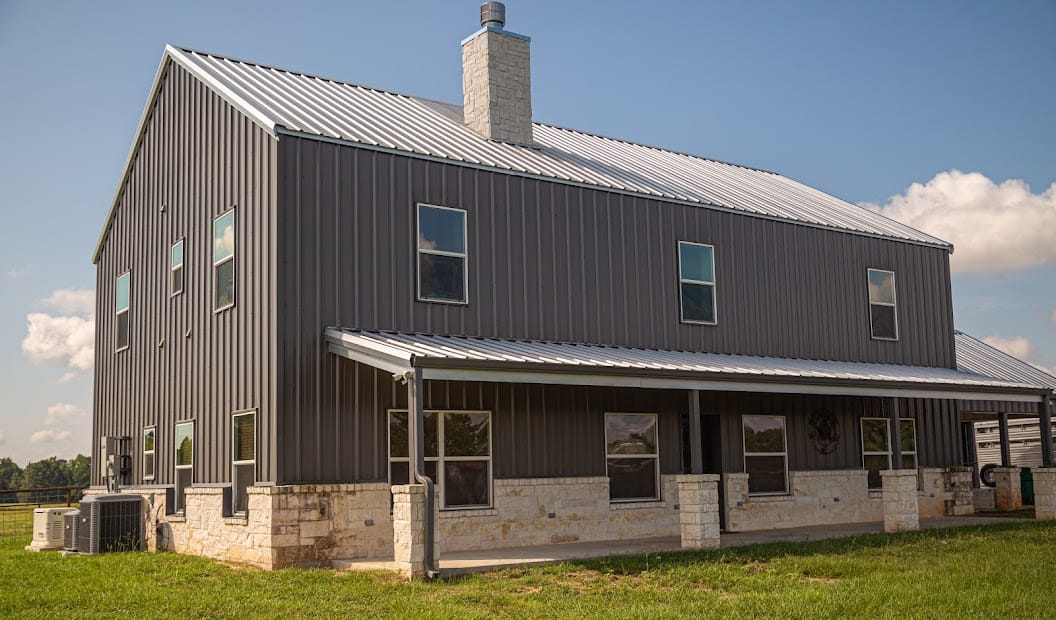 Photo: 1845 Barndominiums
The table below shows how the number moves by scenario. These are Barndo Finder estimates built from published industry ranges, not quotes.
| Scenario | Estimated annual premium |
|---|---|
| 1,800 sqft barndo, primary home, inland rural, no shop use | $1,500 to $2,800 |
| 2,400 sqft barndo with attached hobby shop, Midwest | $1,800 to $3,500 |
| 3,000 sqft barndo plus business use or livestock | $2,500 to $4,500+ |
| Coastal Texas or Florida wind zone, any size | $5,000 to $12,000+ |
| Builder's risk during construction, 12-month term | 1 to 4 percent of build cost |
Insure for replacement cost, not build cost. A $300,000 owner-built barndo might cost $400,000 for a contractor to rebuild after a total loss. Our state cost table shows turnkey rebuild math by region: Texas runs $140 to $210 per sqft turnkey, Ohio $135 to $200, Florida $160 to $240. Use those numbers, not your original invoice, when you set your dwelling coverage. If you built cheap by doing the labor yourself, our analysis of whether barndominiums are actually cheaper explains why the rebuild number is so much higher than the invoice.
Which companies actually insure barndominiums?
The carriers that come up most in industry guides and owner discussions are farm-focused and specialty insurers, not the big national brands. Here is the field as we see it. No carrier on this list publishes barndominium-specific pricing; every one quotes case by case.
| Carrier | Writes barndos? | Published pricing? | Notes |
|---|---|---|---|
| Farm Bureau (state affiliates) | Yes, commonly | Not published | Built for rural and ag properties; often the first quote to get |
| Foremost (a Farmers company) | Yes | Not published | Specializes in non-standard construction |
| American Modern | Yes | Not published | Specialty carrier for unusual homes |
| State Farm | Agent dependent | Not published | Some agents write them as custom homes, others decline |
| USAA | Reported yes, military families | Not published | Named in industry guides; case by case |
| Germania | Yes, Texas only | Not published | Texas specialist frequently recommended for barndos |
| Surplus lines (via independent agent) | Yes, last resort | Not published | Higher cost, fewer consumer protections |
Owner sentiment on forums and in industry guides is consistent on one point: the same building gets wildly different treatment from different agents. Owners report one State Farm agent declining a barndo while another quotes it as a normal custom home. That is why we tell readers to collect at least 3 quotes from at least 2 carrier types before believing any number.
If you are still choosing a builder, ask each candidate which carriers their past clients used. Builders in our directory who have delivered 20 or more homes in a state usually know which local agents say yes. That local knowledge matters most in high-volume barndo states like Texas, Tennessee, and Ohio.
What insurance do you need during construction?
You need builder's risk insurance, also called course of construction insurance, from the day materials hit the site until you get a certificate of occupancy. It covers fire, theft, vandalism, hail, and windstorm damage to the structure and to materials stored on site. Homeowners insurance does not cover a house that isn't finished, and construction lenders require builder's risk before they fund a draw. Our guide to barndominium construction loans covers where that requirement fits in the draw schedule.
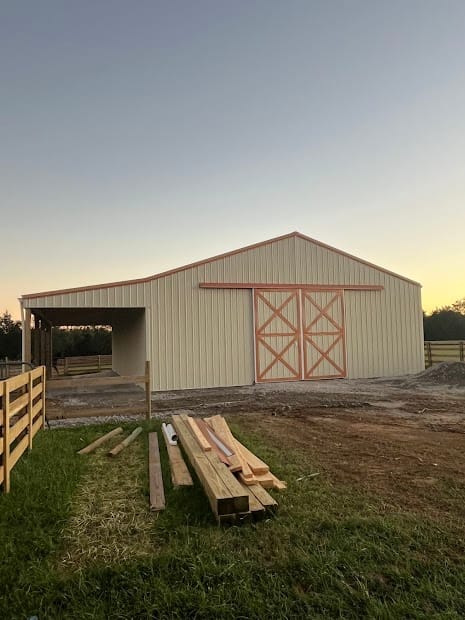 Photo: The Barn Store
Industry pricing for builder's risk typically runs 1 to 4 percent of the total construction cost for the policy term. On a $350,000 build, that's roughly $3,500 to $14,000, with most straightforward residential projects near the low end.
If you're an owner-builder, hold the policy in your own name rather than relying on a subcontractor's coverage. You control the claim and the payout if something burns. If a GC runs your project, confirm in writing who holds builder's risk and who is named on it before you sign.
How does a shop, business, or livestock change your policy?
Any non-residential use changes your policy, and hiding it is the most expensive mistake a barndo owner can make. Underinsured dual use comes up often in our roundup of barndominium mistakes and regrets. A standard homeowners policy assumes the whole structure is living space. If half your square footage is a shop full of equipment, or you board horses, or customers ever set foot in the building, a standard policy can deny a claim outright.
Be specific with the agent. Underwriters want the ratio of living space to shop space, what the shop is used for, and whether non-family members have access. A hobby woodshop is one answer. A welding business with employees is a different policy entirely. If the shop is the main point of your build, our shouse guide explains how a shop-house is treated differently.
Expect one of three outcomes: a homeowners policy with endorsements for the shop, a farm and ranch policy that covers the home plus ag use, or a commercial policy layered on top for a real business. Farm and ranch policies from Farm Bureau affiliates are the common landing spot for barndos with acreage and animals.
What actually lowers a barndominium premium?
Shopping agents lowers the premium more than anything you can do to the building. Concretely:
- Get at least 3 quotes, including 1 independent agent who can shop multiple carriers, and 1 Farm Bureau affiliate.
- Use the right words. Say "post-frame home" or "custom home with steel siding, primary residence, certificate of occupancy in hand." Never open with "metal barn."
- Document the build: engineered plans, permits, inspection records, photos of framing and mechanicals. Underwriters price unknowns against you.
- Raise the deductible from $1,000 to $2,500 or $5,000 if you have the cash reserve.
- Add monitored smoke and security systems, and mention your water source and distance to the fire station if either is favorable.
- Ask about steel construction credits. Some carriers discount metal roofs and frames for fire and wind resistance. Others add cosmetic damage exclusions for hail dents on metal panels, so read that clause before you sign.
One warning on the cosmetic exclusion: in hail states it means the carrier pays only if the panel leaks, not if it looks like a golf ball. Weigh that against the premium savings, especially in Texas and Oklahoma.
Budget insurance into the build, not after it
Get an insurance ballpark before you pour the slab, because the annual premium belongs in the same budget as land, septic, and site work. We've said this elsewhere on this site: turnkey quotes under $100 per sqft are usually shell quotes in disguise, and budgets that skip the boring lines are how projects stall. Insurance is one of the boring lines. It costs $125 to $375 a month forever, and lenders will require proof of it before closing a construction loan.
Start with our cost table to set a realistic replacement value for your state, then request builder quotes through the directory. We track 335 barndominium-specific builders across 40 states, and the good ones can tell you which carriers their last 10 clients used. That one question can save you more than any discount on this page.
Common questions
How much does barndominium insurance cost per year?
Most owners pay between $1,500 and $4,500 per year for a finished barndominium used as a primary home. That compares with a national average of about $1,516 for a standard homeowners policy, so barndos usually sit at or above the average. Coastal wind zones in Texas and Florida can push the total to $5,000 or more.
Is barndominium insurance more expensive than regular homeowners insurance?
Usually yes, by roughly 20 to 100 percent for the same coverage amount. Carriers classify post-frame and steel homes as non-standard construction, and they price the lack of claims history into the premium. An agent who writes post-frame homes regularly will often quote much closer to standard rates.
Does State Farm cover barndominiums?
Sometimes. State Farm has no published barndominium product, and owner reports are mixed: some agents quote the building as a normal custom home, others decline it as non-standard construction. Call 2 or 3 different State Farm agents before you conclude the company won't write it, and get quotes from Farm Bureau and Foremost at the same time.
What insurance do I need while building a barndominium?
You need a builder's risk policy, also called course of construction insurance, from groundbreaking until you get a certificate of occupancy. It covers fire, theft, vandalism, and storm damage to the structure and materials during the build, and construction lenders require it. Industry pricing typically runs 1 to 4 percent of the construction budget. Owner-builders should hold the policy in their own name.
Does a shop or business in my barndominium change my insurance?
Yes. A standard homeowners policy assumes the whole structure is residential, and a hobby shop, livestock, equipment storage, or any paying business can void or limit coverage. Tell the agent the exact split between living space and shop space and what happens in the shop. Many owners end up on a farm and ranch policy or a homeowners policy with endorsements.
Can a barndominium be denied coverage?
Individual carriers can and do decline them, especially when the agent codes the building as a barn or the home lacks a certificate of occupancy. That is a carrier problem, not a building problem. Independent agents can usually place the home with a specialty carrier like Foremost or American Modern, or with surplus lines as a last resort.
Ready to price your build?
Fill out one form. We send it to builders who work in your area. It costs nothing.
Request quotes