Builders / Tennessee
Barndominium builders in Tennessee
Planning a build? Read our guide to building a barndominium in Tennessee.
Builders tracked
Barndominium-specific, deduplicated
Turnkey
Per sqft, directory estimate
Shell only
Per sqft, directory estimate
Permits and codes in Tennessee
Tennessee lets counties opt out of statewide residential code enforcement, so requirements swing hard by county: Williamson County runs full plan review while some rural counties only require electrical and septic permits. Septic approval through TDEC is the common denominator and the usual schedule risk on rural land. Contractors need a state license for projects over $25,000, verifiable through the TN Board for Licensing Contractors.
Financing a barndominium in Tennessee
Middle Tennessee's barndo boom means local lenders have seen these loans before. Farm Credit Mid-America and several Nashville-area community banks write construction-to-permanent loans on metal homes. Appraisal comparables are strongest within an hour of Nashville and Knoxville.
The list (19)
Sorted by review count. Featured listings are labeled.

Gallatin, TN

Murfreesboro, TN
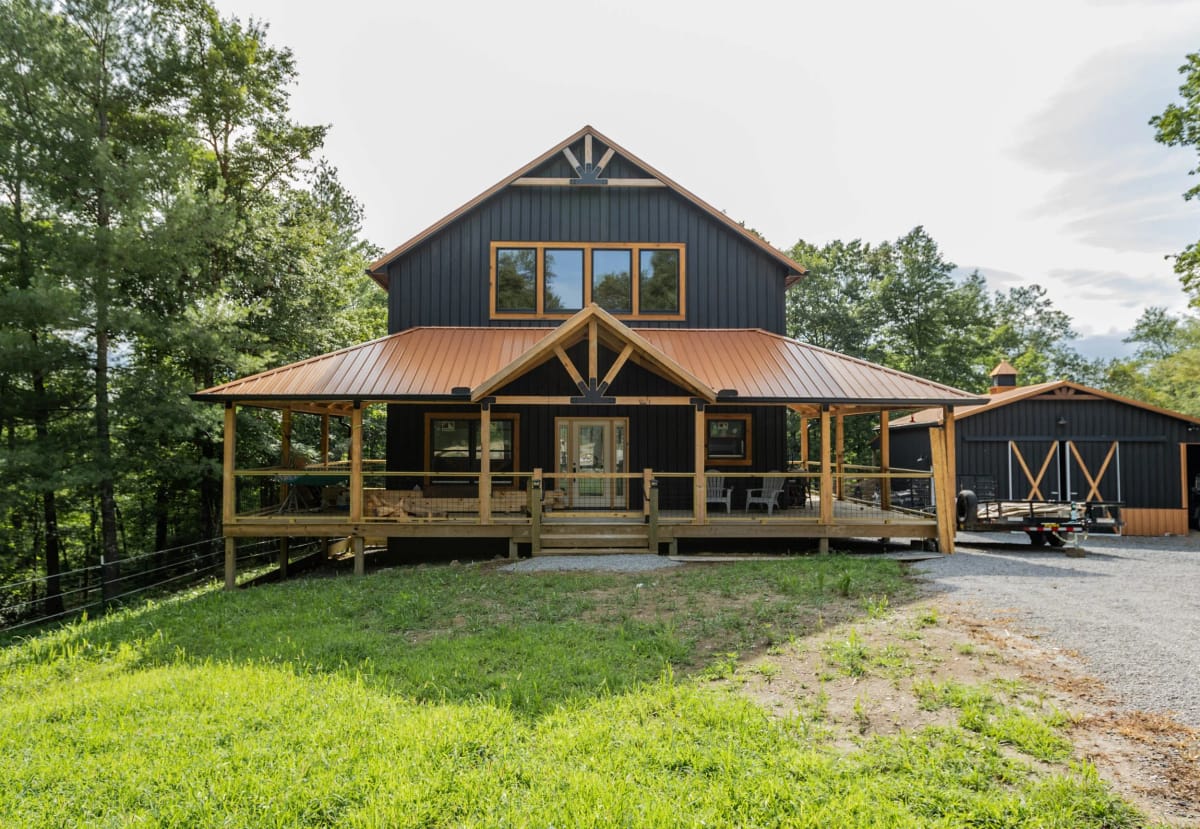
Jamestown, TN


Crossville, TN


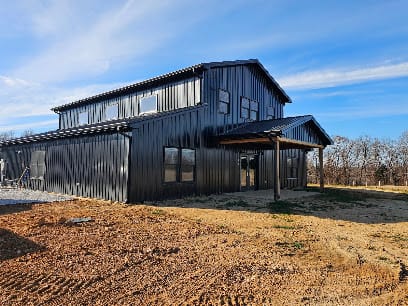
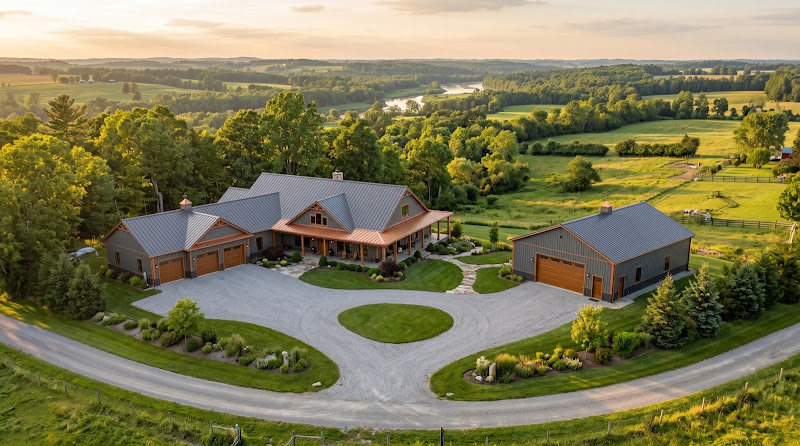

Photos pending


Photos pending
Hohenwald, TN

Henderson, TN
Photos pending
Photos pending
Goodlettsville, TN

Hohenwald, TN


Ad space available
Your barndo business can be here
Builders, lenders, kit makers and suppliers: put your company in front of people planning a barndominium in Tennessee.
Get the deck and pricingBuilding a barndominium in Tennessee
A finished barndominium in Tennessee runs about $140 to $210 per square foot turnkey, or $40 to $70 per square foot for a shell, by our directory estimates. That puts a 2,400 square foot home at roughly $336,000 to $504,000 before land and site work. We list 19 Tennessee builders, clustered in Middle Tennessee and the Upper Cumberland.
Three things shape a Tennessee build. The permit you need depends on which of three code groups your county sits in, and in an opt-out county there may be no building inspection at all. Contractor licensing is real here, unlike Texas: jobs of $25,000 and up need a state-licensed contractor. And the septic permit from TDEC, not the building permit, is usually what sets your schedule on rural land.
Land, zoning and deed restrictions
Tennessee counties can zone, and the ones around Nashville, Knoxville and Chattanooga do. Rural counties often zone lightly or not at all, which makes a barndo on acreage a simple single-family home in most places. The risk sits in subdivisions: recorded covenants and HOA rules around the fast-growing Nashville suburbs can ban metal exteriors or set minimum brick or stone coverage. Ask the title company for every recorded restriction before closing and search them for "metal," "exterior" and "outbuilding."
Before you buy, call the county planning office with the parcel number and ask three things: the zoning district, whether a post-frame or steel home is treated like any other house, and which code group the county is in. That last answer tells you what the next section means for you. For Nashville-area specifics, see our Middle Tennessee builder guide.
Codes, engineering and climate
The State Fire Marshal's Office (SFMO) sorts every city and county into three groups. Exempt jurisdictions run their own building department and enforce codes at least as strict as the state's. State program jurisdictions have no local department, so you buy the permit from the state through the State Residential Building Code Enforcement Program. Opt-out jurisdictions voted, by a two-thirds resolution, to exempt one- and two-family dwellings from the statewide standards, and there no residential building permit is required.
Where the state program applies, it uses the 2018 IRC with Tennessee amendments, in effect since July 16, 2020, and the permit FAQ lists three required inspections: foundation before the pour, rough-in and framing, and final. The state building permit does not cover wiring. The SFMO runs a separate electrical permit program with deputy inspectors, and a permit is required before installing wiring that must be inspected.
In an opt-out county, the thin rules are not a reason to skip engineering. Your lender, your insurer and your future buyer will all want stamped drawings. A useful tool: under a 2017 law, an owner in an opt-out or non-code jurisdiction can ask the SFMO to inspect the home during construction and, if it complies, receive a certificate of occupancy. For a barndo on a construction loan, that paper trail is worth having.
What drives the engineering in Tennessee:
- Tornadoes. Middle and West Tennessee sit in tornado country. Continuous uplift connections from roof to foundation matter more than panel gauge. If you want a shelter, build it to FEMA P-320 guidance; our storm safety guide covers the options.
- Karst. Much of Middle and East Tennessee sits on limestone with sinkholes. Ask the engineer whether the site needs a geotechnical look before the slab is designed.
- Humidity. Hot, wet summers make condensation under a metal roof the most common barndo complaint. Budget for closed-cell spray foam or a real vapor control layer.
What a barndominium costs in Tennessee
Here is the math from our state table. These are Barndo Finder directory estimates, not transaction data, and they exclude land, well, septic, site work and the driveway.
| Size | Shell ($40 to $70/sqft) | Turnkey ($140 to $210/sqft) |
|---|---|---|
| 1,500 sq ft | $60,000 to $105,000 | $210,000 to $315,000 |
| 2,400 sq ft | $96,000 to $168,000 | $336,000 to $504,000 |
| 3,000 sq ft | $120,000 to $210,000 | $420,000 to $630,000 |
Tennessee matches Texas in our data and sits slightly under the national medians (shell $45 to $75, turnkey $145 to $215). One builder we list, MidSouth Barndominiums in Hohenwald, publishes its prices; our MidSouth review works those out to roughly $147 to $200 per square foot turnkey, inside our range. The 2026 cost report has the national picture, the sizes guide shows how footprint moves the total, and every state is on the cost page.
Financing and insurance in Tennessee
Two Farm Credit associations lend here. Farm Credit Mid-America serves 391 counties across six states including Tennessee, and its rural home lending runs under the Rural 1st brand, which offers land and home construction loans. River Valley AgCredit serves western Kentucky and 12 Tennessee counties, with branches in Athens, Cleveland and Pikeville, and lends to purchase, build or improve rural homes. Community banks fill in the rest.
The lender will want stamped plans, a fixed-price contract and a licensed builder. In an opt-out county, expect the lender's own draw inspector to be the only inspection the house gets unless you request the SFMO inspection above. Our construction loan guide covers draw schedules, and the financing page compares lender types.
Insurance is a normal homeowners policy from an agent who writes post-frame and steel homes. Ask before you finalize plans whether the carrier treats a steel frame, a post frame and an attached shop differently, and how it handles cosmetic hail damage on metal roofing. Our barndominium insurance guide lists the carrier types.
Utilities, well and septic
Septic is the common thread in every Tennessee county, opted out or not. A TDEC environmental scientist evaluates the site to decide what system it can take, may ask for a soils map from a private licensed soil consultant, and processing can take up to 45 days once the application is complete. Shallow soil over rock is common, so some lots only support an alternative system, and a few support none. Get this answer before you close.
Many rural lots have public water lines along the road, so ask the utility district about a tap before you price a well. For budgeting, published estimates run $3,500 to $8,500 and up for a septic system and $10,000 to $30,000 for a drilled well, per our build process guide. Long electric runs from the road add up fast.
A realistic timeline in Tennessee
Plan on 12 to 18 months from design to move-in, the national range from our build timeline guide.
- Before you buy: code group, zoning, covenants, and the soil work for septic. This is where Tennessee projects win or lose months.
- Pre-construction: 3 to 6 months. Design and stamped engineering, the loan, the septic permit and, depending on the county, a local or state building permit. Opt-out counties save plan review time.
- Construction: 6 to 12 months for a turnkey home. The shell goes up in weeks; interior finish-out and inspections take the rest.
Around Nashville, builder backlog is the usual delay, not the county.
Builders we list in Tennessee
We list 19 barndominium builders in Tennessee. Here are the most reviewed, by region, with what our data shows. Ratings are public Google reviews at the time we indexed them.
| Region | Builder | City | Build type | Rating |
|---|---|---|---|---|
| Middle Tennessee | The Barn Store | Gallatin | Turnkey | 4.6 (115 reviews) |
| Middle Tennessee | Morton Buildings, Inc. | Murfreesboro | Turnkey (Morton) | 3.0 (27 reviews) |
| Middle Tennessee | Midsouth Barndominiums, LLC | Hohenwald | Turnkey | 4.4 (22 reviews) |
| Middle Tennessee | Walt's Buildings, Inc. | Lafayette | Shell and turnkey | 4.4 (21 reviews) |
| Upper Cumberland | Barndos Direct | Jamestown | Shell | 4.8 (24 reviews) |
| Upper Cumberland | TruBuild Construction | Crossville | Turnkey | 5.0 (23 reviews) |
| Upper Cumberland | Dutchway Services | Grimsley | Shell and turnkey | 5.0 (12 reviews) |
| East Tennessee | The Barndo Co. | Seymour | Turnkey | 4.7 (24 reviews) |
| West Tennessee | Andrew Signature Homes | Memphis | Turnkey | 5.0 (5 reviews) |
| West Tennessee | 3M Buildings LLC | Henderson | Not stated | 5.0 (3 reviews) |
Photo: Dutchway Services
Our Tennessee list leans turnkey, and most of it sits within two hours of Nashville; West Tennessee is thin. If you are weighing Morton, our Morton Buildings barndominium review covers cost and quality. If you take a shell and finish the inside yourself, read our shell vs turnkey guide first, and browse barndominium floor plans for layouts.
Ready to price your build? Request quotes from Tennessee builders who serve your county, and check every number against our cost table.
Updated September 2026 · Barndo Finder research
Building in Tennessee: common questions
Do you need a building permit for a barndominium in Tennessee?
It depends on the county. Every Tennessee jurisdiction falls into one of three groups: it runs its own code program, it uses the State Fire Marshal's residential permit program, or it has opted out of residential codes entirely. In an opt-out county you need no building permit, but you still need a state electrical permit and a TDEC septic permit on rural land.
How much does a barndominium cost in Tennessee?
Our directory estimate for Tennessee is $140 to $210 per square foot turnkey and $40 to $70 per square foot for a shell. A 2,400 square foot turnkey build works out to about $336,000 to $504,000 before land, well, septic, driveway and site work. Those are estimates from our state table, not quotes.
Does a Tennessee barndominium builder need a license?
Yes, for any job of $25,000 or more. A prime contractor must hold a Tennessee contractor license before bidding or negotiating a price on a project that size, and residential builders typically carry the BC-A classification. Look the builder up on the state's license search. An owner can build one home for their own use every two years without a license.
Can I get my barndominium inspected in an opt-out county?
Yes. Since 2017, an owner in an opt-out or non-code jurisdiction can ask the State Fire Marshal's Office to inspect a new one- or two-family home. If it meets the statewide standards, the office issues a certificate of occupancy. That record helps with your lender, your insurer and the eventual buyer.
Who finances barndominiums in Tennessee?
Farm Credit Mid-America lends across most of the state through its Rural 1st home loan brand, and River Valley AgCredit covers 12 Tennessee counties, with branches in the southeast around Athens and Cleveland. Both make rural home construction loans. Nashville-area and rural community banks also write construction-to-permanent loans on metal homes.
How long does a septic permit take in Tennessee?
TDEC says processing can take up to 45 days from receipt of a complete application. A TDEC environmental scientist visits the site, and on many lots you will first need a soil map from a private licensed soil consultant. Order the soil work during your due diligence period, before you close on the land.