Resources / Kits
Shell Kit, DIY Kit or Turnkey: Which Barndominium Route Fits Your Budget
Updated July 2026 · Barndo Finder research
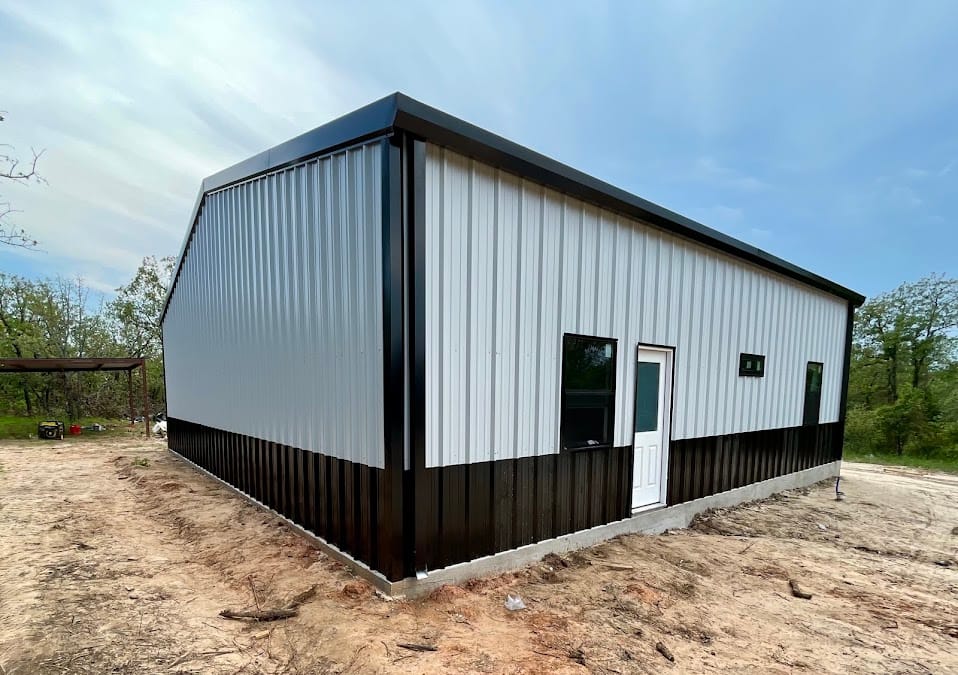
A barndominium shell kit runs about $20 to $50 per square foot for materials, an erected weathered-in shell runs $35 to $85 in most states, and turnkey construction runs $125 to $320 per square foot depending on where you build. The kit is the cheap part of the project, not the project. Which route fits your budget depends on one question: who is doing the 70 to 80 percent of the work the kit does not cover.
Key takeaways
- A materials-only kit is roughly 20 to 25 percent of the cost of a finished barndominium, per multiple 2026 cost guides.
- Typical 2026 numbers: kits $20 to $35 per square foot, kits with assembly $30 to $50, erected shells $35 to $65, turnkey $130 to $200 in most markets.
- A turnkey quote under $100 per square foot is almost always a shell quote wearing a turnkey label. Ask for the written spec before you get excited.
- Land, septic, well, driveway, and utility trenching sit outside every kit price and most shell quotes. Budget them as separate lines from day one.
- DIY finishing saves real money only if you can legally and competently do work that licensed trades normally charge for.
- Builders on forums report local suppliers sometimes beat national kit companies on price and material grade. Always compare a kit quote against a local erected-shell bid.
What is the difference between a shell kit, a DIY kit, and turnkey?
They are 3 points on the same line, sorted by how much work arrives done. A shell kit is a package of materials: engineered steel framing, roof panels, wall panels, fasteners, and trim, sometimes with windows and exterior doors. A DIY kit is the same package marketed with the assumption that you erect it yourself or hire your own crew.
An erected shell is different. A builder pours the foundation, stands the frame, and hands you a weathered-in building: roof on, walls up, windows and exterior doors installed, interior empty. Turnkey means the builder delivers a finished house with plumbing, electrical, HVAC, insulation, drywall, flooring, and fixtures done.
The words matter because sellers blur them. "Shell" can mean a pile of steel on a truck or a dried-in building on a slab, and those 2 things differ by tens of thousands of dollars. Our cost table separates shell and turnkey numbers by state for exactly this reason. If you are still deciding whether this building type is right for you at all, start with our barndominium primer.
What does a barndominium shell kit cost in 2026?
Materials-only kits run $20 to $35 per square foot, and packages that include assembly run $30 to $50, according to 2026 guides from HomeGuide and other cost trackers. We also track supplier-by-supplier kit prices if you want to see what specific companies charge. Here is how the 3 routes compare on a 2,000 square foot build. These are published-guide and Barndo Finder directory estimates, not quotes.
| Route | $/sqft (2026 est.) | 2,000 sqft example | What you get |
|---|---|---|---|
| Materials-only kit | $20 to $35 | $40,000 to $70,000 | Steel package on a truck. No foundation, no labor. |
| Kit with assembly | $30 to $50 | $60,000 to $100,000 | Erected frame and skin. Foundation often excluded. |
| Erected shell, weathered-in | $35 to $85 by state | $70,000 to $170,000 | Slab, frame, roof, walls, windows, exterior doors. Empty inside. |
| Turnkey | $125 to $320 by state | $250,000 to $640,000 | Move-in ready. Land and site work still extra. |
A widely cited example: a 40x60 kit (2,400 square feet) costs $40,000 to $80,000 in materials, while the same building finished as a home lands near $280,000. The gap between those 2 numbers is where first-time builders get hurt.
What do kit prices leave out?
Almost everything that makes a building a house. The kit typically excludes the concrete foundation, erection labor, insulation beyond basic wrap, plumbing, electrical, HVAC, drywall, flooring, cabinets, and fixtures. Cost guides consistently put the shell and structure at 20 to 25 percent of the finished cost, with the remaining 75 to 80 percent in site work and interior trades.
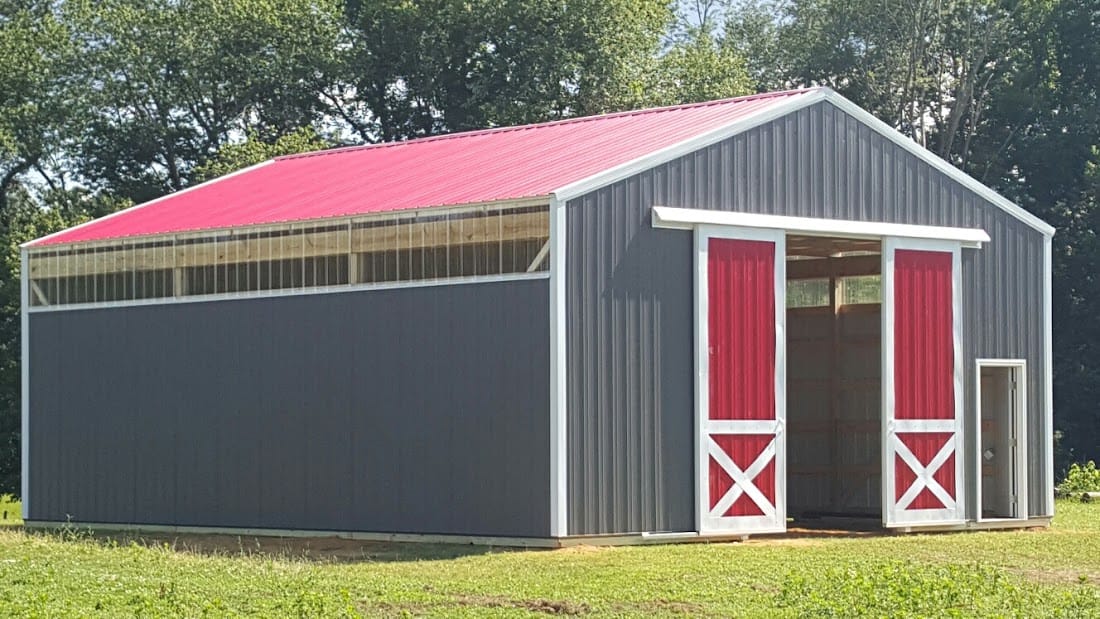 Photo: DIY Pole Barns
Then there is the land side, which no kit touches. Clearing, grading, a construction-grade driveway, a septic system, a well or water tap, and utility trenching are all separate. Owners report utility runs from the road that cost more than the slab. If your budget sheet does not have separate lines for land, septic, water, power, and driveway, it is not a budget yet. Underbudgeting site work is one of the most common stories in our roundup of owner mistakes and regrets.
One more thing kit marketing skips: engineering and permits. Your county may require stamped plans for your wind and snow loads, and the "starting at" price on the website rarely includes them or freight. Our kit manufacturer rankings flag which suppliers include engineering and which leave it to you.
Why don't we trust turnkey quotes under $100 per square foot?
Because the math does not work. Credible 2026 sources put real turnkey construction at $130 to $200 per square foot in most markets, and Texas builders with long track records quote $140 to $150. Our own directory estimates across 40 states run $125 to $320. When someone quotes $85 turnkey, one of 3 things is true: it is a shell price with the word turnkey attached, the spec is stripped to builder-grade everything with allowances that will not survive contact with reality, or the builder plans to make it up in change orders.
We have read enough owner threads to see the pattern. The cheap quote wins the signature, then the extras start: slab thickening, upgraded insulation, the well, the septic, the driveway culvert. The final cost lands right where the honest quotes started, except now you are stuck mid-build.
The fix is boring: demand a line-item spec. If the quote does not name the foundation type, insulation R-values, window brand, and what happens to site work, treat it as a shell price and compare it against the shell column in our cost table. For the bigger question of whether barndos beat stick-built on price at all, we ran the numbers.
How much does an erected shell cost in your state?
Shell pricing tracks local labor and concrete costs, so the spread between states is wide. These are Barndo Finder directory estimates pending verified quotes, in dollars per square foot.
| State | Erected shell $/sqft | Turnkey $/sqft |
|---|---|---|
| Texas | 40 to 70 | 140 to 210 |
| Oklahoma | 35 to 65 | 130 to 195 |
| Alabama | 35 to 60 | 125 to 190 |
| Tennessee | 40 to 70 | 140 to 210 |
| Florida | 50 to 85 | 160 to 240 |
| California | 60 to 95 | 180 to 270 |
Notice the shell-to-turnkey ratio holds near 3 to 1 everywhere. That ratio is a useful smell test. If a quote in your state breaks it badly in either direction, something is missing from the spec or padded into it.
How much can DIY actually save?
Real savings exist, but they are smaller and slower than kit marketing suggests. The honest case: if you erect the shell yourself and self-perform finish work, you are capturing labor that would otherwise cost $50 to $100 per square foot. Builders on forums like TractorByNet also report saving around 25 percent by sourcing steel and lumber locally instead of buying a branded kit, and some describe kit packages as minimum-grade material chosen by the seller, not by them.
The honest countercase: you still need licensed electricians and plumbers in most counties, a crane or telehandler for steel erection, and a lender willing to finance an owner-build, which many are not. Our guide to barndominium construction loans covers which lenders will touch owner-builds and what they require. One forum owner called his steel kit experience "a complete disaster," and that sentiment shows up often enough that we take it seriously. DIY is a second job that lasts a year or more.
Our position: DIY the finish work if you have the skills, but think hard before self-erecting the shell. A local crew stands a shell in 1 to 3 weeks. The money you save doing it yourself over several months often evaporates in equipment rental, rework, and interest on a construction loan that is burning the whole time.
Which route fits your budget?
Match the route to your cash, skills, and timeline, not to the lowest sticker price.
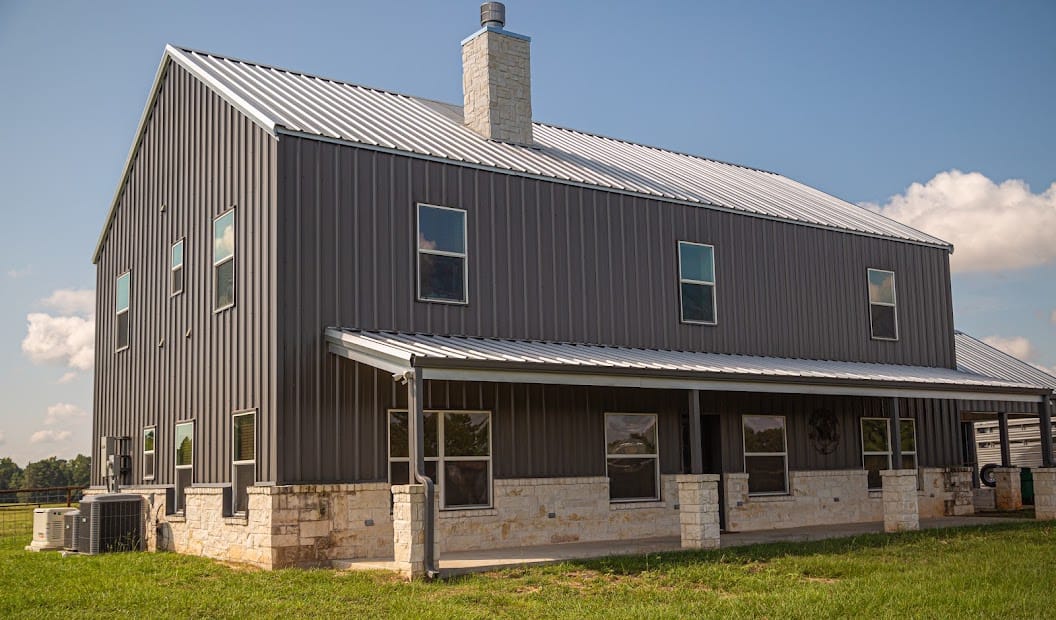 Photo: 1845 Barndominiums
Pick a kit if you have serious construction experience, your county allows owner-builds, you can pay cash or have flexible financing, and your total budget for a 2,000 square foot home is under $200,000 including land work. You are betting your own labor against roughly half the project cost. Compare every serious kit supplier before you put down a deposit.
Pick an erected shell if you can do interior finish work but not structural work. You pay a pro for the part where mistakes are expensive and slow, then spend your sweat where it is safest. This is the route we recommend most often, and it is the fastest-growing request we see among the 335 builders in our directory.
Pick turnkey if your time is worth more than the savings, you need conventional financing, or you need a certificate of occupancy on a predictable date. At $130 to $200 per square foot in most states it is the expensive route, but it is also the only one with a single throat to choke when something goes wrong.
How do the timelines compare?
With hired crews, guides report the shell goes up in 1 to 3 weeks and interior finishing takes 3 to 6 months, so a contracted build typically runs 4 to 8 months from foundation to move-in. Turnkey builds sit in that window. Erected-shell projects where the owner finishes the interior depend entirely on the owner: full-time effort can match a contractor, nights-and-weekends effort commonly takes a year or more. We break the whole schedule down stage by stage in our build timeline guide.
Kit builds add front-end time too: engineering, permits, foundation scheduling, and kit lead times all happen before the first panel goes up. Budget the loan interest for those months. Time is a line item.
Get real numbers before you pick a route
Everything above is an estimate, and your county, your soil, and your spec will move the numbers. The only way to decide between a shell kit, an erected shell, and turnkey is to put 2 or 3 real bids for each side by side. We track 335 barndominium-specific builders across 40 states, and many quote both shell and turnkey scopes. Request quotes with your location and square footage and compare them against the state ranges above before you sign anything.
Common questions
How much does a barndominium shell kit cost?
Published 2026 guides put materials-only kits at $20 to $35 per square foot and shell-plus-assembly packages at $30 to $50. A common 40x60 kit lands between $40,000 and $80,000 for the steel package. That number does not include the foundation, erection labor on most base kits, or any interior work.
What is included in a DIY barndominium kit?
Most kits include engineered steel framing, roof and wall panels, fasteners, and trim. Some add windows, exterior doors, and basic insulation. Almost none include the concrete foundation, site work, plumbing, electrical, HVAC, or interior finishes, and those missing items are 70 to 80 percent of the finished cost.
Are barndominium kits cheaper than hiring a builder?
Not always. Builders on forums like TractorByNet report that local suppliers and builders sometimes beat national kit companies on price, and that some kits ship minimum-grade materials. Some owners estimate 25 percent savings by sourcing materials locally instead of buying a branded kit. Get a local erected-shell quote before you buy a kit, then compare line by line.
Can I find barndominium shell kits with prices published online?
Some manufacturers publish base prices for standard sizes, but most show starting prices that exclude delivery, engineering stamps, and current steel surcharges. Treat any online price as a starting point, not a quote. The real number comes after you give a delivery address and a wind and snow load requirement.
How long does it take to turn a shell into a livable home?
With hired crews, guides report the steel shell goes up in 1 to 3 weeks and interior finishing takes 3 to 6 months, so 4 to 8 months total is typical. If you are finishing the interior yourself on nights and weekends, plan on a year or more.
Is a turnkey barndominium worth the extra cost?
It is if you cannot self-perform trade work or manage subcontractors. Turnkey runs $125 to $320 per square foot depending on the state, but it prices in labor you would otherwise pay for piecemeal, and it puts schedule risk on the builder instead of you. The savings from DIY are real only if your labor is genuinely free and competent.
Ready to price your build?
Fill out one form. We send it to builders who work in your area. It costs nothing.
Request quotes