Resources / Guides
Are Barndominiums Actually Cheaper to Build? We Ran the Numbers
Updated July 2026 · Barndo Finder research
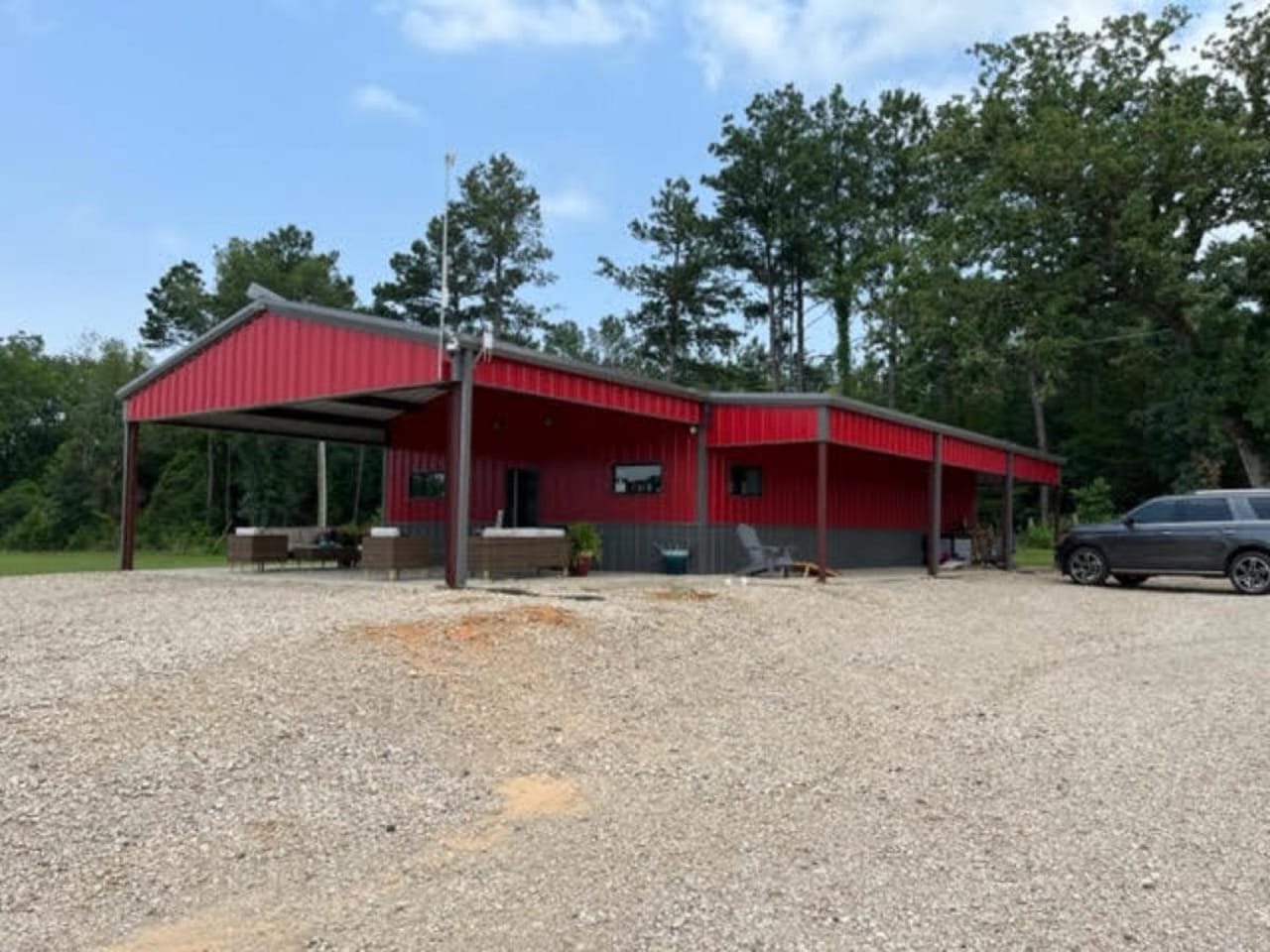
Yes, a barndominium is usually cheaper to build than a comparable stick-built house, but not by the margin the internet promises. A realistic finished barndominium runs $125 to $320 per square foot turnkey depending on the state, against roughly $162 per square foot in average construction cost for a new single-family home in the latest NAHB survey. The savings are real, typically 10 to 30 percent, and they come from the structure and the timeline, not from magic.
Key takeaways
- Finished barndominiums usually cost 10 to 30 percent less than comparable stick-built homes, not the 50 percent some kit sellers imply.
- Any "turnkey" quote under $100 per square foot is almost certainly a shell quote in disguise. Read the exclusions.
- Kits at $20 to $50 per square foot are materials, not homes. Foundation, site work, utilities, and interior finish are the bulk of the budget.
- A true under $100k barndominium means a small footprint, land you already own, and a lot of your own labor.
- Land, septic, well, driveway, and permits cost the same no matter what you build. Budget them as separate lines.
- State matters. The same 2,000 sqft build can swing $150,000 between Alabama and California.
Is it cheaper to build a barndominium or a house?
Usually yes, by a modest but real margin. Industry cost guides put finished barndominiums in the $100 to $195 per square foot range for standard builds, while NAHB's 2024 construction cost survey found average stick-built construction costs of about $162 per square foot, and custom homes at a median of $166. Our own directory estimates, built from published builder pricing across 40 states, put turnkey barndominiums at $125 to $320 per square foot nationally, with most builds in the middle of that band.
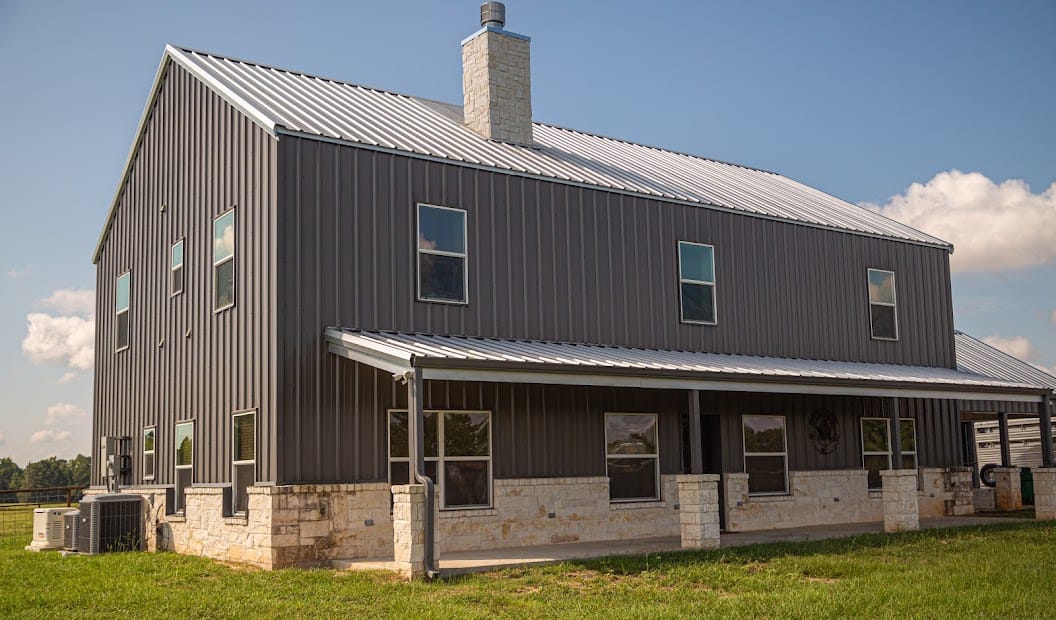 Photo: 1845 Barndominiums
So a 2,000 sqft barndominium in Texas at $140 to $210 per square foot lands between $280,000 and $420,000 turnkey, before land. A comparable stick-built custom home in the same county would typically quote 10 to 30 percent higher for the same finish level. That is a real gap. It is not the "half the cost of a house" gap that shows up in kit ads. We break down the full comparison, including insurance and resale, in our barndominium vs traditional house guide.
The full state-by-state table lives on our cost page.
Why do so many quotes claim under $100 per square foot?
Because they are shell quotes wearing a turnkey costume. This is the single biggest trap in barndominium budgeting, and we see it constantly. A shell is the erected structure: frame, roof, wall panels, exterior doors, maybe a concrete slab. Our directory estimates put shells at $35 to $95 per square foot in most states. That number sits comfortably under $100, so it gets marketed hard. Our shell vs turnkey breakdown walks through exactly which route fits which budget.
What a shell does not include: plumbing, electrical, HVAC, insulation, drywall, flooring, cabinets, fixtures, interior walls, or often even the slab. Those items typically add $50 to $110 per square foot at mid-grade finishes. When a company advertises "homes from $89 per square foot," ask one question: does that number include a working kitchen and a flushing toilet? The answer is almost always no.
Our position is blunt. If a turnkey quote comes in under $100 per square foot, treat it as a shell quote until the builder shows you a line-item scope that proves otherwise.
What does a barndominium kit actually get you?
A kit gets you materials and engineering, nothing more. Published kit pricing in 2025 and 2026 runs about $20 to $35 per square foot for the package itself, or $30 to $50 with professional erection, per cost guides like HomeGuide. A 40 by 60 steel kit typically runs $26,000 to $52,000, with erection adding roughly $7,000 to $19,000 on top. We track what each major supplier charges in our kit price comparison.
That sounds like a 2,400 sqft home for $60,000. It is not. It is 2,400 sqft of steel, panels, trusses, and fasteners sitting on dirt. You still need a foundation, site prep, utility trenching, and the entire interior. Kit marketing overpromises because the kit is the cheapest 25 to 35 percent of the project and the easiest part to put a price tag on.
Kits make sense for experienced DIY builders and for rural owners with equipment and time. They are not a shortcut to a cheap finished home for anyone who has to hire out every trade. If you go this route, start with our ranking of kit manufacturers before you put down a deposit.
Where does the money actually go?
Here is how the numbers stack up across the ways people buy these buildings. Ranges are 2026 published-source figures plus Barndo Finder directory estimates, which are pending verified builder quotes.
| What you're buying | Typical cost ($/sqft) | Included | Still missing |
|---|---|---|---|
| Kit, materials only | $20 to $35 | Steel frame, panels, roof, trim, plans | Everything else |
| Kit, erected | $30 to $50 | Kit plus assembly labor | Foundation, utilities, all interior |
| Shell (directory est.) | $35 to $95 | Erected structure, exterior doors, often slab | Mechanicals, insulation, all finishes |
| Turnkey barndo (directory est.) | $125 to $320 | Move-in ready build | Land, septic, well, site work |
| Stick-built home (NAHB 2024 avg) | ~$162 construction cost | Move-in ready build | Land and site development |
Notice what is missing from every single row: land, septic, well, driveway, and permits. Those are not barndominium costs or house costs. They are property costs, and they hit every build the same. A septic system commonly runs $5,000 to $20,000. A well can run $5,000 to $15,000. A long driveway, rural power extension, or bad soil can add tens of thousands more. Any budget without separate lines for these items is not a budget. It is a wish. Blown site-work budgets are one of the most common stories in our roundup of owner mistakes and regrets.
Can you build a barndominium for under $100k?
Only in a narrow set of circumstances, and "under 100k" searches deserve a straight answer. At 2026 prices, $100,000 buys one of three things: a shell on land you already own, a small finished build around 800 to 1,100 sqft in a cheap-labor state with heavy DIY, or a kit plus foundation with years of sweat equity ahead of you.
Run the math. Even at $125 per square foot, the bottom of our national turnkey range, $100,000 buys 800 finished square feet. In lower-cost states like Oklahoma at $130 to $195 or Alabama at $125 to $190, the picture barely changes. A family-size 2,000 sqft build under $100k finished, with hired labor, does not exist in 2026. Anyone selling that number is selling a shell.
The honest low-cost path is a simple rectangular shell, professionally built, with the owner finishing the interior room by room while living in a camper or a finished corner. People do it. It takes years, not months, and it only pencils if your time is free.
Where do the real savings come from?
The savings come from the shape, the envelope, and the calendar. A simple rectangular steel or post-frame structure uses fewer materials and fewer framing hours than a cut-up stick-built plan. The roof and walls go up as one system, so the building dries in within weeks instead of months. A shorter build means fewer months of construction loan interest and less exposure to weather delays. Our stage-by-stage timeline shows where those weeks actually get saved, and our construction loan guide covers how the shorter draw schedule affects total cost.
The metal skin also does double duty. Exterior sheathing, siding, house wrap, and shingles collapse into one panel system. Long clear spans mean fewer interior load-bearing walls, so floor plan changes cost less. And maintenance savings continue after move-in: a quality metal roof outlasts 2 to 3 asphalt roofs.
What does not save money: complex rooflines, lots of dormers, second stories inside a clear-span frame, and custom window packages. Every one of those erodes the structural advantage. The affordable barndominium is the simple barndominium, which is exactly why the phrase "low cost simple barndominium" describes a real strategy and not just a search term.
Does the interior cost less in a barndominium?
No, and this surprises people. A kitchen costs what a kitchen costs. Cabinets, countertops, tile, plumbing fixtures, and HVAC equipment have no idea what kind of structure surrounds them. Low-cost pole barn home interiors get their savings from choices, not from the building type: polished or stained concrete floors instead of hardwood, open ceilings instead of coffered ones, a simple plumbing core with kitchen and baths sharing walls, and standard cabinet lines instead of custom.
Budget $50 to $110 per square foot for interior finish at mid-grade. Spray foam insulation is the one interior line that runs higher in metal buildings, because condensation control is not optional on steel. Skimping there is the most expensive mistake in this entire category.
How much does the state change the answer?
A lot. The same build can differ by six figures across state lines. These are Barndo Finder directory estimates for turnkey and shell pricing, pending verified quotes:
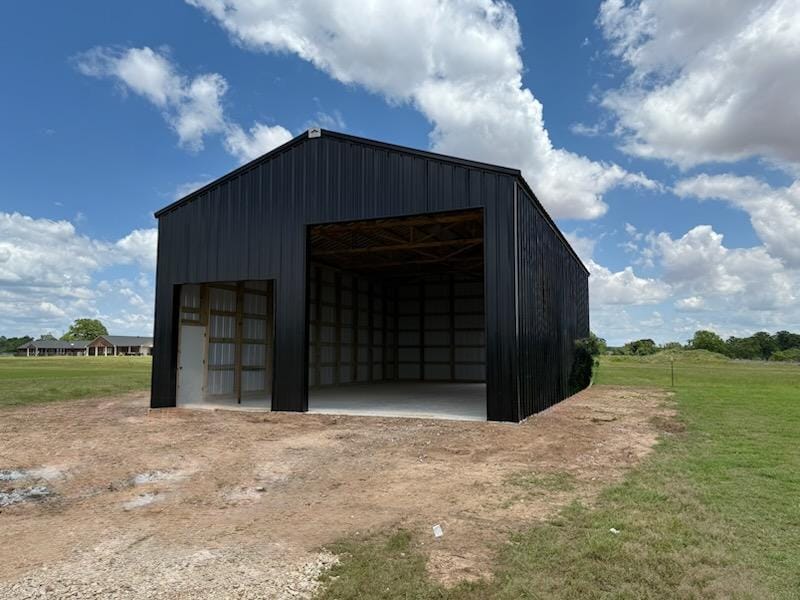 Photo: TBC Buildings & Concrete
| State | Turnkey ($/sqft) | Shell ($/sqft) |
|---|---|---|
| Alabama | $125 to $190 | $35 to $60 |
| Oklahoma | $130 to $195 | $35 to $65 |
| Texas | $140 to $210 | $40 to $70 |
| Tennessee | $140 to $210 | $40 to $70 |
| Georgia | $140 to $210 | $40 to $70 |
| North Carolina | $150 to $220 | $45 to $75 |
| Florida | $160 to $240 | $50 to $85 |
| California | $180 to $270 | $60 to $95 |
Wind and snow loads, seismic codes, labor rates, and permit regimes drive the spread. Florida's wind engineering and California's codes push both columns up. The barndominium cost advantage tends to be largest in rural parts of the South and Midwest, where post-frame builders are common and permitting is light.
So is a barndominium the cheaper way to build?
Yes, if you build simple, budget honestly, and compare finished cost to finished cost. Expect to save 10 to 30 percent against a comparable stick-built home, more if you can do real interior work yourself, less if you load the plan with complexity. Expect to save nothing on land, septic, well, and site work, because those lines do not care what you build.
The way to move from ranges to real numbers is quotes from builders who do this work every week. We track 335 barndominium-specific builders across 40 states in our directory, with cost baselines on our cost page to sanity-check what comes back.
Get real numbers for your build
Ranges get you oriented. Quotes get you a budget. Tell us your state, target square footage, and whether you want a shell or a turnkey build, and we'll match you with barndominium builders who publish real scopes. Start at our quote page. It takes about two minutes, and comparing 2 or 3 line-item bids is the single best defense against the sub-$100 shell trap.
Common questions
Can you build a barndominium for under $100k?
Not a finished full-size home in most markets. $100k covers a shell, or a small 800 to 1,100 sqft build where you do most of the interior work yourself on land you already own. Ads showing large finished barndominiums for under $100k are almost always pricing the kit or shell only.
Is it cheaper to build a barndominium or a regular house?
Usually, but the gap is smaller than marketing suggests. A finished barndominium typically runs 10 to 30 percent less than a comparable stick-built home, mostly from the simpler shape and faster dry-in. Land, septic, well, and site work cost the same either way.
What is the cheapest way to build a barndominium?
Buy land you can actually build on, pick a simple rectangular plan, hire a builder for the shell and mechanicals, and do finishes yourself over time. Skipping the second story, complex rooflines, and custom windows saves more than shopping for a cheaper kit.
Why are barndominium kit prices so low?
A kit is a pile of engineered steel, panels, and fasteners, not a house. Kits run about $20 to $50 per square foot and exclude the foundation, site prep, utilities, insulation, and every interior finish. Those excluded items are usually 60 to 70 percent of the finished cost.
How much does it cost to finish a pole barn home interior?
Plan on $50 to $110 per square foot on top of the shell for plumbing, electrical, HVAC, insulation, drywall, flooring, kitchen, and baths at mid-grade finishes. Doing your own flooring, paint, and trim can trim that meaningfully, but the mechanical trades still cost real money.
Do barndominiums cost less to own after the build?
Often yes. Metal roofs and siding need little maintenance for decades, and a tight simple envelope is cheap to heat and cool. Insurance and financing can be slightly harder to arrange in some counties, so check both before you commit.
Ready to price your build?
Fill out one form. We send it to builders who work in your area. It costs nothing.
Request quotes