Builders / Georgia
Barndominium builders in Georgia
Planning a build? Read our guide to building a barndominium in Georgia.
Builders tracked
Barndominium-specific, deduplicated
Turnkey
Per sqft, directory estimate
Shell only
Per sqft, directory estimate
Permits and codes in Georgia
Georgia adopts statewide minimum codes but leaves enforcement to counties, and enforcement varies widely between metro Atlanta and rural south Georgia. A residential general contractor license is required for home construction, so ask for the license number and check it against the Secretary of State database. Septic approval through the county health department is usually the long pole on rural land.
Financing a barndominium in Georgia
Regional banks and Farm Credit associations (AgSouth, AgGeorgia) both write construction-to-permanent loans on barndominiums. Appraisals lean on comparable sales, so ask your lender how many metal-home sales it can find in your county before you commit.
The list (9)
Sorted by review count. Featured listings are labeled.


Springfield, GA
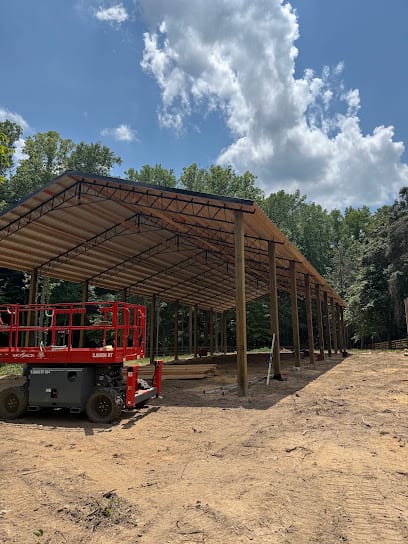
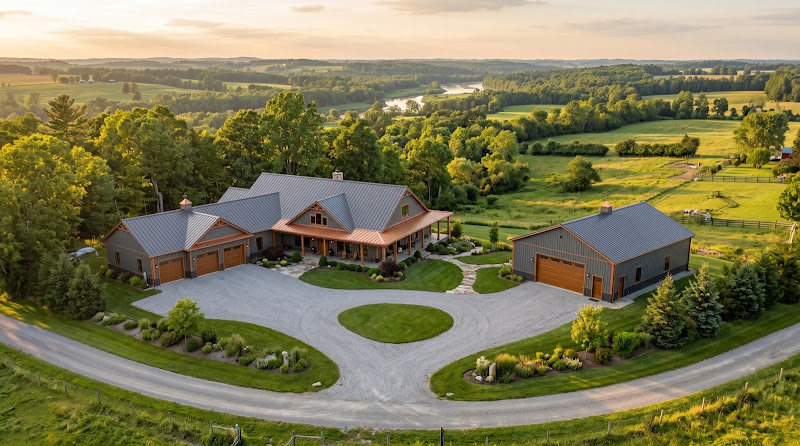

Photos pending

Ad space available
Your barndo business can be here
Builders, lenders, kit makers and suppliers: put your company in front of people planning a barndominium in Georgia.
Get the deck and pricingBuilding a barndominium in Georgia
A finished barndominium in Georgia runs about $140 to $210 per square foot turnkey, or $40 to $70 per square foot for a shell, by our directory estimates. That puts a 2,400 square foot home at roughly $336,000 to $504,000 before land and site work. Our Georgia list has 9 entries, spread from the north Georgia mountains to the coast.
Three things set Georgia apart. The state writes one minimum code for everyone but leaves enforcement to each county, so the permit experience in metro Atlanta and in rural south Georgia can feel like two different states. Counties can zone, and some now write barndominium-specific rules. And the septic permit, backed by a soil report from a certified soil classifier, usually decides your schedule on rural land.
Land, zoning and deed restrictions
Unlike Texas counties, Georgia counties have zoning power and many use it, so the district your parcel sits in decides how hard this will be. Agricultural districts are the easy path; a barndominium there is usually just a single-family home. Residential districts often carry rules on exterior materials, minimum heated square footage or roof pitch that a metal-sided building can fail.
Some counties have moved from ignoring barndos to regulating them by name. Spalding County, south of Atlanta, defines a barndominium in its zoning ordinance and handles them in its agricultural district by special exception. At recent hearings, approvals carried conditions including a five-acre minimum and brick, stone or similar veneer on at least 25 percent of each building face. We would not be surprised to see that pattern (acreage plus a masonry requirement) in other counties as barndo applications rise, so ask early.
Private restrictions are the other gate. Subdivision covenants and HOA rules in Georgia often ban metal exteriors or anything that resembles an agricultural building. Get the recorded covenants from the closing attorney before you sign, and call the county planning office with the parcel number to ask two questions: what district is it in, and is a barndominium a permitted use, a special exception, or not allowed?
Codes, engineering and climate
Georgia's state minimum standard codes are set by the Department of Community Affairs. As of January 1, 2026, the residential code is the 2024 IRC with Georgia amendments. The energy code is still the 2015 IECC with Georgia supplements and amendments. The catch is enforcement: DCA's guidance says that if a local government chooses to enforce the codes, it must use the current editions. Many counties enforce fully. Where a rural county inspects little, that is not a license to skip engineering, because your lender and insurer will ask for stamped drawings regardless.
What drives the engineering in Georgia:
- Humidity and condensation. In a hot, humid climate, condensation under a metal roof is a common barndo complaint. Budget for closed-cell spray foam or a proper vapor control layer, and size the HVAC to handle latent load, not just temperature.
- Termites. Subterranean termites are the main termite pest across the state, per UGA's integrated pest management program. A post-frame barndo has wood posts at or below grade, so ask what treatment rating the posts carry, whether the slab gets a termite pretreatment, and whether the builder transfers a termite bond.
- Wind on the coast. Design wind speeds rise toward the coast. A kit engineered for middle Georgia needs to be re-checked by the engineer for a site near Savannah or Brunswick.
- Red clay and drainage. Grading and drainage around the slab matter more than the frame. Water standing against a steel building shortens its life.
What a barndominium costs in Georgia
These numbers come straight from our state table. They are Barndo Finder directory estimates, not transaction data, and they exclude land, well, septic, site work and the driveway.
| Size | Shell ($40 to $70/sqft) | Turnkey ($140 to $210/sqft) |
|---|---|---|
| 1,500 sq ft | $60,000 to $105,000 | $210,000 to $315,000 |
| 2,400 sq ft | $96,000 to $168,000 | $336,000 to $504,000 |
| 3,000 sq ft | $120,000 to $210,000 | $420,000 to $630,000 |
Georgia matches Texas in our data and sits slightly under the national medians (shell $45 to $75, turnkey $145 to $215). A county masonry requirement is the Georgia-specific cost to watch: brick or stone veneer on a quarter of every wall adds material and labor that a plain metal building does not carry. Our 2026 cost report has the national picture, the sizes guide shows how footprint moves the total, and every state is on the cost page.
Financing and insurance in Georgia
Georgia is covered by three Farm Credit associations: AgGeorgia Farm Credit, AgSouth Farm Credit and Southwest Georgia Farm Credit. All three make rural home loans. AgSouth publishes a barndominium financing guide that lists what the lender needs before closing: floor plans and blueprints, contractor bids, proof of utility availability, local regulatory approvals and the usual income documents. Regional and community banks also write construction-to-permanent loans. The appraisal is the step to watch: ask the lender early how its appraisers find comparable barndo sales in your county. Our construction loan guide explains draws, and the financing page compares lender types.
Insurance is a normal homeowners policy with an agent who understands post-frame and steel homes. Ask the agent before you finalize plans whether they price a steel frame, a post frame and a stick-framed interior differently, and whether a large attached shop changes the policy type. Coastal builds carry wind and flood questions that inland builds do not. Our barndominium insurance guide lists the carrier types that write these homes.
Utilities, well and septic
Septic is where rural Georgia builds slow down. Permits come from the county board of health under the Georgia Department of Public Health rules, and most counties require an original, stamped Level 3 or Level 4 soil report from a Georgia certified soil classifier before they will accept an application. Order the soil report before you close on land. It tells you whether a conventional system fits, where it can go, and sometimes whether the lot works at all.
Wells in Georgia need no state drilling permit, but they must be drilled by a licensed water well contractor, and the contractor files a notice of intent with the county health department before drilling, under the Water Well Standards Act. For budgeting, published estimates run $3,500 to $8,500 and up for a septic system and $10,000 to $30,000 for a drilled well, per our build process guide. Get local bids once the soil report is back.
A realistic timeline in Georgia
Plan on 12 to 18 months from design to move-in, the national range from our build timeline guide.
- Before you buy: zoning district check, covenants, and the soil report. In counties with a special exception process, add a public hearing to the calendar.
- Pre-construction: 3 to 6 months. Design and stamped engineering, the loan, septic permit and building permit. Metro counties with full plan review take longer than rural ones.
- Construction: 6 to 12 months. Georgia's mild winters allow year-round work, so the schedule depends more on your builder's backlog and long-lead orders than on weather.
Builders we list in Georgia
Our Georgia list has 9 entries. Here are the 8 builders among them, grouped by region, with what our data shows. Ratings are public Google reviews at the time we indexed them.
| Region | Builder | City | Build type | Rating |
|---|---|---|---|---|
| East Georgia | Smith's Buildings & Trailers | Augusta | Turnkey | 4.5 (52 reviews) |
| Middle Georgia | Metal Buildings of Georgia | Forsyth | Shell, Red Iron kits | 5.0 (12 reviews) |
| Middle Georgia | Smith Built Services | Jackson | Shell and turnkey | 5.0 (10 reviews) |
| Middle Georgia | C4 Buildings and Pole Barns | Monticello | Shell and turnkey | No reviews yet |
| North Georgia | Southeast Metal Buildings | Hiawassee | Shell | 4.6 (10 reviews) |
| Northeast Georgia | J&P Pole Barn | Comer | Shell | 5.0 (1 review) |
| Coastal Georgia | South Georgia Sawmill | Pembroke | Turnkey | 4.1 (9 reviews) |
| Coastal Georgia | Moncrief Steel Structures | Springfield | Shell | 5.0 (5 reviews) |
Photo: Smith Built Services
Six of the eight build shells, alone or alongside turnkey work, so many Georgia buyers end up hiring a separate contractor for the interior. Our shell vs turnkey guide covers what that split means for your budget and your loan. For layouts before you call anyone, browse our barndominium floor plans.
When you are ready, request quotes from Georgia builders who serve your county and compare each one to our cost table.
Updated September 2026 · Barndo Finder research
Building in Georgia: common questions
Do you need a permit to build a barndominium in Georgia?
In most counties, yes. Georgia's state minimum codes apply statewide, and counties that run a building department issue permits and inspect under the 2024 IRC with Georgia amendments. Enforcement is a local choice, so a few rural jurisdictions do little inspecting. Every rural build still needs a septic permit from the county environmental health office and zoning approval where the county zones.
How much does a barndominium cost in Georgia?
Our directory estimate for Georgia is $140 to $210 per square foot turnkey and $40 to $70 per square foot for a shell. A 2,400 square foot turnkey build works out to about $336,000 to $504,000, before land, well, septic, driveway and site work. These are estimates from our state table, not quotes.
Are barndominiums allowed in Georgia?
Yes, but the county decides where. Agricultural districts are the easiest path. In residential districts, subdivisions and HOAs, metal exteriors are often restricted. Some counties now write barndominium rules directly: Spalding County defines them in its zoning ordinance, and recent approvals there carried a five-acre minimum and brick or stone on part of each wall.
Can you get a loan for a barndominium in Georgia?
Yes. Georgia's three Farm Credit associations, AgGeorgia Farm Credit, AgSouth Farm Credit and Southwest Georgia Farm Credit, all make rural home loans, and AgSouth publishes a step-by-step barndominium financing guide. Community banks also write construction-to-permanent loans. Lenders want floor plans, contractor bids, utility availability and local approvals before closing.
Does a Georgia barndominium builder need a license?
Yes. Anyone contracting general construction work over $2,500 in Georgia needs a license from the State Licensing Board for Residential and General Contractors, which you can check through the Secretary of State. Owners can build their own home without a license, limited to one home in any 24-month period.