
Builders / Ohio
Barndominium builders in Ohio
Planning a build? Read our guide to building a barndominium in Ohio.
Builders tracked
Barndominium-specific, deduplicated
Turnkey
Per sqft, directory estimate
Shell only
Per sqft, directory estimate
Permits and codes in Ohio
Ohio enforces the Residential Code of Ohio through county and municipal building departments. There is no statewide general contractor license for home building; registration happens at the local level. Where no certified residential building department has jurisdiction, the code itself says no plan review or inspection is required, so vet builders on completed work and insurance certificates rather than a state license number. Amish and Mennonite post-frame crews are a real force in Ohio construction and often deliver the best shell pricing in the country, but confirm who pulls the permit and who carries the liability insurance before signing.
Financing a barndominium in Ohio
Farm Credit Mid-America finances post-frame homes in most of Ohio, and AgCredit covers 18 northern counties. Community banks in rural counties follow. Appraisal comparables are plentiful in the western and central counties where post-frame housing is common.
The list (17)
Sorted by review count. Featured listings are labeled.


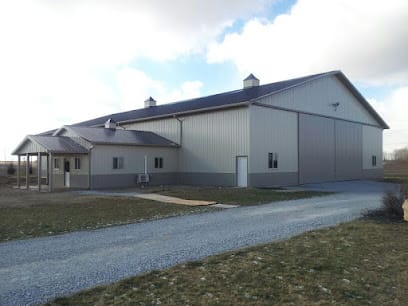
Middletown, OH


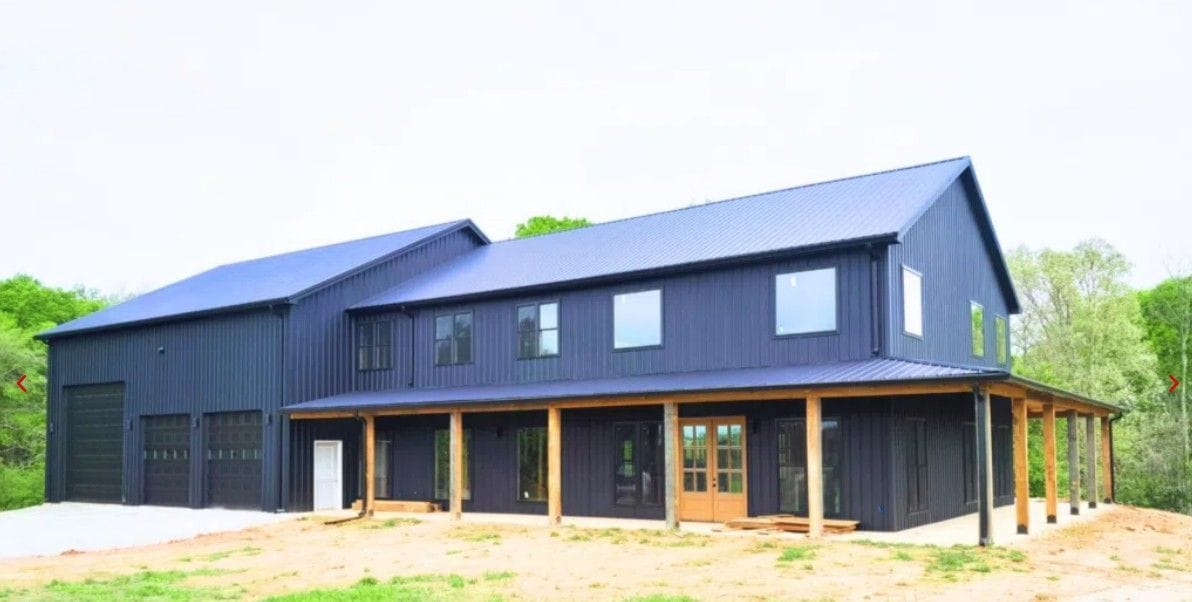


Wellington, OH


New Concord, OH
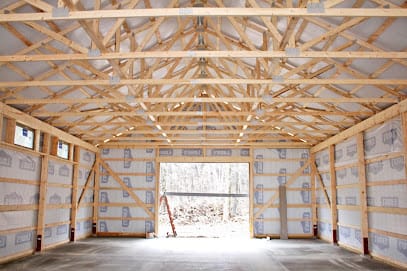

Washington Township, OH


Ad space available
Your barndo business can be here
Builders, lenders, kit makers and suppliers: put your company in front of people planning a barndominium in Ohio.
Get the deck and pricingBuilding a barndominium in Ohio
A finished barndominium in Ohio runs about $135 to $200 per square foot turnkey, or $40 to $70 per square foot for a shell, by our directory estimates. That puts a 2,400 square foot home at roughly $324,000 to $480,000 before land and site work, below the national medians in our data. We list 17 Ohio builders.
Three things make Ohio different. The state has one residential code, but whether anyone reviews your plans depends on whether a certified building department covers your land. Post-frame shell builders are everywhere, which keeps shell prices low. And your septic and well permits come from the county health district under state rules, so the soil on your lot matters as much as the building.
Land, zoning and deed restrictions
Rural Ohio zoning is often a township matter, and sometimes a county one. If your township has adopted a zoning resolution, the zoning inspector issues a zoning certificate before construction, and the district sets lot size, frontage, setbacks and sometimes minimum floor area. Call the township before you buy and ask two questions: is a post-frame or steel home a permitted single-family dwelling in this district, and are there limits on the size of an attached shop?
Watch the agricultural exemption. The Residential Code of Ohio exempts buildings incident to agricultural use of the land, which is why pole barns go up without residential review. A barndominium is a home, so that exemption does not cover the living quarters. Permitting a building as a barn and finishing it into a house later is the kind of shortcut that surfaces at appraisal, insurance or resale.
Rural subdivisions and lake communities can carry recorded deed restrictions on exterior materials and outbuildings. Get them from the title company and read them before closing.
Codes, engineering and climate
Ohio's residential code is the Residential Code of Ohio, based on the 2018 International Residential Code. Its enforcement rule is the part barndo buyers need to understand. Section 101.5 says that if no certified municipal, township or county building department has jurisdiction, "the owner is not required to make submission of construction documents, seek approvals, request inspections, or obtain certificates of occupancy." The code still applies; nobody checks it.
That sounds like a shortcut. In practice, your construction lender, your insurer and your eventual buyer will all want evidence the home was built properly. If your land has no residential building department, hire a third-party inspector or engineer to review the plans and inspect the foundation, framing and mechanicals, and keep the reports. Ask your electric utility what it needs before it will set a meter.
The code leaves the local design numbers to local officials. In the climate table, the jurisdiction fills in the frost line depth as the minimum footing depth, and the ground snow load from the code's snow map. Ask the building department (or, where there is none, your engineer) for both before a kit is engineered. For a post-frame home, the frost depth sets how deep the posts or piers go, and a slab on grade needs footings below frost or an engineered frost-protected shallow foundation.
What a barndominium costs in Ohio
These figures come from our state table. They are Barndo Finder directory estimates, not transaction data, and exclude land, well, septic, site work and the driveway.
| Size | Shell ($40 to $70/sqft) | Turnkey ($135 to $200/sqft) |
|---|---|---|
| 1,500 sq ft | $60,000 to $105,000 | $202,500 to $300,000 |
| 2,400 sq ft | $96,000 to $168,000 | $324,000 to $480,000 |
| 3,000 sq ft | $120,000 to $210,000 | $405,000 to $600,000 |
Ohio sits below the national medians in our data (shell $45 to $75, turnkey $145 to $215), and our builder list fits that picture: 10 of the 17 Ohio builders we list are shell-only post-frame and steel suppliers, so competition on the shell is deep. Ohio also has the second-largest Amish population of any state, about 87,760 people in 2026 per the Young Center at Elizabethtown College, and in many rural counties the post-frame crew you hire may be Amish or Mennonite. Get the same written scope, insurance certificate and permit responsibility from them as from anyone else. The gap between a cheap shell and a finished home is where Ohio budgets go wrong. If you take on the interior, read our shell vs turnkey guide and pole barn house guide first. National context is in the 2026 cost report, and the full state table is on our cost page.
Financing and insurance in Ohio
Two Farm Credit associations split the state. Farm Credit Mid-America lends in every Ohio county except Crawford, Hancock, Lucas, Marion, Ottawa, Sandusky, Seneca, Wood and Wyandot. AgCredit serves 18 counties in northern Ohio and offers home loans to non-farmers. Rural community banks also write construction loans on post-frame homes. Our construction loan guide covers draw schedules, and the financing page compares lender types.
Expect the lender to set the inspection standard where the county does not. A lender releasing construction draws wants someone independent to confirm the footings, frame and mechanicals, and a shell crew's invoice is not that. Build the cost of third-party inspections into the budget. Insurers ask the same questions about construction type and who built it; our insurance guide covers how they classify post-frame homes.
Utilities, well and septic
Septic and wells both run through your local board of health under Ohio Department of Health rules. For septic, OAC 3701-29-06 says a sewage treatment system "shall not be installed, altered, or operated without an approved permit from the board of health," and the lot must have enough suitable area for the system plus a designated area for a complete replacement. The permit can carry operation and maintenance conditions that follow the home. Heavy clay or a high water table can rule out a conventional system, so the soil evaluation can decide the system type and where the house sits.
For a well, OAC 3701-28-03 requires a board of health permit before anyone constructs a private water system. The application names the registered contractor doing the work and includes payment for at least one water sample, and the health district has ten business days to act on it. Budget with published ranges of $3,500 to $8,500 and up for septic and $10,000 to $30,000 for a drilled well from our build process guide, then get local bids.
A realistic timeline in Ohio
Plan on 12 to 18 months from design to move-in, the range in our build timeline guide.
- Before you buy: zoning, deed restrictions, and a soil evaluation with the health district. The septic answer can change the site plan.
- Pre-construction: 3 to 6 months. Design, engineering to your frost depth and snow load, the loan, the building permit where a certified department covers you, and the septic and well permits.
- Construction: 6 to 12 months. Post-frame shells go up in weeks once materials arrive. Interior finish-out is the long stretch, and popular shell crews book out, so reserve a slot early.
Builders we list in Ohio
We list 17 barndominium builders in Ohio. Here are ten of them by region, with what our data shows. Ratings are public Google reviews at the time we indexed them.
| Region | Builder | City | Build type | Rating |
|---|---|---|---|---|
| Northeast | Erb's Construction & Roofing LLC | Wooster | Shell | 4.9 (93 reviews) |
| Northeast | Miller's Premier Construction | Wooster | Turnkey | 4.5 (20 reviews) |
| West | DIY Pole Barns | Arcanum | Shell | 4.5 (87 reviews) |
| Southwest | Needabarn Sales | Middletown | Shell, Red Iron and American Steel kits | 4.8 (46 reviews) |
| Southwest | Dutch Builders LLC | Sardinia | Shell | 4.4 (45 reviews) |
| Southwest | Highland Building & Supply | Loveland | Turnkey; Morton, Wick, Cleary and Lester | 5.0 (13 reviews) |
| Southwest | Queen City Builders LLC | Ripley | Shell and turnkey | 5.0 (11 reviews) |
| Northwest | USA Pole Barns | Weston | Shell | 4.4 (13 reviews) |
| Northwest | Schwab Builders LLC | Holgate | Turnkey, Wick kits | 4.2 (5 reviews) |
| Southeast | RAMCK General Contractors LLC | Crooksville | Shell and turnkey | Not yet rated |
Photo: USA Pole Barns
Most Ohio listings are shell builders, so plan how the interior gets done before you sign: who frames the interior walls, who does the mechanicals, and who pulls each permit. Our DIY barndominium guide covers the owner-managed route.
Photo: Schwab Builders LLC
For layouts that fit a post-frame span, browse our barndominium floor plans. When you are ready, request quotes from Ohio builders who serve your county and compare each one to our cost table.
Updated September 2026 · Barndo Finder research
Building in Ohio: common questions
Do you need a permit to build a barndominium in Ohio?
It depends on whether a certified residential building department covers your land. The Residential Code of Ohio applies statewide, but where no certified city, township or county department has jurisdiction, the code itself says the owner does not have to submit plans, request inspections or get a certificate of occupancy. You still need a septic permit and a well permit from the local health district, plus any township zoning permit.
How much does a barndominium cost in Ohio?
Our directory estimate for Ohio is $135 to $200 per square foot turnkey and $40 to $70 per square foot for a shell, below the national medians in our data. A 2,400 square foot turnkey home works out to about $324,000 to $480,000 before land, well, septic and site work. Those are estimates from our state table, not quotes.
Is a barndominium exempt from the Ohio building code as an agricultural building?
No. The Residential Code of Ohio exempts buildings incident to the agricultural use of the land, such as a working barn. A building you live in is a dwelling, so the living space falls under the residential code wherever a certified department enforces it. Do not plan on permitting a barndo as a farm building and converting it later.
Can you get a loan for a barndominium in Ohio?
Yes. Farm Credit Mid-America lends in every Ohio county except Crawford, Hancock, Lucas, Marion, Ottawa, Sandusky, Seneca, Wood and Wyandot. AgCredit serves 18 counties in northern Ohio. Community banks in rural counties also write construction loans on post-frame homes. Expect the lender to want stamped plans and inspections even where the county does not require them.
Who issues septic and well permits in Ohio?
Your local board of health. Under Ohio Department of Health rules, a sewage treatment system cannot be installed, altered or operated without a board of health permit, and the lot must have room for a full replacement system. Private water systems also need a board of health permit before construction, with a registered contractor named on the application and a water sample.
Are Amish builders a good choice for an Ohio barndominium?
They can be. Ohio has the second-largest Amish population of any state after Pennsylvania, about 87,800 people in 2026, so in many rural counties the local post-frame crew may be Amish. Treat an Amish crew like any other contractor: get a written scope, confirm who pulls permits and who carries liability insurance, and hire licensed or registered trades for electrical, plumbing and HVAC if the shell contract excludes them.