
Resources / Building
DIY Barndominium: What You Can Build Yourself and What It Saves
Updated October 2026 · Barndo Finder research
Quick answer
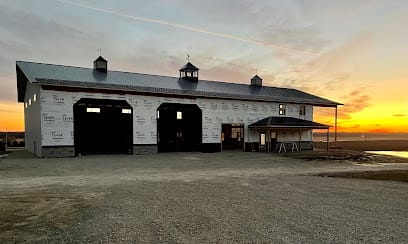
Yes, you can build a barndominium yourself in many states as an owner-builder, but the realistic DIY build means acting as your own general contractor, hiring out the slab, erection, and HVAC, and doing finish work yourself. Replacing a builder's average 11 percent profit and 5.7 percent overhead saves roughly $30,000 to $70,000 on a 2,000 sqft home, before any sweat equity.
Yes, you can build a barndominium yourself, and in many states the law lets you act as your own contractor on a home you will live in. The realistic DIY barndominium is not one person bolting up steel alone. It is you running the job as the general contractor, hiring out the slab, shell erection, and HVAC, and doing the finish work yourself. That captures a builder's margin, which averages about 11 percent profit plus 5.7 percent overhead, and trims labor on every trade you self-perform.
Key takeaways
- Owner-builder exemptions are common, with strings attached. Florida presumes a violation if you sell or lease within 1 year. North Carolina requires 12 months of occupancy. Tennessee limits you to one owner-built house every 2 years.
- The biggest single saving is the general contractor's margin: roughly $30,000 to $70,000 on a 2,000 sqft home at our national turnkey medians.
- Hire the concrete, the HVAC, and usually the shell erection. DIY the interior framing, insulation batts, drywall hanging, paint, flooring, and trim.
- Lenders are the hard part. FHA lets a borrower be the general contractor only if the borrower holds a GC license, and many banks add their own restrictions on owner-builders.
- Budget 12 months or more, builder's risk insurance at 1 to 4 percent of construction cost, and equipment rentals that run over $1,600 a week for a telehandler.
- 188 of the 333 builders in our directory sell shell or shell-plus-finish packages, which is the most common way owner-builders start.
How do you build a barndominium yourself, step by step?
The order is fixed, because inspections force it. Here is the owner-builder version, with what you actually do at each stage. Our full build process guide walks through each phase in more detail.
- Line up the money. Talk to lenders before you buy land or a kit. Owner-builder financing, covered below, shapes every other decision.
- Pick a plan and get it engineered. Your steel or post-frame supplier engineers the structure. You decide the layout, and you need stamped drawings for the permit.
- Pull permits as the owner-builder. Sign the county's owner-builder affidavit or disclosure, and schedule the septic permit first, since it often moves slowest.
- Site work, well, and septic. Hire the dozer work, the well driller, and the septic installer. You can clear brush and run a rented skid steer on small jobs.
- Slab. Hire the pour. You can help with layout, plumbing stub-out coordination, and vapor barrier prep.
- Shell. Hire an erector or buy an erected shell from a local builder. Self-erecting is possible, especially with post-frame, but it is the most dangerous stage.
- Rough-ins and inspections. Plumbing, electrical, and HVAC rough-ins, done by you where your state allows it and by licensed trades where it does not.
- Insulation, drywall, finishes. This is where DIY hours pay off most.
- Final inspection and certificate of occupancy. You walk the punch list, as the GC, with the inspector.
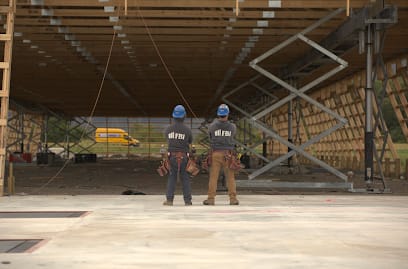 Photo: FBi Buildings, Inc.
What can you DIY, and what should you hire out?
Stage by stage, here is where owner-builders realistically save and where they get hurt, in money or otherwise.
| Stage | DIY realistic? | Who usually does it | Why |
|---|---|---|---|
| Plans and engineering | No | Supplier's engineer | Stamped drawings required for permits and lenders |
| General contracting | Yes | You | Owner-builder exemptions cover this in many states |
| Clearing, driveway | Partly | Excavator | Small jobs with a rented skid steer, big jobs need a dozer |
| Well and septic | No | Licensed driller and installer | Septic designs typically need a licensed designer or engineer |
| Slab | No, help with prep | Concrete crew | One pour, one chance, cure-time schedule |
| Shell erection | Maybe | Erector crew | Equipment, fall risk, and speed favor a crew |
| Windows and exterior doors | Yes | You or erector | Standard carpentry |
| Electrical | Depends on state | You or licensed electrician | Homeowner exemptions vary, see below |
| Plumbing | Depends on state | You or licensed plumber | Same |
| HVAC | Mostly no | Licensed HVAC contractor | Refrigerant handling requires EPA Section 608 certification |
| Spray foam insulation | No | Insulation contractor | Equipment and chemistry |
| Batt or rigid insulation | Yes | You | Tedious, low risk |
| Interior framing | Yes | You | Non-structural walls under clear-span framing |
| Drywall | Hang yes, finish maybe | You or finisher | Finishing is a skill that shows |
| Paint, flooring, trim, cabinets | Yes | You | Labor-heavy, low risk, big savings |
The pattern: hire the things that are hard to redo (concrete, structure, refrigerant, septic) and do the things that are slow but forgiving (framing, insulation batts, paint, flooring). The post-frame shells built by many Midwest crews are the friendliest for owner-builders, because interior walls are non-structural and the framing is ordinary carpentry. Our pole barn house guide explains why.
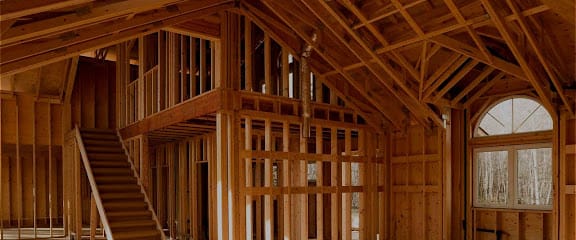 Photo: Heribacka Construction
Do owner-builder rules differ by state?
A lot. Every state treats owner-builders differently, and cities often add their own rules. Four states where barndominiums are common show the range:
| State | General contractor rule | Owner-builder condition | Your own electrical and plumbing |
|---|---|---|---|
| Texas | No state GC license | Local permit rules only | State exempts owners who live in the dwelling, but cities can require licensed trades |
| Florida | State or local license required | Exempt if you personally supervise and sign a disclosure | Unlicensed helpers must be your employees |
| North Carolina | License required for projects of $40,000 or more | Exempt if you occupy it for 12 months after completion | Homeowner permits allowed with an occupancy affidavit |
| Tennessee | State license required above a project-cost threshold | Exempt for your own residence, one per 2 years | Homeowner exempt for electrical work on own residence |
Texas. Texas does not license general contractors at the state level, and the TDLR says a person doing electrical work on a dwelling they own and reside in does not need a state electrician license. State law also lets a property owner do plumbing in their own homestead. Inside city limits, local ordinances can still require licensed trades, and every permitted job still gets inspected.
Florida. Under Florida Statute 489.103(7), you must provide direct, onsite supervision of all work not done by licensed contractors and personally sign the permit application. Selling or leasing within 1 year of completion creates a presumption that you built for sale, which violates the exemption. The required disclosure also warns that any unlicensed person you pay is your employee, meaning tax withholding and workers' compensation.
North Carolina. The general contractor license threshold rose from $30,000 to $40,000 in October 2023, per the NC licensing board's enforcement coverage. Owners are exempt when they will solely occupy the home, and the county's owner exemption affidavit typically commits you to 12 months of occupancy. Many towns, such as Holly Springs, let homeowners pull their own electrical permits under the same 12-month occupancy condition.
Tennessee. T.C.A. 62-6-103 exempts owners building a single residence for their own use, but building or permitting more than one within 2 years creates a presumption that you are building for sale. The same statute exempts a single-residence homeowner from limited electrician licensing for work on their own home. You still pull the electrical permit.
Always confirm with your county building department before you buy land. These rules change, and local ordinances can be stricter than state law. Browse builders and local notes for Texas, Florida, North Carolina, and Tennessee.
How much does a DIY barndominium cost, and what does it actually save?
Start from our data, then subtract what you capture. Our national medians put an erected shell at $45 to $75 per square foot and a turnkey home at $145 to $215. These are directory estimates, not transaction data, and they exclude land, well, septic, and site work.
There are three savings levers, and they are not equal.
Lever 1: be your own general contractor. The NAHB's 2024 cost survey puts average builder profit at 11.0 percent and overhead at 5.7 percent of the sales price. Treat 11 to 17 percent as the margin you are replacing with your own time.
Lever 2: erect the shell yourself. Our kit price research puts erection labor at $10 to $15 per square foot. Against that, a telehandler rents for an average of $1,644 a week and an electric scissor lift for $355 to $935 a week. A crew stands a shell in 1 to 3 weeks. An owner working weekends can take months, paying rent the whole time.
Lever 3: sweat equity on the finish. The gap between our shell and turnkey medians is $100 to $140 per square foot. Every trade you do yourself removes its labor from that gap. One self-builder on Reddit's r/barndominiums estimated saving about $140 per square foot on a 2,400 sqft build. That equals our entire median finish gap, so read it as the ceiling for someone who did nearly everything, not a typical result.
Here is the math on a 2,000 sqft home in Texas, one of the most common barndominium states:
| Route | Texas, 2,000 sqft | How we got it |
|---|---|---|
| Turnkey builder | $280,000-$420,000 | Texas turnkey $140-$210 per sqft |
| You as GC, all trades hired | About $232,000-$374,000 | Turnkey minus an 11 to 17 percent builder margin |
| You as GC, crew-erected shell, you do the finish trades | Lower again, by the labor you replace | Depends on skill and hours |
| Erected shell only | $80,000-$140,000 | Texas shell $40-$70 per sqft, not livable |
And the costs owner-builders forget: builder's risk insurance at 1 to 4 percent of construction cost, roughly $2,800 to $16,800 on this build; construction loan interest that runs for every extra month; tool purchases; and rework. Our shell vs turnkey comparison makes the case that DIY finish work pays and DIY shell erection often does not. We agree.
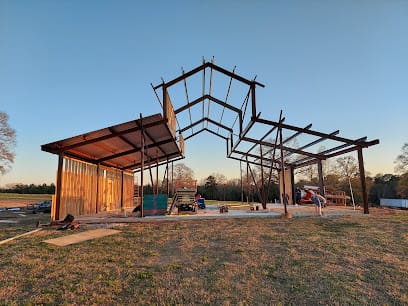 Photo: ETEX steel building
Can you get a loan to build a barndominium yourself?
It is the hardest part of the project. FHA's handbook allows a borrower to act as the general contractor on a construction-to-permanent loan only if the borrower is also a licensed general contractor, and lenders can refuse even then. Conventional construction lenders commonly want a licensed builder on the contract.
What works in practice:
- Local banks and farm credit lenders. They make portfolio loans and can accept an owner-builder with a detailed budget, a schedule, subcontractor bids, and some construction track record.
- Land equity. Owned land can count toward your down payment.
- Cash for the shell, finance later. Some owner-builders pay cash for an erected shell, finish in phases, and refinance once the home has a certificate of occupancy.
Our construction loan guide covers draw schedules and approval odds, and our financing overview compares loan types.
How long does a DIY barndominium take?
Longer than you think. Builder-run projects take 6 to 14 months from drawings to move-in, and our stage-by-stage timeline shows where the weeks go. Owner-builders should plan on 12 months or more, because the calendar breaks in two places: waiting for subcontractors who have better-paying customers, and interior work done on nights and weekends.
Two scheduling rules help. Order long-lead items like the steel package and cabinets early, since steel alone can take 6 to 16 weeks. And book your inspectors and trades in sequence before you need them, so a no-show plumber does not stall the electrician, the insulation, and the drywall behind him. The most common DIY failures, from blown budgets to skipped insulation, are in our mistakes and regrets roundup.
Who sells shells to owner-builders?
Most DIY builds start with a shell. 188 of the 333 builders in our directory are listed as shell or shell-plus-turnkey, and many will erect a building and hand you the keys to finish it. A few listed shell builders in the states above:
- Sawyer Metal, Tyler, Texas (4.5, 53 reviews)
- Barndos Direct, Jamestown, Tennessee (4.8, 24 reviews)
- Tailor-Made Structures, LLC, Plant City, Florida (5.0, 24 reviews)
- Ridgeline Construction LLC, Hiddenite, North Carolina (5.0, 17 reviews)
- DIY Pole Barns, Arcanum, Ohio (4.5, 87 reviews)
Ratings are public review averages as captured in our directory. Ask each one exactly what the shell includes: slab or no slab, doors and windows, insulation, and whether they will stamp the drawings as a residence.
Our take
Build it yourself, but pick your battles. Being your own general contractor is where the reliable money is, and it takes organization more than skill. Finish trades are where your hours turn into savings. Concrete, structure, septic, and refrigerant are where amateurs lose money and sometimes get hurt, so hire them.
Before you commit, answer three questions honestly. Can you get financing as an owner-builder in your county? Can you give this a year of evenings and weekends? And does your state's owner-builder rule fit your plans to live there? If all three are yes, a DIY barndominium is one of the few ways left to build a custom home for meaningfully less than market price.
Price your shell and your finish-out
Get 2 or 3 shell bids and 2 or 3 turnkey bids on the same plan, so you know exactly what your labor is worth before you commit to doing it. Compare them against the cost table for your state, and request builder quotes to get matched with shell and turnkey builders in our directory.
Common questions
Can I build a barndominium myself?
In many states, yes, including Texas, Florida, North Carolina, and Tennessee. Owner-builder exemptions let you act as your own contractor on a home you will live in, usually with conditions such as occupying it for 12 months or not building another house within 2 years. You still need permits and inspections, and some cities require licensed trades for electrical, plumbing, or HVAC work.
How much can you save building a barndominium yourself?
Acting as your own general contractor captures the builder's margin. NAHB's 2024 survey puts average builder profit at 11.0 percent and overhead at 5.7 percent of the sales price. On a 2,000 sqft home at our national turnkey medians of $290,000 to $430,000, that is roughly $30,000 to $70,000. Doing trade work yourself adds more, at the cost of a year or more of your time.
What is the cheapest way to build a barndominium?
Build smaller, keep a simple rectangle with a single roofline, buy an erected shell from a local builder, and act as your own general contractor for the finish-out. Do the labor-heavy, low-risk trades yourself: interior framing, insulation batts, paint, flooring, trim. Pay cash for the shell if you can, since owner-builder construction loans are hard to find.
How big of a barndominium can I build for $200,000?
At Texas turnkey rates of $140 to $210 per sqft, $200,000 buys about 950 to 1,430 finished square feet through a builder. Acting as your own general contractor and removing an 11 to 17 percent builder margin stretches that to roughly 1,070 to 1,700 square feet. Land, well, septic, and site work come on top.
Will a bank finance an owner-builder barndominium?
Some will, many will not. FHA's handbook lets a borrower act as general contractor on a construction-to-permanent loan only if the borrower is a licensed general contractor, and many lenders add stricter rules on top. Local banks and farm credit lenders are more flexible, but expect to show a detailed budget, a schedule, and construction experience.
How long does it take to build a barndominium yourself?
Plan on 12 months or more. Builder-run projects take 6 to 14 months from drawings to move-in, and owner-builders lose time in the gaps between trades and on nights-and-weekends labor. A shell goes up in weeks. The interior finish is where DIY builds stretch.
Ready to price your build?
Fill out one form. We send it to builders who work in your area. It costs nothing.
Request quotes