Resources / Guides
Barndominium Pros and Cons After the Hype: 14 Owners Weigh In
Updated July 2026 · Barndo Finder research
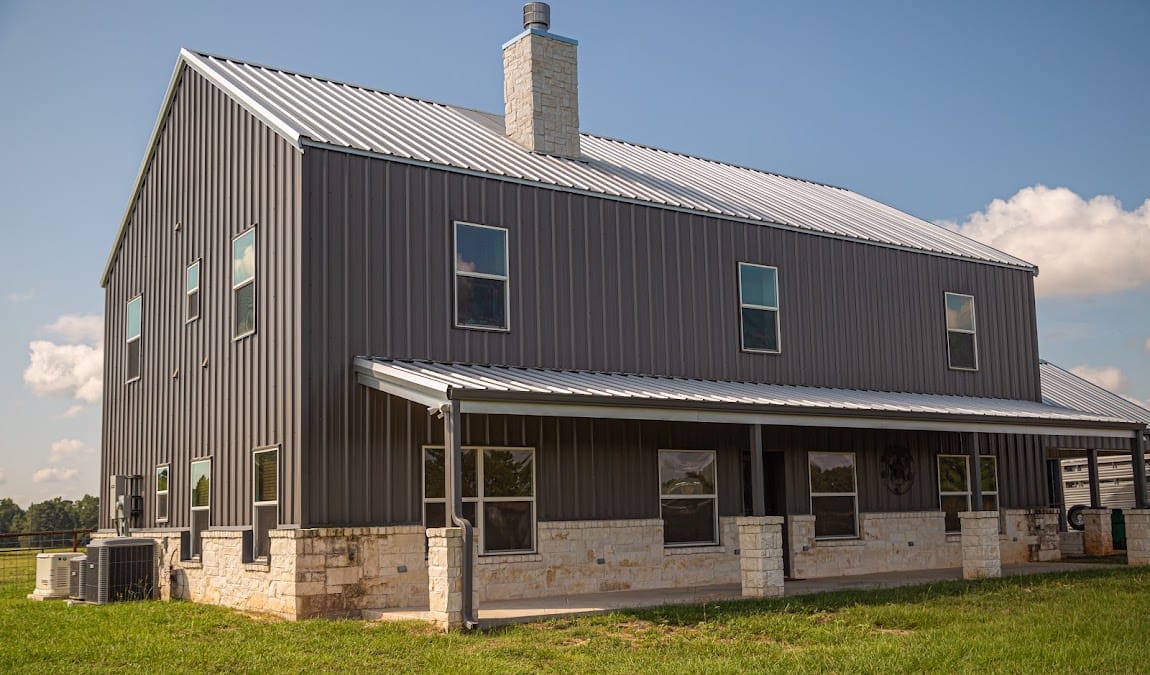
Barndominiums are still cheaper than stick-built homes in most markets, but the gap is smaller than the marketing says, and the real problems show up in financing, insurance, and resale, not construction. We went through public owner discussions on Reddit's r/Barndominiums, building forums, and appraisal reports and grouped what owners keep repeating into 14 points: 7 things they like and 7 they warn about. Here is the honest version, with numbers.
Key takeaways
- Finished barndominiums run about $125 to 320 per square foot turnkey nationally. Any turnkey quote under $100 per square foot is almost always a shell quote wearing a costume.
- The steel shell is only about 25 percent of total project cost. Insulation, plumbing, HVAC, drywall, and finishes eat the other 75 percent.
- Financing is the most common owner complaint. Many conventional lenders will not touch a barndo, and appraisers struggle to find comps.
- Resale data is better than the skeptics claim in rural markets. One appraisal group documented 20 to 30 percent appreciation over 5 years or less in its case studies.
- Rain noise and condensation are solvable with spray foam and a real ceiling. Owners who skipped insulation to save money regret it.
- Budget for land, septic, well, and site work as separate lines. That is where most blown budgets actually blow.
Are barndominiums worth it after the hype?
Yes, for the right buyer in the right county, and that qualifier does a lot of work. A well-built barndo on rural acreage is durable, cheap to maintain, and fast to erect. The same building in a suburban market with skeptical appraisers and a thin buyer pool can cost you at closing and again at resale. The building type did not fail after the 2020 to 2023 hype cycle. The lazy math around it did.
Our directory tracks 335 barndominium-specific builders across 40 states, and the pattern in quotes is consistent: the buildings perform, the budgets people walk in with do not. Start with the full numbers on our cost page before you fall for a Pinterest floor plan.
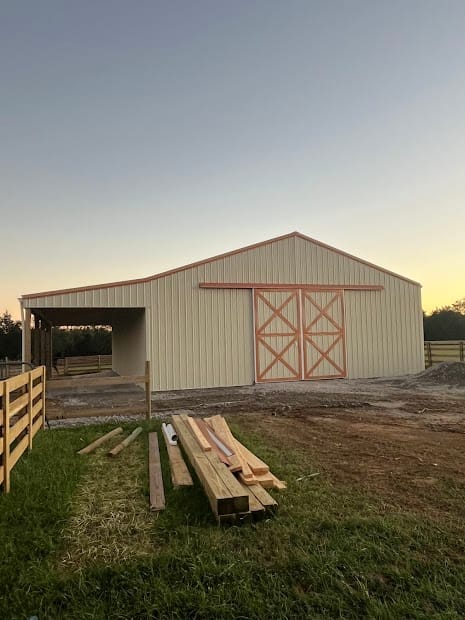 Photo: The Barn Store
What do owners like after living in one?
The 7 positives owners repeat most are cost, speed, durability, open spans, low maintenance, storage, and energy performance when insulated right.
- Lower build cost. Bankrate puts a 2,000 square foot barndo around $130,000 to 320,000 against roughly $485,000 for many traditional homes. The savings are real, just not the 50 percent some kit sellers imply. Our barndominium vs traditional house comparison breaks the gap down line by line.
- Fast shell erection. The steel frame and skin go up in 1 to 3 weeks. Owners consistently mention how motivating it is to see a dried-in building in under a month.
- Durability. Metal siding and roofing shrug off hail, rot, and termites that eat wood-framed homes.
- Clear-span interiors. No load-bearing interior walls means owners reconfigure rooms later without structural work.
- Low exterior maintenance. No painting cycles, no rotting fascia. Owners with 5-plus years in report near-zero exterior spend.
- Shop and storage space. Attaching a 1,200 square foot shop costs a fraction of what that space costs in a conventional build.
- Energy efficiency, conditionally. Spray-foamed barndos with tight envelopes post low utility bills. This one flips to a con when the insulation is cheap.
What do owners complain about?
The 7 complaints that come up over and over are financing, appraisals, insurance, resale uncertainty, noise, condensation, and budget creep. Notice that only 3 of those are about the building itself. We collect the worst cases in our roundup of owner mistakes and regrets.
- Financing. Most big banks will not finance a barndo through standard Fannie Mae or Freddie Mac programs. Owners report going through rural banks, credit unions, Farm Credit lenders, USDA construction loans, or portfolio lenders instead. Our guide to barndominium construction loans covers rates, draw schedules, and approval odds, and the financing overview lists lender types by state.
- Appraisals. Lenders want 3 comparable sales within a few miles in the last 6 months. In counties without a barndo track record, appraisals come in below cost to build, and owners have had to bring extra cash to closing.
- Insurance. Some carriers decline metal homes or quote higher premiums. In coastal wind zones, owners report cosmetic damage exclusions on metal panels and getting pushed into state wind pools. We cover which carriers actually write these policies in our barndominium insurance guide.
- Resale uncertainty. In suburban markets, the buyer pool is thinner and negotiation is tougher. Rural markets look much better, more on that below.
- Rain noise. Corrugated metal roofs amplify rain. Owners who went with open ceilings and minimal insulation say heavy storms are genuinely loud. Closed-cell spray foam and a gypsum ceiling fix it.
- Condensation. Uninsulated or badly vented metal buildings sweat. This is a known failure mode in cheap shell conversions, not a mystery.
- Budget creep. The shell is about 25 percent of the job. Owners who budgeted off the kit price got ambushed by the other 75 percent: insulation, drywall, plumbing, HVAC, septic, well, driveway, and utility runs.
What does a barndominium actually cost per square foot?
Nationally, plan on $125 to 320 per square foot turnkey, or $35 to 95 per square foot for a shell only. These are Barndo Finder directory estimates pending verified quotes, and the spread by state is wide. If you are deciding between routes, our shell vs turnkey breakdown shows what each path really costs.
| State | Turnkey $/sqft (est.) | Shell $/sqft (est.) |
|---|---|---|
| Texas | 140 to 210 | 40 to 70 |
| Oklahoma | 130 to 195 | 35 to 65 |
| Tennessee | 140 to 210 | 40 to 70 |
| North Carolina | 150 to 220 | 45 to 75 |
| Alabama | 125 to 190 | 35 to 60 |
| Florida | 160 to 240 | 50 to 85 |
| California | 180 to 270 | 60 to 95 |
Here is our stance, and we will keep repeating it: a turnkey quote under $100 per square foot is usually a shell quote in disguise. Kit sellers advertise $20 to 50 per square foot and let you assume the rest is cheap. It is not. We track what each supplier actually charges in our kit price comparison. Industry breakdowns and our own quote data agree the shell is roughly a quarter of the finished cost. A real budget also carries separate lines for land, septic or sewer connection, a well or water tap, electrical service, and site work. Those lines routinely add $40,000 to $100,000 on rural ground, and no kit brochure mentions them.
Timelines run 6 to 12 months from planning to move-in. Kit lead times alone can run 8 to 16 weeks, and interior finishing takes 3 to 6 months after the shell is dried in.
Do barndominiums hold their value?
In rural markets with comparable sales nearby, yes, and the data is better than the internet skepticism suggests. KW Appraisal Group documented 20 to 30 percent appreciation over 5 years or less across its case studies, including an Alabama barndo that went from $205,000 to $270,000 in 2 years. In Hood County, Texas, local brokerage data shows well-built barndos selling in 60 to 90 days, close to site-built homes in the same areas. We keep a running file on resale value and appraisals as new sales data comes in.
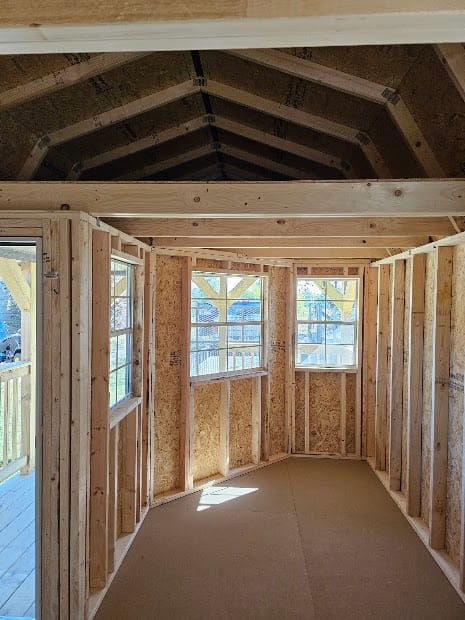 Photo: Storage Nuts - Childersburg
The honest caveat: those numbers come from markets where barndos are normal. Build one in a subdivision-adjacent suburb where the appraiser has never seen one, and you inherit the comps problem at purchase and again at sale. Location risk is the real resale risk, not the building.
Who should build a barndominium, and who shouldn't?
Build one if you own or are buying rural land, want shop space attached to living space, and can finance through a rural lender. You will get more building for the money than stick framing offers, and the maintenance profile over 10 years is hard to beat.
Look elsewhere if you need conventional financing at the lowest possible rate, you are building in a suburban or HOA-adjacent area, or your total budget only works if the kit-price math is true. Also think hard in hurricane-exposed coastal zones, where insurance exclusions on metal panels are a documented and recurring owner complaint.
And whichever camp you are in, vet the builder. The barndo boom attracted underqualified operators, and consumer reporting has covered buyers burned by bad ones. Check licensing, insurance, and references, and compare more than one bid from our builder directory.
Get real numbers, not brochure numbers
The pros and cons argument gets settled by quotes, not blog posts, including this one. Pull 2 or 3 itemized bids from builders in your state and check that each one carries lines for foundation, insulation, mechanicals, septic, and site work, not just the shell. If a bid is missing those lines, that is your answer about the bidder. Start with our analysis of whether barndominiums are actually cheaper, then request quotes from vetted builders near your land. It costs nothing and it turns this whole debate into arithmetic.
Common questions
What are the main disadvantages of a barndominium?
The 4 biggest disadvantages are financing, appraisals, insurance, and resale in the wrong location. Many conventional lenders will not write a standard mortgage on a metal home, and appraisers often struggle to find comparable sales. Some insurers quote higher premiums or add cosmetic damage exclusions for metal panels. In a suburban market with few barndos, your buyer pool shrinks.
Is a barndominium really cheaper than a regular house?
Usually yes, but by less than the marketing claims. A finished barndominium typically runs $125 to $320 per square foot turnkey depending on the state, against roughly $150 to $300 for stick-built in the same markets. The shell is only about 25 percent of total cost. The savings shrink fast once you add land, septic, a well, and site work.
Do barndominiums hold their value?
In rural markets with other barndos nearby, the data looks fine. One appraisal group documented 20 to 30 percent appreciation over 5 years or less in its case studies, and Hood County, Texas data shows days on market of 60 to 90, close to site-built homes. In suburbs with no comparable sales, appraisals come in low and resale takes longer.
Are barndominiums loud when it rains?
An uninsulated metal roof is loud, and corrugated panels amplify the sound. A properly built barndo is not. Closed-cell spray foam, a gypsum ceiling, or a finished attic space brings rain noise down to normal house levels. Budget for this up front because it is much cheaper to fix during the build than after.
Is it hard to get a loan for a barndominium?
Harder than for a stick-built house, but not impossible. Most big banks will not finance one through standard Fannie Mae or Freddie Mac programs. Owners have the best luck with rural banks, credit unions, Farm Credit lenders, USDA construction loans, and portfolio lenders. Get a lender lined up before you sign a builder contract.
How long does it take to build a barndominium?
Plan on 6 to 12 months from planning to move-in. The steel shell goes up in 1 to 3 weeks, which is the part the marketing photos show. Interior finishing takes another 3 to 6 months, and kit lead times alone can run 8 to 16 weeks before anything arrives on site.
Ready to price your build?
Fill out one form. We send it to builders who work in your area. It costs nothing.
Request quotes