Builders / Kansas
Barndominium builders in Kansas
Planning a build? Read our guide to building a barndominium in Kansas.
Builders tracked
Barndominium-specific, deduplicated
Turnkey
Per sqft, directory estimate
Shell only
Per sqft, directory estimate
Permits and codes in Kansas
Kansas has no statewide residential building code and no state general contractor license. Everything is local: Johnson County and the Wichita metro enforce the IRC and run their own contractor licensing programs with online lookup, while most rural counties west of Wichita have no building department and issue nothing beyond septic and road entrance permits. Where no county program exists there is no license to verify, so check insurance certificates and past builds. Engineering is wind driven: 115 mph design speeds, tornado exposure, and gust ratings on tall open-wall buildings. Frost depth runs 30-36 inches. Septic permits come from county health or environmental departments under Kansas Department of Health and Environment rules, with minimum lot sizes common on rural parcels.
Financing a barndominium in Kansas
4 Farm Credit associations split the state: Frontier Farm Credit in eastern Kansas, American AgCredit through the center, High Plains Farm Credit and Farm Credit of Western Kansas out west. All lend on rural homes and acreage. Small-town banks also close these loans routinely. Comps are scarce west of Salina, so appraisals run conservative. Expect 15-20 percent down.
The list (6)
Sorted by review count. Featured listings are labeled.


Photos pending


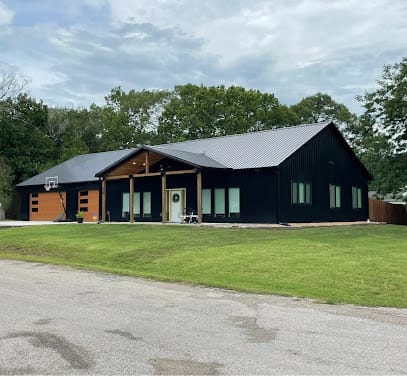
Overbrook, KS
Ad space available
Your barndo business can be here
Builders, lenders, kit makers and suppliers: put your company in front of people planning a barndominium in Kansas.
Get the deck and pricingBuilding a barndominium in Kansas
A finished barndominium in Kansas runs about $125 to $190 per square foot turnkey, or $35 to $65 per square foot for a shell, by our directory estimates. That puts a 2,400 square foot home at roughly $300,000 to $456,000 before land and site work, $20 to $25 a foot under the national turnkey median in our data. We list 6 Kansas builders, so most buyers will also look across state lines.
Kansas is mostly a county-by-county state. There is no statewide residential code, no state general contractor license, and outside the Kansas City and Wichita metros many counties issue no building permits. What the state does control is septic, through minimum standards the counties adopt. The engineering drivers are wind and tornadoes across the whole state and shrink-swell clay in the northeast.
Land, zoning and deed restrictions
Many Kansas counties zone their unincorporated land; others do not. Where zoning exists, agriculture is largely exempt. Douglas County's zoning code, citing K.S.A. 19-2908, exempts land and structures used strictly for agricultural purposes, but even exempt buildings must meet road setbacks and floodplain rules. A house is not used strictly for agriculture, so a barndo goes through the normal residential permit in a zoned county.
Before you buy, ask the county three things: is the parcel zoned and does the district allow a new home, what is the minimum lot size for a home on a septic system, and is there a road setback that pushes the building back from a section-line road. In Johnson County and other metro-edge areas, subdivision covenants can bar metal siding, so read them before you make an offer.
Codes, engineering and climate
Kansas has no statewide residential building code. Counties and cities adopt codes by reference under K.S.A. 12-3301. Leavenworth County, for example, applies adopted residential and commercial codes to new construction in its unincorporated area except Easton and Kickapoo townships, and took up an updated code resolution in November 2025. A 2016 Kansas Corporation Commission survey listed Allen, Anderson, Atchison, Barber and Barton counties, among many others, with "No building codes at this time." Call your county before you assume either way; codes change.
Where no county code exists, nobody inspects the house. Your lender and insurer will still expect IRC-level construction, so budget for an engineer and third-party inspections at footings, framing and mechanicals.
Contractor rules follow the same pattern. There is no state general contractor license. Roofing contractors must hold a Kansas Attorney General roofing registration to work for a fee, with an exemption since 2015 for general contractors who meet set criteria. In Johnson County, cities such as Overland Park require a Johnson County contractor's license before issuing a building permit. Owner-builders have room in some counties: Douglas County lets homeowners do their own electrical, plumbing and mechanical work, with diagrams for review, but requires a licensed master to finish the work if an inspection fails twice.
The engineering drivers are specific to Kansas:
- Wind and tornadoes. Open ground means high wind exposure, and a tall post-frame building with big door openings needs engineered bracing and uplift connections. FEMA's safe room guidance covers in-home shelters; see also our storm safety guide.
- Expansive clay. Northeast Kansas's regional hazard mitigation plan says all of the region has soils with slight to moderate swelling potential, with building settlement noted during droughts. A soils test before the slab design is cheap insurance; our foundation guide covers slab options.
- Frost. The Johnson County Building Officials Association sets residential frost footing depth at no less than 36 inches. Rural counties without a code leave the number to your engineer.
What a barndominium costs in Kansas
These figures come from our state table. They are Barndo Finder directory estimates, not transaction data, and exclude land, well, septic, site work and the driveway.
| Size | Shell ($35 to $65/sqft) | Turnkey ($125 to $190/sqft) |
|---|---|---|
| 1,500 sq ft | $52,500 to $97,500 | $187,500 to $285,000 |
| 2,400 sq ft | $84,000 to $156,000 | $300,000 to $456,000 |
| 3,000 sq ft | $105,000 to $195,000 | $375,000 to $570,000 |
Kansas has the lowest turnkey range of the Midwest states in our table, $20 to $25 a foot under the national median ($145 to $215), and its shell range sits $10 under ($45 to $75). Distance eats into that in the west: when the nearest crew is two hours away, mobilization, concrete delivery and inspection trips add cost that a $/sqft number hides. Ask every bidder for a line item on travel.
Half of our Kansas listings carry Wick Buildings kits, so you will see post-frame quotes more often than red iron. Our shell vs turnkey guide and red iron kits guide help you compare the two systems, and every state is on our cost page.
Financing and insurance in Kansas
Kansas has four Farm Credit associations, more than any other state in this group:
| Association | Territory | Notes |
|---|---|---|
| Frontier Farm Credit | Eastern Kansas | Rural home loans; based in Manhattan |
| High Plains Farm Credit | Central and western Kansas | Rural 1st construction loans; says it finances most barndominium builds like traditional construction loans |
| Farm Credit of Western Kansas | Cheyenne, Rawlins, Decatur, Sherman, Thomas, Sheridan, Wallace, Logan and Gove counties | Based in Colby |
| American AgCredit | Kansas, plus six other states | Rural home loans |
Small-town banks also write construction loans, often on land they already finance. Comparable sales are thin in the west, so expect a conservative appraisal and bring equity. Our construction loan guide and financing page explain the process, and our insurance guide covers how carriers rate wind exposure on metal and post-frame homes.
Utilities, well and septic
Septic is where Kansas sets a statewide floor for the house itself. KDHE's Bulletin 4-2 sets minimum standards for onsite wastewater systems, and county sanitary codes, usually run by the county health department, handle plan approval, construction permits and variances. If there is no local code, landowners must still comply with K.A.R. 28-5-6 to 9 and the bulletin. Counties can go further; Thomas County's sanitary code adopts Bulletin 4-2 and adds its own requirements. Ask whether your county's sanitary code sets a minimum lot size for a septic system before you split land.
Water can be the harder question. Ask the county whether a rural water district serves the parcel before you price a well, and in the west, ask about well depth on neighboring homes. Budget with published ranges of $3,500 to $8,500 and up for septic and $10,000 to $30,000 for a drilled well from our build process guide, then get local bids.
A realistic timeline in Kansas
Plan on 12 to 18 months from design to move-in, the range in our build timeline guide.
- Before you buy: county code status, zoning and lot size rules, septic soils, water source, and a soils test where clay is likely.
- Pre-construction: 2 to 5 months. Wind and foundation engineering, the loan, any county permit, and the septic permit.
- Construction: 6 to 12 months. High wind days stall roof and wall sheeting on a tall shell, so build slack into the schedule.
Builders we list in Kansas
We list 6 barndominium builders in Kansas, a short list. Here is every one. Ratings are public Google reviews at the time we indexed them.
| Region | Builder | City | Build type | Rating |
|---|---|---|---|---|
| Northwest | Vap Construction, Inc | Atwood | Shell | 4.6 (33 reviews) |
| South Central | LaClef Construction - Wick Buildings | Leon | Turnkey, Wick kits | 5.0 (7 reviews) |
| South Central | Suburban Buildings Inc | Andover | Shell and turnkey | 4.3 (6 reviews) |
| South Central | Drechsler Construction LLC - Wick Buildings | El Dorado | Shell, Wick kits | 5.0 (3 reviews) |
| Northeast | Craun Construction | Basehor | Turnkey, Wick kits | 1.0 (1 review) |
| Northeast | Mast Builders Llc | Overbrook | Not listed | 5.0 (1 review) |
Photo: Mast Builders Llc
Three of the six are around Wichita, and only Vap Construction is in the west. Western Kansas buyers should also check Nebraska and Colorado builders; eastern Kansas buyers can add Missouri and Oklahoma listings.
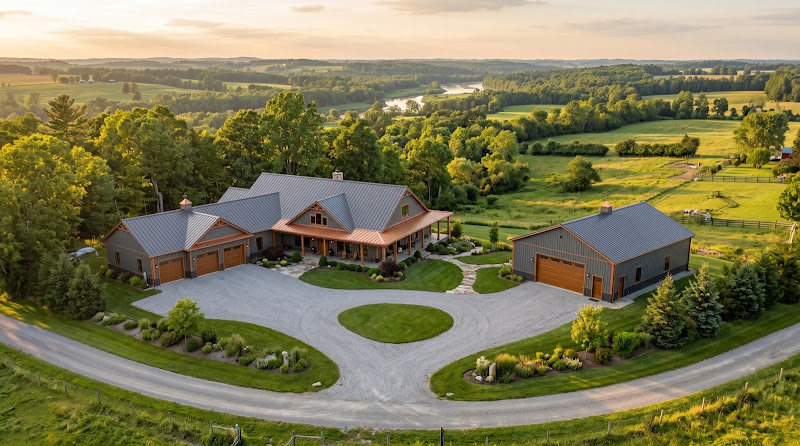
Photo: Drechsler Construction LLC - Wick Buildings
When you are ready, request quotes from builders who serve your Kansas county, and check each one against our cost table.
Updated October 2026 · Barndo Finder research
Building in Kansas: common questions
Do you need a permit to build a barndominium in Kansas?
It depends on the county. Kansas has no statewide residential building code. Johnson County cities, Leavenworth County and other urban areas enforce adopted codes, while a 2016 Kansas Corporation Commission survey listed many rural counties with no building codes at all. Almost everywhere you still need a septic permit under the county sanitary code and any county zoning approval.
How much does a barndominium cost in Kansas?
Our directory estimate for Kansas is $125 to $190 per square foot turnkey and $35 to $65 per square foot for a shell, the lowest turnkey range of the Midwest states in our table. A 2,400 square foot turnkey home works out to about $300,000 to $456,000 before land, well, septic and site work. Those are estimates from our state table, not quotes.
Can you get a loan for a barndominium in Kansas?
Yes. Frontier Farm Credit serves eastern Kansas, High Plains Farm Credit serves central and western Kansas and says its Rural 1st program finances most barndominium builds like traditional construction loans, and Farm Credit of Western Kansas covers nine northwest counties. American AgCredit also lends in Kansas, and small-town banks write construction loans.
Does Kansas license contractors?
Not general contractors at the state level. Roofing contractors must register with the Kansas Attorney General, and local programs such as Johnson County's contractor licensing apply in some areas: Overland Park, for one, will not issue a building permit without a Johnson County license. In rural counties without a program, check insurance and past work yourself.
Do Kansas barndominiums need a storm shelter?
No state rule requires one in a private home, but Kansas sits in tornado country and a reinforced safe room is worth pricing into the plan. FEMA publishes safe room design criteria in FEMA P-320 and P-361, and prefabricated units are tested to ICC 500. A slab-on-grade barndo can include an interior safe room or a separate below-grade shelter.