Builders / Nebraska
Barndominium builders in Nebraska
Planning a build? Read our guide to building a barndominium in Nebraska.
Builders tracked
Barndominium-specific, deduplicated
Turnkey
Per sqft, directory estimate
Shell only
Per sqft, directory estimate
Permits and codes in Nebraska
Nebraska adopted the 2018 IRC as the Nebraska State Building Code, but enforcement is local, and construction on a farm is exempt. Cities and counties can amend it or adopt newer editions, and many rural counties have no building department, so the state code applies on paper with nobody inspecting. Contractors must register with the Nebraska Department of Labor under the Contractor Registration Act, searchable at dol.nebraska.gov. Registration proves insurance and tax status, not competence, so vet the builder separately. Design drivers: 115 mph wind with true exposure C on open ground, 25-30 psf snow in the north, 42 inch frost depth. Septic permits run through the Nebraska Department of Water, Energy, and Environment, which certifies installers and requires a soil evaluation for new systems.
Financing a barndominium in Nebraska
Farm Credit Services of America, headquartered in Omaha, covers all of Nebraska and is the most experienced rural construction lender in the state. Community banks across the state also close construction-to-perm loans, especially where they already hold the land note. Comps exist in the eastern third; west of Kearney they thin out and appraisals get conservative. Expect 15-20 percent down, and paid-off land typically satisfies most of it.
The list (6)
Sorted by review count. Featured listings are labeled.
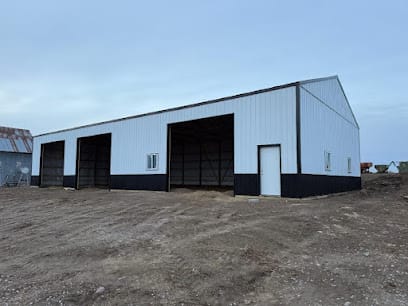
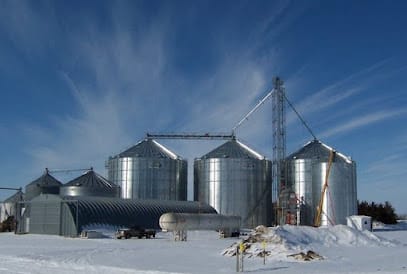
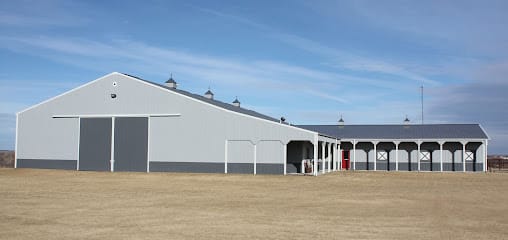
Ad space available
Your barndo business can be here
Builders, lenders, kit makers and suppliers: put your company in front of people planning a barndominium in Nebraska.
Get the deck and pricingBuilding a barndominium in Nebraska
A finished barndominium in Nebraska runs about $130 to $200 per square foot turnkey, or $40 to $70 per square foot for a shell, by our directory estimates. That puts a 2,400 square foot home at roughly $312,000 to $480,000 before land and site work, under the national medians in our data. We list 6 Nebraska builders, four of them turnkey.
Nebraska sits between its neighbors on regulation. Unlike Kansas or Missouri, it has a state building code that local codes must track. Unlike Indiana, it does not make every county enforce that code, and farm construction is carved out. Where the state does reach every new home is electrical inspection, septic certification and the energy code.
Land, zoning and deed restrictions
County zoning in Nebraska exempts farm buildings from building permits. Neb. Rev. Stat. 23-114.04 has county boards require permits before construction of any "nonfarm building or structure," and in Premium Farms v. County of Holt the court read that word as exempting farm buildings from county building permits, though not from other zoning rules such as road setbacks. A house on an acreage is a nonfarm building. Expect a zoning permit and setbacks like any other rural home.
Before you buy, ask the county zoning administrator whether the district allows a new dwelling on your parcel size, and whether there are density limits on homes in agricultural districts. Around Omaha and Lincoln, acreage subdivisions often have covenants on siding, roof pitch and outbuildings; read them before you commit to a steel exterior.
Codes, engineering and climate
Nebraska has a real state code. Under Neb. Rev. Stat. 71-6403, the state building code adopts the 2018 International Residential Code, except section R313 (fire sprinklers) and chapters 25 through 33 (plumbing, mechanical and electrical), plus the 2018 Uniform Plumbing Code and state radon-resistant construction standards.
Enforcement stays local. Section 71-6406 lets a county, city or village enforce its own code only if it conforms generally to the state code, and a local code that uses an older edition does not conform. If a local government does not adopt a code within two years after a state update, the state code applies there, "except that such code shall not apply to construction on a farm or for farm purposes." The state code applies on paper in those places, but a county without a building department still does not inspect.
Two statewide programs do reach your house:
- Energy code. The Department of Water, Energy, and Environment says the 2018 IECC was adopted statewide on July 1, 2020 for new one- and two-family homes. Local codes may differ only if they do not increase energy use. Our insulation guide covers metal-building envelopes.
- Electrical inspection. Under the State Electrical Act, work in state jurisdiction needs an inspection request at or before the start of work, a rough-in inspection before wiring is covered, and inspection of all new single-family wiring when new service equipment goes in. Book the inspector early; itineraries are set the Friday before.
On structure, Nebraska's open ground drives the design. Wind exposure on a hilltop acreage is higher than in a wooded subdivision, which changes post spacing, bracing and uplift connections on a tall post-frame wall. Snow load and frost depth come from your county or engineer. Tornadoes are a statewide risk; FEMA's safe room guidance and our storm safety guide cover in-home shelters.
What a barndominium costs in Nebraska
These figures come from our state table. They are Barndo Finder directory estimates, not transaction data, and exclude land, well, septic, site work and the driveway.
| Size | Shell ($40 to $70/sqft) | Turnkey ($130 to $200/sqft) |
|---|---|---|
| 1,500 sq ft | $60,000 to $105,000 | $195,000 to $300,000 |
| 2,400 sq ft | $96,000 to $168,000 | $312,000 to $480,000 |
| 3,000 sq ft | $120,000 to $210,000 | $390,000 to $600,000 |
Nebraska's ranges match Iowa's in our table: shell $5 a foot under the national median ($45 to $75) and turnkey $15 under ($145 to $215). The labor pool is different. Nebraska has about 700 Amish residents, per the Young Center, against roughly 68,000 in Indiana, so the low-cost Amish shell crews common farther east are rare here. Four of our six Nebraska listings sell turnkey, and three carry Wick kits.
In the Sandhills and Panhandle, the nearest crew can be far from your site, so ask for travel and concrete delivery as separate line items. Our shell vs turnkey guide explains what each route includes, and the full state table is on our cost page.
Financing and insurance in Nebraska
Farm Credit Services of America, headquartered in Omaha, is the only Farm Credit association the Farm Credit Council lists for Nebraska. It offers rural home loans, and its site names barndominiums among the properties it finances. Community banks also close construction-to-permanent loans, especially where they already hold the land note. Our construction loan guide and financing page cover draws and approvals.
In sparsely settled counties there may be few comparable sales, so appraisals can come in conservative; our appraisal guide explains why. Insurers want to know the wind design and construction type, and a state electrical inspection record helps. See our insurance guide.
Check registration before you sign. Nebraska has no general contractor license, but the Contractor Registration Act requires contractors and subcontractors to register with the Department of Labor before doing construction work, and a contractor paying an unregistered subcontractor must withhold 5 percent of the payment. The database is searchable through the Department of Labor.
Utilities, well and septic
Septic in Nebraska is a state-certified trade. Under Title 124, the Department of Water, Energy, and Environment requires anyone doing percolation testing, installation, repair, pumping or inspection to be certified unless they are a licensed professional engineer or registered environmental health specialist, and a qualified professional must be on site while work is done. Every new system must be registered with the department, with late fees if registration comes more than 45 days after completion, and the installer gives the owner a copy. Keep it; a buyer's lender will ask.
Book the site evaluation before you place the house. It decides the system type and the setback area, and on a small acreage it can decide whether the shop fits. Budget with published ranges of $3,500 to $8,500 and up for septic and $10,000 to $30,000 for a drilled well from our build process guide, then get local bids.
A realistic timeline in Nebraska
Plan on 12 to 18 months from design to move-in, the range in our build timeline guide.
- Before you buy: zoning district and density rules, covenants, septic site evaluation, and water source.
- Pre-construction: 3 to 5 months. Wind and snow engineering, the loan, county permits where required, and the electrical inspection request.
- Construction: 6 to 12 months. Set posts or pour after the frost leaves, close in before winter, and finish inside through the cold months.
Builders we list in Nebraska
We list 6 barndominium builders in Nebraska, a short list for a state this wide. Here is every one. Ratings are public Google reviews at the time we indexed them.
| Region | Builder | City | Build type | Rating |
|---|---|---|---|---|
| Omaha | Davis Custom Homes | Omaha | Turnkey | 2.3 (9 reviews) |
| Southwest | Martin Building Systems | Madrid | Turnkey, Wick kits | 5.0 (6 reviews) |
| Northeast | Doescher Construction, Inc. | West Point | Turnkey, Wick kits | 3.0 (2 reviews) |
| East Central | Patriot Buildings | Columbus | Shell | 5.0 (1 review) |
| Southeast | Heartland Sales LLC | Tecumseh | Turnkey, Wick kits | Not yet rated |
| North Central | North Central Construction | O'Neill | Shell and turnkey | Not yet rated |
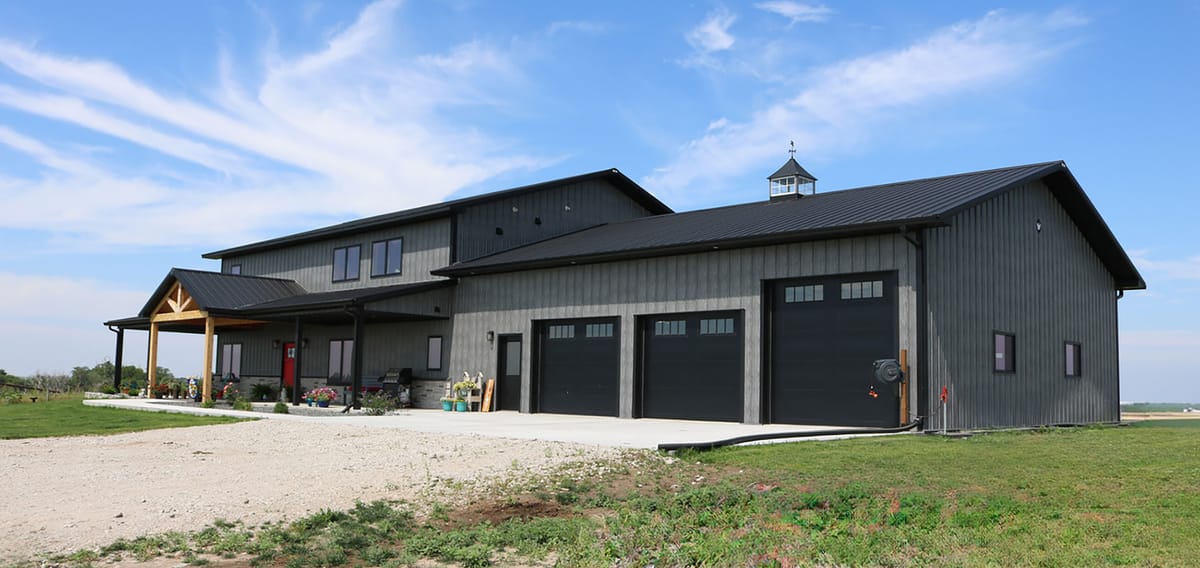
Photo: Martin Building Systems
Review counts are small, so ask each builder for addresses of finished homes and the names of their engineer and electrician. Eastern Nebraska buyers can add Iowa builders, and southern Nebraska buyers can look at Kansas listings.
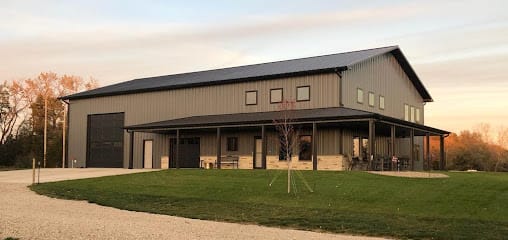
Photo: Doescher Construction, Inc.
When you are ready, request quotes from builders who serve your Nebraska county, and check each one against our cost table.
Updated October 2026 · Barndo Finder research
Building in Nebraska: common questions
Does Nebraska have a statewide building code?
Yes. The Nebraska state building code adopts the 2018 IRC, without the fire sprinkler section and the plumbing, mechanical and electrical chapters. Counties and cities may enforce their own code if it conforms generally. If a local government does not adopt one within two years of a state update, the state code applies there, but not to construction on a farm or for farm purposes.
How much does a barndominium cost in Nebraska?
Our directory estimate for Nebraska is $130 to $200 per square foot turnkey and $40 to $70 per square foot for a shell, below the national medians in our data. A 2,400 square foot turnkey home works out to about $312,000 to $480,000 before land, well, septic and site work. Those are estimates from our state table, not quotes.
Who installs and approves septic systems in Nebraska?
The Nebraska Department of Water, Energy, and Environment regulates onsite systems under Title 124. Anyone doing percolation tests, installation, repair or inspection must be state-certified unless they are a professional engineer or registered environmental health specialist, and the professional must register each new system with the department, with late fees after 45 days.
Do Nebraska contractors need a license?
There is no state general contractor license, but contractors and subcontractors must register with the Nebraska Department of Labor under the Contractor Registration Act before doing construction work. A contractor who pays an unregistered subcontractor must withhold 5 percent of the payment. Registration covers tax and insurance status, not skill.
Can you get a loan for a barndominium in Nebraska?
Yes. Farm Credit Services of America, based in Omaha, is the Farm Credit association listed for Nebraska and markets rural home loans that include barndominiums. Community banks across the state also write construction-to-permanent loans, often where they already hold the land note.