Builders / Colorado
Barndominium builders in Colorado
Planning a build? Read our guide to building a barndominium in Colorado.
Builders tracked
Barndominium-specific, deduplicated
Turnkey
Per sqft, directory estimate
Shell only
Per sqft, directory estimate
Permits and codes in Colorado
Colorado has no statewide building code. Each county and city adopts its own, so front range jurisdictions run a current IRC while some eastern plains counties have minimal residential enforcement. HB22-1362 forces jurisdictions to adopt a recent energy code whenever they update. There is no state general contractor license: GCs license city by city, Denver being the strictest, while electricians and plumbers are licensed statewide through DORA and verifiable online. Engineering drivers are real: site-specific snow loads in the mountains often exceed 75 psf, plains sites get 115+ mph wind gusts and hail, and frost depth is set county by county. Septic is OWTS Regulation 43, permitted through county public health under CDPHE.
Financing a barndominium in Colorado
Three Farm Credit associations cover the state: Premier Farm Credit in the northeast, Farm Credit of Southern Colorado, and American AgCredit across northern and western Colorado. All three lend on rural acreage with construction financing. Barndominium comps are decent on the eastern plains and western slope but thin in resort counties, where appraisers substitute custom home sales. Plan on 20-25 percent down. Front range credit unions will sometimes do construction-to-perm if the plans read as a house.
The list (8)
Sorted by review count. Featured listings are labeled.
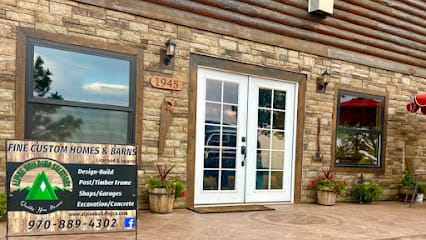
Colorado Springs, CO
Steamboat Springs, CO
Cañon City, CO
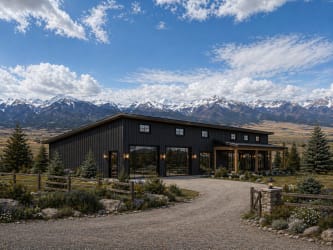
Cañon City, CO
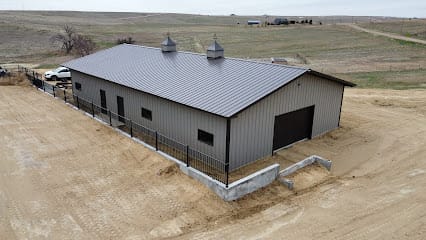
Burlington, CO
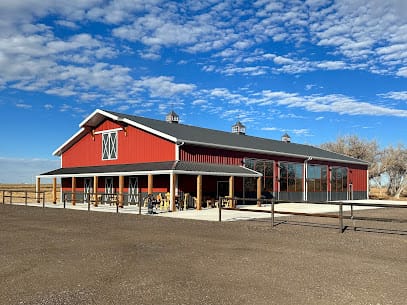
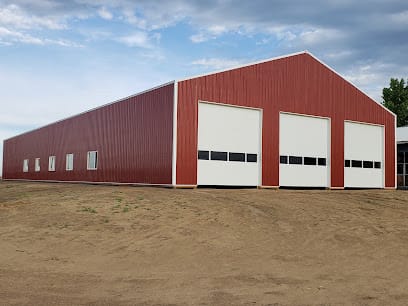
Longmont, CO
Ad space available
Your barndo business can be here
Builders, lenders, kit makers and suppliers: put your company in front of people planning a barndominium in Colorado.
Get the deck and pricingBuilding a barndominium in Colorado
A finished barndominium in Colorado runs about $155 to $230 per square foot turnkey, or $50 to $80 per square foot for a shell, by our directory estimates. That puts a 2,400 square foot home at roughly $372,000 to $552,000 before land and site work, above the national medians in our data. We list 8 Colorado builders.
Three things set Colorado apart. The building rules change completely at the county line, from full plan review on the Front Range to counties with no adopted building code at all. Elevation drives the engineering: in Lake County alone, the design snow load more than doubles between 9,000 and 12,000 feet. And water is a legal question before it is a plumbing one: whether you can drill a well, and what you can do with the water, is decided by the State Engineer and the size of your parcel.
Land, zoning and deed restrictions
Start with the county. In unincorporated Colorado, the county sets the zoning and building rules, so a barndo that sails through in one county can meet design review, minimum dwelling sizes or wildfire mitigation rules in the next. Read the county land use code for your zone district before you make an offer, and ask the planning office one direct question: will a post-frame or steel home with an attached shop be permitted as a single-family dwelling here?
Some rural counties regulate lightly. Delta County, on the Western Slope, has not adopted building codes for its unincorporated area. That does not mean no permits. The county still requires an access permit, an address, a septic (OWTS) permit from county environmental health, and building permits inside its highway overlay districts, and electrical and plumbing permits come from the state Department of Regulatory Agencies. Treat "no building code" as "no county plan review," not "no rules."
Mountain subdivisions add another layer. Many carry recorded covenants and architectural committees that dictate roof pitch, siding, colors and sometimes minimum square footage. Read the covenants for the lot itself, and look for words like "metal," "exterior materials" and "outbuilding."
Codes, engineering and climate
Snow load is the number that decides a Colorado barndo budget, and it is set locally, often by elevation. Lake County's published chart shows how fast it climbs:
| Elevation (Lake County) | Design snow load |
|---|---|
| 9,000 ft | 65 psf |
| 9,500 ft | 75 psf |
| 10,300 ft (Leadville) | 95 psf |
| 11,000 ft | 115 psf |
| 12,000 ft | 145 psf |
The chart dates from 2005 and allows reductions for steeper roofs, so confirm the current figure with the building department. Other counties have moved to site-specific numbers: Park County requires plans submitted since January 1, 2024 to use the ground snow load and wind speed from the ASCE 7-22 hazard tool for the property's exact location and elevation. On the eastern plains the snow numbers are lower, and wind and hail take over as the design concerns.
For a post-frame or steel building, a doubled snow load means heavier trusses or rafters, tighter purlin and girt spacing and bigger columns. A kit priced for Texas will not stamp at Leadville's 95 psf without that upgrade. Ask every supplier what snow load their quote is engineered to, and make the number a line in the contract.
Wildfire is the second driver. The state created a Wildfire Resiliency Code Board in 2023, and it adopted a model code on July 1, 2025. Jurisdictions with mapped wildland-urban interface areas had until April 1, 2026 to adopt it and July 1, 2026 to enforce it. Broomfield's summary of the requirements for new homes lists Class A roofing, noncombustible gutters and ember-resistant vents in lower-risk zones, plus fire-rated wall assemblies and fire-resistant decks and doors in higher-risk zones, and a noncombustible strip in the first five feet around the house. Metal roofing and siding give a barndo a head start, but the soffit vents, the wood porch and the garage door seals still have to meet the rule. If your county has no building department, ask how it plans to apply the code.
What a barndominium costs in Colorado
These figures come from our state table. They are Barndo Finder directory estimates, not transaction data, and exclude land, well, septic, site work and the driveway.
| Size | Shell ($50 to $80/sqft) | Turnkey ($155 to $230/sqft) |
|---|---|---|
| 1,500 sq ft | $75,000 to $120,000 | $232,500 to $345,000 |
| 2,400 sq ft | $120,000 to $192,000 | $372,000 to $552,000 |
| 3,000 sq ft | $150,000 to $240,000 | $465,000 to $690,000 |
Colorado sits above the national medians in our data (shell $45 to $75, turnkey $145 to $215) on both ranges. We would expect mountain builds above about 9,000 feet, with heavy snow framing, wildfire detailing and long delivery hauls, to land at the top of both, and plains builds nearer the bottom. For national context see the 2026 cost report, and for the full state comparison, our cost page. If you are still choosing a footprint, our barndominium sizes guide shows how size drives the total.
Financing and insurance in Colorado
Three Farm Credit lenders cover most of the state. Farm Credit of Southern Colorado lists construction loans, site loans and a nonconforming program for rural properties that conventional lenders avoid. American AgCredit lends through its Rural 1st brand in northern and western counties including Larimer, Weld, Routt, Mesa and Montrose, and Premier Farm Credit serves the northeast. Credit unions and community banks fill in the rest. Our construction loan guide covers draw schedules and approval odds, and the financing page compares lender types.
Two things make Colorado underwriting different. Expect the lender to ask for the well permit (or proof of a water tap) before it funds, because a house without legal water is hard to appraise. And in wildfire country, line up an insurance quote before you close on the land, since the carrier's view of defensible space and access roads can change what you can build. Our insurance guide explains how carriers classify post-frame and steel homes.
Utilities, well and septic
Water comes first. Well permits are issued by the Division of Water Resources, the State Engineer's office, not the county. The deputy state engineer explained the basic rule to Colorado Public Radio: on lots under 35 acres, a household-use-only well supplies water used inside the home for drinking and sanitation and nothing outside. On 35 acres or more, a permit can allow up to three single-family homes, irrigation of up to one acre of lawn and garden, and watering of livestock. The state can also turn down an application where a town or water district can serve the property. If you want horses or a garden on a 10-acre parcel, confirm what the existing or available permit allows before you buy.
Septic in Colorado is an onsite wastewater treatment system (OWTS) permitted by county or district public health, and rocky or shallow mountain soils can push the design to an engineered system. Budget with published ranges of $3,500 to $8,500 and up for septic and $10,000 to $30,000 for a drilled well from our build process guide, then get local bids, since well depth varies widely across the state. Long power line extensions are common on plains and mountain parcels alike.
A realistic timeline in Colorado
Plan on 12 to 18 months from design to move-in, the range in our build timeline guide, with the calendar mattering more the higher you build.
- Before you buy: confirm the well permit type, septic feasibility, covenants and whether the lot sits in a mapped wildfire zone.
- Pre-construction: 3 to 6 months. Engineering to your site's snow load, the loan, the building permit where one exists, and the septic permit. Wildfire review can add a step in mapped areas.
- Construction: 6 to 12 months. On the plains crews work most of the year. In the mountains, aim to pour and dry in the shell between late spring and fall so interior work can continue through winter.
Builders we list in Colorado
We list 8 barndominium builders in Colorado. Here are all of them, grouped by region, with what our data shows. Ratings are public Google reviews at the time we indexed them.
| Region | Builder | City | Build type | Rating |
|---|---|---|---|---|
| Northern Front Range | Alpine Building Solutions | Livermore | Turnkey | 4.5 (8 reviews) |
| Northern Front Range | MoJO Barns | Longmont | Shell | Not yet rated |
| Pikes Peak | Mountain State Construction | Colorado Springs | Shell | 5.0 (7 reviews) |
| Pikes Peak | Steel Structures America - Monument | Monument | Shell, Mueller kits | Not yet rated |
| Arkansas Valley | Mountain View Builders | Cañon City | Shell and turnkey | 5.0 (2 reviews) |
| Arkansas Valley | Built Rite Buildings | Cañon City | Shell | 5.0 (1 review) |
| Mountains | Pinnacle Buildings | Steamboat Springs | Turnkey | 5.0 (2 reviews) |
| Eastern Plains | Fat Puppy Construction | Burlington | Shell and turnkey, Wick kits | 5.0 (1 review) |
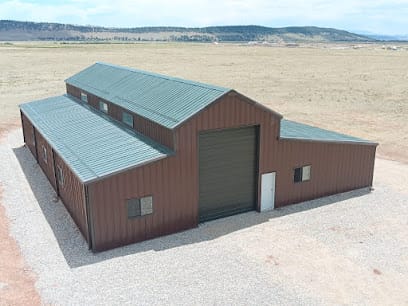
Photo: Steel Structures America - Monument
Review counts are thin across Colorado, so ask each builder for addresses of finished homes at a similar elevation and for the snow load on their last three stamped drawings. If you plan to finish the interior yourself, our shell vs turnkey guide lays out what you take on.
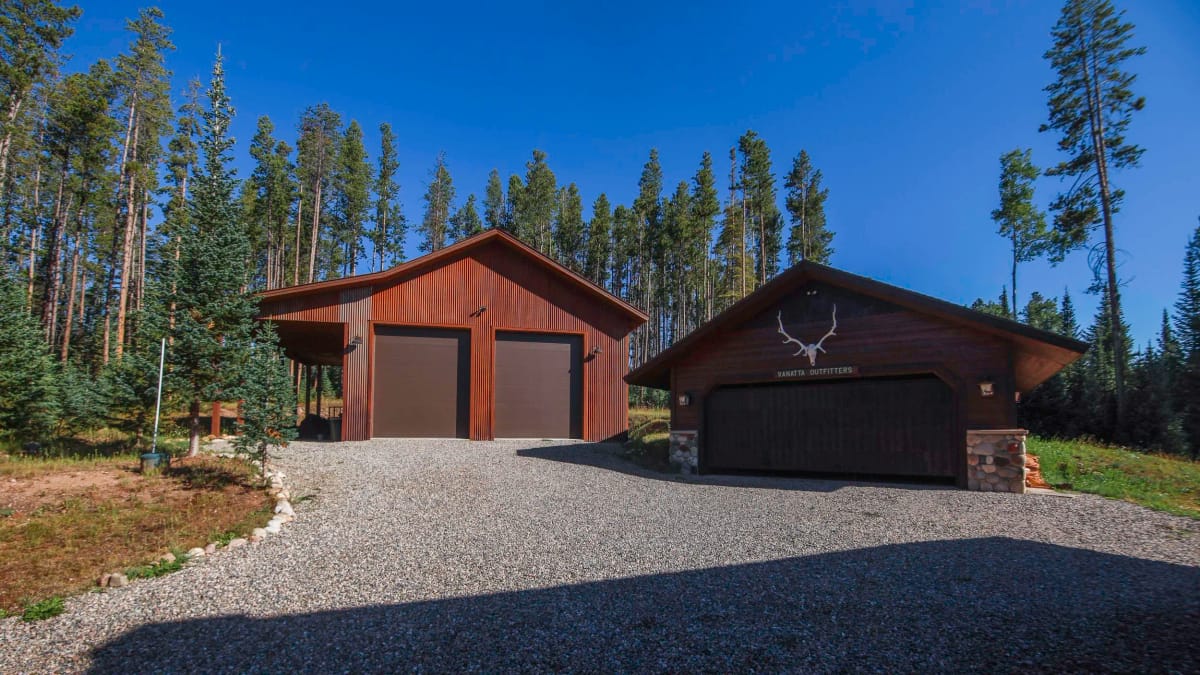
Photo: Pinnacle Buildings
For layout ideas, browse our barndominium floor plans. When you are ready, request quotes from Colorado builders who serve your county, and check each one against our cost table.
Updated September 2026 · Barndo Finder research
Building in Colorado: common questions
Do you need a permit to build a barndominium in Colorado?
Almost always, but what kind depends on the county. Most counties and cities issue building permits under an adopted code. A few rural counties, such as Delta, have adopted no building code for unincorporated land, yet you still need state electrical and plumbing permits, a county septic (OWTS) permit, an access permit and a well permit from the State Engineer.
How much does a barndominium cost in Colorado?
Our directory estimate for Colorado is $155 to $230 per square foot turnkey and $50 to $80 per square foot for a shell, above the national medians in our data. A 2,400 square foot turnkey home works out to about $372,000 to $552,000 before land, well, septic and site work. Mountain sites with heavy snow loads land toward the top.
What snow load does a Colorado barndominium need?
It is set by elevation and by your county. Lake County's published chart runs from 65 psf at 9,000 feet to 145 psf at 12,000 feet, with Leadville at 95 psf. Park County now requires the ground snow load from the ASCE 7-22 hazard tool for your exact site. Lower sites need less. Get the number in writing before a kit is engineered.
Can you drill a well for a barndominium in Colorado?
Usually, with a permit from the State Engineer's Division of Water Resources. On parcels under 35 acres, most new wells are permitted for household use only, which means indoor use: no lawn, garden or livestock watering. On 35 acres or more, a permit can cover up to three homes, one acre of lawn and garden, and livestock. Check the permit before you buy land.
Does the Colorado Wildfire Resiliency Code apply to a barndominium?
It can. Jurisdictions with land in the mapped wildland-urban interface had to adopt the state model code by April 1, 2026, and enforce it by July 1, 2026. It applies to new homes in those zones and can require Class A roofing, ember-resistant vents, noncombustible gutters and a noncombustible strip around the house. A steel-clad barndo helps, but the vents, doors and porch still need attention.
Can you get a loan for a barndominium in Colorado?
Yes. Farm Credit of Southern Colorado lists construction loans and financing for nonconforming rural homes, Premier Farm Credit serves the northeast, and American AgCredit lends in northern and western counties through its Rural 1st brand. Expect the lender to want stamped plans that show the design snow load and a builder it can vet.