
Builders / Illinois
Barndominium builders in Illinois
Planning a build? Read our guide to building a barndominium in Illinois.
Builders tracked
Barndominium-specific, deduplicated
Turnkey
Per sqft, directory estimate
Shell only
Per sqft, directory estimate
Permits and codes in Illinois
Since January 1, 2025, Illinois requires local building codes to be at least as strict as the IRC on structure, and places with no code fall back to the IRC, but the state does not inspect. Cities and counties enforce, and some downstate counties enforce little beyond septic and electrical. Two state rules apply everywhere: the Illinois Energy Conservation Code, based on the 2024 IECC since November 30, 2025, and the Illinois Plumbing Code, which requires a licensed plumber except when an owner plumbs a single-family home they will live in. There is no state general contractor license. Roofing contractors are licensed by IDFPR and verifiable at idfpr.illinois.gov; for GCs, check municipal registration. Chicago collar counties add zoning resistance to metal buildings, so confirm zoning before buying land. Design for 36 to 42 inch frost depth and 90 mph wind. Septic permits come from county health departments under the IDPH Private Sewage Disposal Code.
Financing a barndominium in Illinois
Two Farm Credit associations split the state: Compeer Financial in northern Illinois and Farm Credit Illinois across the central and southern counties. Both close construction loans on rural acreage. Community banks downstate will lend where they know the ground. Comparables are thin in the Chicago collar counties and better downstate, where post-frame homes sell regularly. Expect 15 to 25 percent down. Cheaper quotes are usually shell-only, so make sure the appraisal reflects the finished spec.
The list (10)
Sorted by review count. Featured listings are labeled.


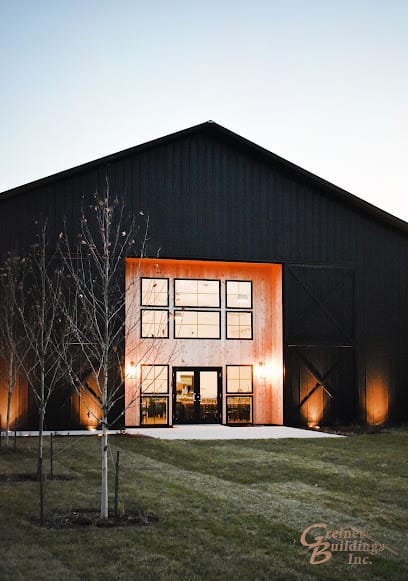


New Athens, IL

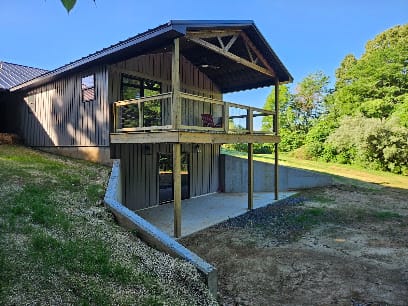


Princeton, IL
Ad space available
Your barndo business can be here
Builders, lenders, kit makers and suppliers: put your company in front of people planning a barndominium in Illinois.
Get the deck and pricingBuilding a barndominium in Illinois
A finished barndominium in Illinois runs about $140 to $210 per square foot turnkey, or $40 to $70 per square foot for a shell, by our directory estimates. That puts a 2,400 square foot home at roughly $336,000 to $504,000 before land and site work, about $5 a foot under the national medians in our data. We list 10 Illinois builders.
Illinois is a split state for a barndo. The Chicago collar counties have building departments, newer codes and real zoning review. Much of downstate has county zoning but no building inspections at all, and since 2025 the state has a baseline code that nobody from the state enforces. Your experience depends heavily on which county you buy in, so the first job is finding out what your county actually checks.
Land, zoning and deed restrictions
Illinois counties cannot zone farming. The Counties Code says county zoning powers shall not be used to impose regulations or require permits for land used for agricultural purposes when farming is the principal activity on the land. That is why machine sheds and grain bins go up without a zoning certificate.
The exemption does not cover a house. Will County's zoning code spells it out: a residence in connection with an agricultural use, and the residence's water supply and sewage disposal, are not exempt. A barndominium needs the same zoning approval as any other home: minimum lot size, setbacks, and in some districts limits on accessory building size. Building it as a "farm shed" and moving in later is the shortcut that fails at appraisal, insurance or resale.
In the collar counties, expect more process. Lake County, for example, has adopted the 2024 IRC for unincorporated areas, effective July 11, 2026. Subdivision covenants there and around lake developments often control exterior materials, so pull them from the title company before you make an offer. Our barndominium zoning guide covers the questions to ask.
Codes, engineering and climate
Illinois went decades with no statewide building code. Public Act 103-0510 changed the Capital Development Board Act to require statewide baseline building codes from January 1, 2025. The Capital Development Board's code summary sets out what that means for a house:
| Where you build | Code that applies to a new home |
|---|---|
| City or county with an adopted code | Local code, which must regulate structural design at least as strictly as the IRC |
| No local code, with a written agreement | Current or previous IRC edition, or a code from a city or county within 100 miles (excluding IRC Parts IV and VII) |
| No local code, no agreement | Current IRC edition (excluding Parts IV and VII) |
The excluded parts are energy and plumbing, which Illinois covers with its own codes. The catch is enforcement. The board's FAQ says the local code official is the authority on private projects and the state does not inspect or issue permits. In a county with no building department, the code applies but no one inspects it. Your lender, your insurer and your future buyer will still want proof, so hire a third-party inspector and keep the reports.
Two state codes reach every new home. The Illinois Energy Conservation Code, based on the 2024 IECC, took effect for residential buildings on November 30, 2025. The Illinois Plumbing Code applies statewide, and the Plumbing License Law requires licensed plumbers, with one owner exception covered in the FAQ below. Roofing contractors must hold a state license under the Roofing Industry Licensing Act, and permit officials must check it before issuing a permit. There is no state general contractor license.
On structure, frost depth and snow load come from the local jurisdiction. Chicago's code, for one, requires footings at least 3 feet 6 inches below grade, and northern Illinois sits at the deep end of the state's range. Southern Illinois is part of the New Madrid Seismic Zone region, so an engineer working on a Metro East or far-south build should check the seismic design category along with wind and snow.
What a barndominium costs in Illinois
These figures come from our state table. They are Barndo Finder directory estimates, not transaction data, and exclude land, well, septic, site work and the driveway.
| Size | Shell ($40 to $70/sqft) | Turnkey ($140 to $210/sqft) |
|---|---|---|
| 1,500 sq ft | $60,000 to $105,000 | $210,000 to $315,000 |
| 2,400 sq ft | $96,000 to $168,000 | $336,000 to $504,000 |
| 3,000 sq ft | $120,000 to $210,000 | $420,000 to $630,000 |
Illinois has a higher turnkey range than Indiana, Iowa, Missouri, Kansas or Nebraska in our table, but it still sits $5 a foot under the national medians (shell $45 to $75, turnkey $145 to $215). Collar county labor and stricter local codes push real bids toward the top; downstate shell work can come in near the bottom. Illinois also has about 9,400 Amish residents per the Young Center, concentrated in the Arthur and Arcola settlement of about 5,800 people, one of the twelve largest in the country, which adds post-frame capacity in east-central Illinois.
Compare like with like. A shell quote and a turnkey quote are different products; our shell vs turnkey guide breaks down what each includes, and every state is on our cost page.
Financing and insurance in Illinois
Two Farm Credit associations split the state. Farm Credit Illinois serves the southern 60 counties and offers Rural 1st loans for country homes, rural construction and lots. Compeer Financial covers northern Illinois as part of its 144 counties across Illinois, Minnesota and Wisconsin, and its home mortgage arm offers construction loans. Community banks downstate lend on post-frame homes where they know the market. Our construction loan guide explains draws, and the financing page compares lender types.
In a no-inspection county, the lender becomes your inspector by default. Expect it to require stamped drawings, a licensed plumber's sign-off and third-party draw inspections. Insurers ask similar questions about construction type and wind design; our insurance guide covers how carriers classify steel and post-frame homes.
Utilities, well and septic
The Illinois Department of Public Health regulates private sewage disposal systems, and about 90 local health agencies review septic plans, either under their own ordinance or as the department's agent. IDPH licenses installation contractors. Counties add their own rules: McHenry County requires a licensed installer for every system and bars cutting, filling or compacting the permitted area, while Madison County lets a homeowner install their own residential system under permit.
Check sewer distance before you assume septic. Effingham County may refuse a septic permit if a public sewer is within 200 feet of a single-family home, and its septic permit is void if work does not start within six months. Budget with published ranges of $3,500 to $8,500 and up for septic and $10,000 to $30,000 for a drilled well from our build process guide.
A realistic timeline in Illinois
Plan on 12 to 18 months from design to move-in, the range in our build timeline guide.
- Before you buy: confirm whether the county has a building code and department, read the zoning district, and get a soil evaluation for septic.
- Pre-construction: 3 to 6 months. Engineering to local frost and wind, the loan, zoning and building permits, and the septic permit. Collar counties take longer.
- Construction: 6 to 12 months. Pour before frost, close in by late fall, and finish inside over winter. Line up the licensed plumber early.
Builders we list in Illinois
We list 10 barndominium builders in Illinois, fewer than Indiana or Iowa: 3 shell-only, 4 turnkey, 2 that do both and 1 whose build type is not listed. Here is every one. Ratings are public Google reviews at the time we indexed them.
| Region | Builder | City | Build type | Rating |
|---|---|---|---|---|
| Metro East | O'Neil Metal Buildings and Roofing | Belleville | Not listed | 5.0 (26 reviews) |
| Northeast | Post Frame Construction | Shorewood | Shell | 5.0 (14 reviews) |
| Northwest | Greiner Buildings, Inc. | Kewanee | Shell | 4.4 (10 reviews) |
| Metro East | Xtreme Xteriors | New Athens | Shell | 4.6 (9 reviews) |
| Southern | Built-Mor Buildings Inc | Bluford | Shell and turnkey | 4.4 (9 reviews) |
| Central | Custom Structures Inc | Ashland | Turnkey, Wick kits | 3.4 (5 reviews) |
| Southern | Flint Hills Construction LLC. | Simpson | Turnkey | 5.0 (3 reviews) |
| North Central | FBi Buildings, Inc. | Princeton | Shell and turnkey | Not yet rated |
| South Central | MidState Building Supply | Effingham | Turnkey | Not yet rated |
| East Central | Next-Gen Buildings | Sullivan | Turnkey | Not yet rated |
Photo: Custom Structures Inc
With a short list, widen the search. Builders in Indiana, Iowa, Wisconsin and Missouri work near the Illinois line. Ask any builder whether they will pull permits in your county, who stamps the drawings, and whether their plumber is licensed in Illinois.
Photo: Greiner Buildings, Inc.
When you are ready, request quotes from Illinois builders who serve your county, and compare each bid to our cost table.
Updated October 2026 · Barndo Finder research
Building in Illinois: common questions
Does Illinois have a statewide building code for barndominiums?
Since January 1, 2025, yes in a limited sense. Local codes must regulate structural design at least as strictly as the IRC, and where no local code exists, the Residential Building Code Act points new homes to the current IRC. But the state does not issue permits or inspect private homes, so in a county without a building department nobody checks the work.
How much does a barndominium cost in Illinois?
Our directory estimate for Illinois is $140 to $210 per square foot turnkey and $40 to $70 per square foot for a shell, about $5 a foot under the national medians in our data. A 2,400 square foot turnkey home works out to about $336,000 to $504,000 before land, well, septic and site work. Those are estimates, not quotes.
Is a barndominium exempt from Illinois county zoning as an agricultural building?
No. State law bars county zoning from requiring permits for land used for agricultural purposes, which is why farm buildings go up without zoning review. A house is not an agricultural building. Will County's ordinance, for example, says a residence connected to an agricultural use, and its well and septic, are not exempt.
Can I do my own plumbing on an Illinois barndominium?
Yes, with conditions. The Illinois Plumbing License Law lets the owner of a single-family home under construction for their own occupancy install the plumbing, if it meets the state plumbing code, is inspected, and the owner plans to live there at least six months after completion. Any helper you hire must be a licensed plumber.
Can you get a loan for a barndominium in Illinois?
Yes. Farm Credit Illinois serves the southern 60 counties and offers Rural 1st loans for country homes and rural construction. Compeer Financial covers northern Illinois as part of its 144-county territory and offers construction mortgages. Community banks downstate also lend on post-frame homes.