Builders / Pennsylvania
Barndominium builders in Pennsylvania
Planning a build? Read our guide to building a barndominium in Pennsylvania.
Builders tracked
Barndominium-specific, deduplicated
Turnkey
Per sqft, directory estimate
Shell only
Per sqft, directory estimate
Permits and codes in Pennsylvania
Pennsylvania's Uniform Construction Code applies statewide, administered by municipalities or third-party agencies. There is no state contractor license, and Home Improvement Consumer Protection Act registration does not cover building a new home, so check references and the builder's insurance certificate yourself. Lancaster, Lebanon and the surrounding counties hold some of the most experienced post-frame crews in America, including Amish builders whose shell pricing draws customers from five states. Stormwater management review adds time on parcels over an acre in many townships.
Financing a barndominium in Pennsylvania
Horizon Farm Credit and mid-state community banks finance post-frame homes regularly. Appraisals are the friction point in the Philadelphia exurbs where comparables are thin; in central PA they are routine. If an Amish crew builds your shell, expect the lender to ask who does the electrical and plumbing work and how it gets inspected.
The list (9)
Sorted by review count. Featured listings are labeled.
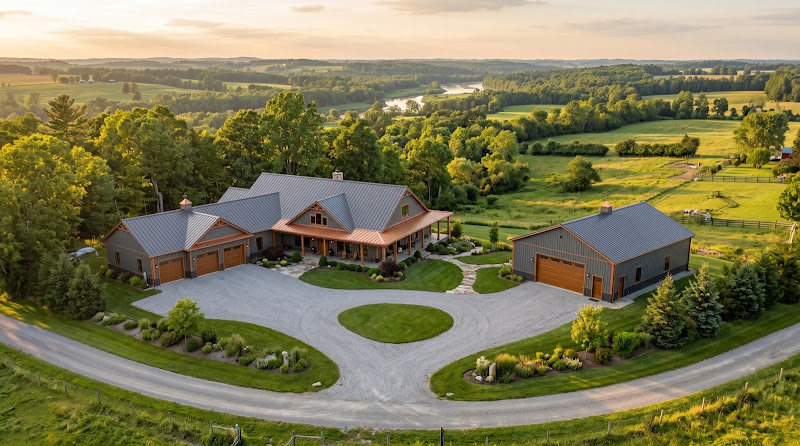
Photos pending
Schuylkill Haven, PA
Photos pending
Punxsutawney, PA
Philadelphia, PA
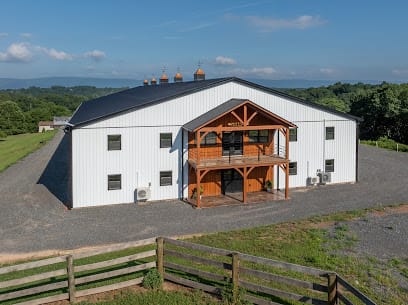
New Providence, PA
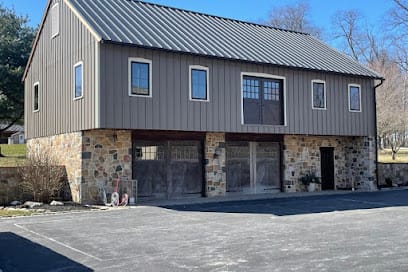
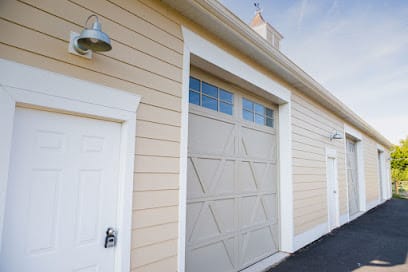
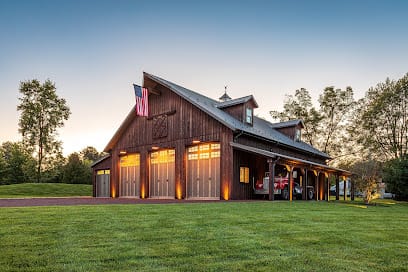
Lancaster, PA
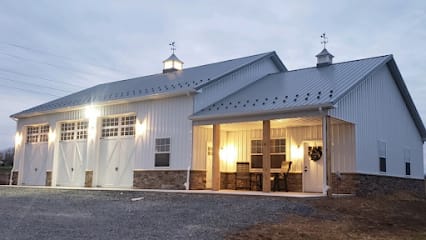
Bridgeville, PA
Ad space available
Your barndo business can be here
Builders, lenders, kit makers and suppliers: put your company in front of people planning a barndominium in Pennsylvania.
Get the deck and pricingBuilding a barndominium in Pennsylvania
A finished barndominium in Pennsylvania runs about $145 to $215 per square foot turnkey, or $45 to $75 per square foot for a shell, by our directory estimates. That puts a 2,400 square foot home at roughly $348,000 to $516,000 before land and site work. We list 9 Pennsylvania builders, and 5 of them are in Lancaster County.
Pennsylvania is a split state on rules. One building code covers all 2,562 municipalities, but enforcement is local, and a handful of municipalities hand residential inspection to private agencies. New home builders need no state license. Septic approval runs through a municipal Sewage Enforcement Officer, and the state sets no construction standard at all for private wells. The upside is the builder base: southeastern Pennsylvania has one of the densest clusters of post-frame crews in the country.
Land, zoning and deed restrictions
Zoning in Pennsylvania is municipal, so the township or borough is the office that decides whether a barndominium is a single-family dwelling on your parcel. In agricultural and rural residential districts it almost always is. The friction shows up in two places: suburban townships around Philadelphia, Harrisburg and Pittsburgh that regulate exterior materials or accessory building size, and platted subdivisions with recorded covenants that ban metal siding. Read the deed and any homeowners association documents for "metal," "pole building" and "accessory structure" before you sign. Our barndominium zoning guide has the questions to ask the zoning officer.
Site disturbance is the other check. Under the state's erosion and sediment control rules, disturbing 5,000 square feet or more requires a written erosion and sediment control plan, and disturbing an acre or more requires an NPDES construction stormwater permit, as the Allegheny County Conservation District explains. A 40 by 60 foot building, a long gravel driveway, a septic field and a turnaround can approach that acre on a rural lot. Ask your county conservation district early, because the permit review adds weeks.
Codes, engineering and climate
The Uniform Construction Code is Pennsylvania's statewide building code, administered by the Department of Labor and Industry. Its triennial update took effect on January 1, 2026, moving the state to the 2021 International Codes as amended by the state's Review and Advisory Council, per the Pennsylvania Housing Research Center at Penn State. Expect your plans to be reviewed against the 2021 International Residential Code and its energy chapter.
Who enforces it depends on your municipality. Labor and Industry says more than 90 percent of municipalities administer the code locally, with their own staff or a third-party agency they retain. In the opt-out municipalities, the property owner or contractor hires a state-certified third-party agency to review plans and inspect the house. That is not a loophole; it is the same code with a private inspector you pay directly.
Two engineering points matter most here:
- Snow and elevation. Ground snow loads rise with elevation and latitude, so the Laurel Highlands and the northern tier design for more snow than Philadelphia or Lancaster. Have the engineer pull the load for your exact site from the ASCE Hazard Tool and print it on the stamped drawings. A kit priced from a southern catalog may need closer truss spacing or heavier purlins to match.
- Frost and foundations. Footing depth is set locally, so get it from the building official. Post-frame buildings set posts below frost, and a slab-on-grade barndo needs frost-protected edges or footings below the frost line.
One trap: a post-frame building used for agriculture can be exempt from parts of the code, which tempts owners to permit a "barn" and finish living space later. A barndominium is a residence, so it needs a residential permit from the start, and converting later costs more than doing it once.
What a barndominium costs in Pennsylvania
These figures come from our state table. They are Barndo Finder directory estimates, not transaction data, and they exclude land, well, septic, site work and the driveway.
| Size | Shell ($45 to $75/sqft) | Turnkey ($145 to $215/sqft) |
|---|---|---|
| 1,500 sq ft | $67,500 to $112,500 | $217,500 to $322,500 |
| 2,400 sq ft | $108,000 to $180,000 | $348,000 to $516,000 |
| 3,000 sq ft | $135,000 to $225,000 | $435,000 to $645,000 |
Pennsylvania sits exactly on the national median in our data (shell $45 to $75, turnkey $145 to $215), and it runs $15 to $25 per square foot below New York on turnkey work. The reason shells stay competitive is supply: Lancaster County post-frame crews build a lot of buildings, and most of our Pennsylvania listings price the shell only. The turnkey number climbs if you hire one general contractor to manage every trade rather than finishing the shell with your own subs. Our shell vs turnkey guide shows where that line usually falls, the 2026 cost report has national context, and every state is on the cost page.
Financing and insurance in Pennsylvania
Horizon Farm Credit, headquartered in Mechanicsburg, is the Farm Credit association for Pennsylvania. It was formed on July 1, 2022 from the merger of AgChoice Farm Credit and MidAtlantic Farm Credit, and it also serves Delaware, Maryland, Virginia and West Virginia. Its published construction loan terms include a 12-month interest-only construction period, a one-time close loan fixed for up to 30 years, and financing for properties with excess acreage and additional buildings. Its product page names stick-built, modular and log homes, so ask the loan officer directly how they underwrite a post-frame or steel home before you pay for plans.
Community banks in Lancaster, Lebanon and the central counties also lend on post-frame homes, and appraisers there see more of them than appraisers in the Philadelphia suburbs. If your builder only puts up the shell, the lender will want a complete budget for finish work before closing, because the appraisal is based on the finished house. Our construction loan guide covers draw schedules, and the financing page compares lender types.
Insurance is a normal homeowners policy once the house is finished, but some carriers still classify post-frame homes oddly. Give the agent the stamped drawings and the final certificate of occupancy. Our barndominium insurance guide explains what carriers ask.
Utilities, well and septic
On rural land, the septic permit comes first. Pennsylvania's on-lot program runs under the Sewage Facilities Act (Act 537), and the permit is issued by your municipality's Sewage Enforcement Officer, a DEP-certified official who conducts or witnesses the soil probes and percolation tests. You dig the probe pits; the SEO logs the soils and decides what system fits. Shallow soils or a high water table push you from a conventional in-ground bed to a raised sand mound, which costs more. Order the testing before you close on land, because a failed test can make the lot unbuildable for the house you planned.
Wells are the gap. Penn State Extension notes that Pennsylvania is one of only a few states without mandatory statewide construction standards for private water wells. A few counties have their own ordinances, but in most places the quality of your well depends on your contract. Specify casing depth, grouting and a sanitary well cap, and test the water before you move in. For budgeting, published estimates run $3,500 to $8,500 and up for septic and $10,000 to $30,000 for a drilled well, per our build process guide.
A realistic timeline in Pennsylvania
Plan on 12 to 18 months from design to move-in, the national range in our build timeline guide. Pennsylvania lands in the middle of it.
- Before you buy: 1 to 2 months. Zoning check, deed covenants, SEO soil probes and percolation tests.
- Pre-construction: 3 to 5 months. Stamped drawings, the loan, the sewage permit, a conservation district review if you disturb more than 5,000 square feet, and the building permit.
- Construction: 6 to 12 months. A post-frame shell often goes up in weeks; the interior is where the time goes. Pour footings and slabs before the ground freezes so interior trades can work through winter.
Popular Lancaster County crews book out, so put a deposit down with your shell builder while your permits are in review, not after.
Builders we list in Pennsylvania
We list 9 barndominium builders in Pennsylvania. Here is all of them, by region, with what our data shows. Ratings are public Google reviews at the time we indexed them.
| Region | Builder | City | Build type | Rating |
|---|---|---|---|---|
| Lancaster County | Fetterville Pole Buildings | East Earl | Shell | 4.7 (61 reviews) |
| Lancaster County | Tucquan Hollow Builders LLC | Christiana | Shell | 5.0 (18 reviews) |
| Lancaster County | Double S Construction | New Providence | Shell | 5.0 (20 reviews) |
| Lancaster County | Conestoga Buildings | Ephrata | Turnkey | 4.5 (14 reviews) |
| Lancaster County | Tristate Buildings | Lancaster | Shell | 5.0 (13 reviews) |
| East | Pioneer Pole Buildings Inc. | Schuylkill Haven | Shell, Pioneer Pole kits | 4.5 (486 reviews) |
| East | Philadelphia Metal Builders | Philadelphia | Shell | 4.9 (32 reviews) |
| West | VMS Construction LLC | Punxsutawney | Turnkey | 5.0 (51 reviews) |
| West | Fetterville Sales | Bridgeville | Shell | 5.0 (2 reviews) |
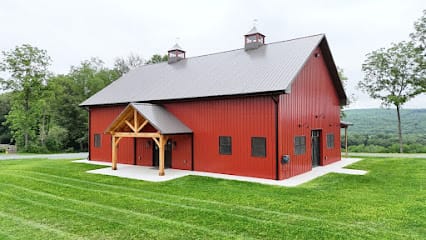
Photo: Double S Construction
Seven of the nine are shell builders, which says a lot about how barndos get built here: a specialist crew frames and sheets the building, and a separate contractor or the owner finishes it. Fetterville's own site describes its team as Amish pole barn builders and lists barndominiums among its project types. Pioneer Pole Buildings carries by far the most reviews of any Pennsylvania listing.
Photo: Fetterville Pole Buildings
Ask every builder three questions: which snow load they designed to, who stamps their drawings, and whether they will coordinate with your finish contractor on slab plumbing and electrical rough-in. Building near the northern line? Compare with our New York builders.
Ready to price your build? Request quotes from Pennsylvania builders who serve your county, and compare every number to our cost table.
Updated October 2026 · Barndo Finder research
Building in Pennsylvania: common questions
Do you need a permit to build a barndominium in Pennsylvania?
Yes. The Uniform Construction Code applies in every municipality, so a barndominium needs a building permit and inspections like any house. Most municipalities enforce the code themselves. In the few that opted out, you hire a state-certified third-party agency to review plans and inspect. You also need an on-lot sewage permit from the municipal Sewage Enforcement Officer on rural land.
How much does a barndominium cost in Pennsylvania?
Our directory estimate for Pennsylvania is $145 to $215 per square foot turnkey and $45 to $75 per square foot for a shell, which matches the national median. A 2,400 square foot turnkey home works out to about $348,000 to $516,000 before land, well, septic, driveway and site work. These are estimates from our state table, not quotes.
Does a Pennsylvania barndominium builder need a license?
There is no statewide license for new home builders. The Home Improvement Consumer Protection Act requires contractors to register with the Attorney General, but the law excludes construction of a new home. Many builders register anyway because they also do additions and garages, so check the registration and ask for a certificate of insurance. Philadelphia runs its own contractor license.
Are Amish builders common for Pennsylvania barndominiums?
Yes, especially in Lancaster County. Five of the nine Pennsylvania builders we list are in Lancaster County, and Fetterville describes its team as Amish pole barn builders. Most of these firms build the post-frame shell only, so plan on a separate contractor or your own subs for plumbing, electrical, HVAC and finishes.
Which lenders finance barndominiums in Pennsylvania?
Horizon Farm Credit, formed in 2022 from AgChoice Farm Credit and MidAtlantic Farm Credit, is the Farm Credit association for Pennsylvania. It offers one-time close construction loans fixed for up to 30 years, with a 12-month interest-only building period, and it finances property with extra acreage and outbuildings. Community banks in farm counties also lend on post-frame homes.
Do you need a well permit in Pennsylvania?
Usually not from the state. Pennsylvania is one of the few states with no mandatory statewide construction standards for private water wells, according to Penn State Extension. A few counties and municipalities have their own ordinances. Because the rules are thin, put well specifications such as casing depth, grouting and a sanitary cap in the driller's contract.