Builders / New York
Barndominium builders in New York
Planning a build? Read our guide to building a barndominium in New York.
Builders tracked
Barndominium-specific, deduplicated
Turnkey
Per sqft, directory estimate
Shell only
Per sqft, directory estimate
Permits and codes in New York
The NYS Uniform Fire Prevention and Building Code applies statewide outside New York City, but enforcement sits with roughly 1,600 town and village code offices, and their appetite for post-frame homes varies widely. New York has no statewide contractor license. Licensing is county or city level: Westchester, Nassau, Suffolk, Putnam and NYC DCWP all run their own registries, most searchable online, while much of upstate requires nothing. Expect stamped engineering for snow loads that hit 70+ psf ground snow in the Tug Hill and Adirondacks, 48 inch frost depth, and the Energy Conservation Construction Code, with some towns adopting the stricter NYStretch code. Rural septic runs through county health departments under NYSDOH standards.
Financing a barndominium in New York
Farm Credit East covers all of New York and closes construction loans on barndominiums and farm dwellings with acreage, which conventional lenders upstate often decline. Community banks in the Southern Tier and North Country will lend where they know the appraiser. Comparables are thin outside farm country, so appraisals frequently come back low against build cost. Plan on 20 to 25 percent down, and a one-time close product where you can get it.
The list (3)
Sorted by review count. Featured listings are labeled.
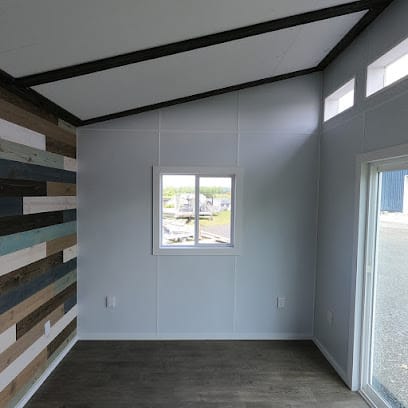
Haverstraw, NY
Photos pending
Ad space available
Your barndo business can be here
Builders, lenders, kit makers and suppliers: put your company in front of people planning a barndominium in New York.
Get the deck and pricingBuilding a barndominium in New York
A finished barndominium in New York runs about $160 to $240 per square foot turnkey, or $50 to $85 per square foot for a shell, by our directory estimates. A 2,400 square foot home lands around $384,000 to $576,000 before land and site work. We list 3 New York builders, all upstate or in the Hudson Valley.
New York is two different states for a barndo. Upstate, land is cheaper and many rural towns treat a post-frame home like any other house, but snow loads are among the heaviest in the East. Downstate, land costs, county contractor licensing and tighter zoning make a metal-sided home a harder sell. New York City runs its own construction codes and is outside the scope of this guide.
Land, zoning and deed restrictions
Towns, villages and cities zone in New York, and in rural towns a barndominium on residential or agricultural land is usually just a single-family dwelling. Ask the town code office three things before you buy: what district the parcel is in, whether any design standards cover exterior materials or roof pitch, and how large a residential accessory building or attached shop can be. Lake associations and subdivisions often carry deed covenants on siding and minimum size, so read the recorded documents too. Our barndominium zoning guide lists the questions in more detail.
The Adirondack Park adds a state layer on private land. The Adirondack Park Agency reviews development under a land use plan, and a single-family dwelling needs an Agency permit in some classifications. In Resource Management areas the overall intensity guideline is 15 principal buildings per square mile, or about 42.7 acres per principal building. The Agency handles a single home as a minor project without a formal public comment period, but it still adds time, and height and shoreline rules apply. Ask for a jurisdictional determination before you close on Park land.
Codes, engineering and climate
The New York State Uniform Fire Prevention and Building Code applies everywhere outside New York City. The 2025 Uniform Code, including the 2025 Residential Code of New York State and a new State Energy Code, took effect on December 31, 2025. It is based on the 2024 International Codes with New York amendments. The optional transition window ran only from October 1 to December 30, 2025, so a kit drawing package prepared under the 2020 code may need updating before a code office will accept it.
Enforcement is local. Under Executive Law section 381, cities, towns and villages administer the code. A town or village can opt out by local law, in which case the county takes over, and if the county also opts out, the Department of State does the work. Either way you get plan review and inspections; what changes is which office you call. With hundreds of local code offices, experience with post-frame homes varies widely, so ask the code officer early whether they have permitted one before.
Snow is the main structural driver:
- Where the number comes from. The 2025 Building Code of New York State replaced the old state ground snow load map with four ASCE 7-22 maps, so engineers now use the ASCE Hazard Tool for a site-specific value. Lake-effect country east of Lakes Erie and Ontario, the Tug Hill Plateau and the higher Adirondack and Catskill elevations carry far more snow than Long Island or Westchester.
- When the prescriptive code stops. The residential code's prescriptive framing provisions cover sites up to 70 pounds per square foot of ground snow load (R301.2.3). Above that, the structure must be engineered. A post-frame or steel barndo should be engineered anyway, and the stamped drawings should state the ground snow load used.
- Frost and energy. Footing depth is set by the local climatic table, so get it from the code office. The 2025 energy code is stricter than the codes most kit catalogs are written for; plan the insulation and a condensation control strategy before you order steel. Our barndominium insulation guide covers the options.
What a barndominium costs in New York
These figures come from our state table. They are Barndo Finder directory estimates, not transaction data, and they exclude land, well, septic, site work and the driveway.
| Size | Shell ($50 to $85/sqft) | Turnkey ($160 to $240/sqft) |
|---|---|---|
| 1,500 sq ft | $75,000 to $127,500 | $240,000 to $360,000 |
| 2,400 sq ft | $120,000 to $204,000 | $384,000 to $576,000 |
| 3,000 sq ft | $150,000 to $255,000 | $480,000 to $720,000 |
New York runs above the national median in our data (shell $45 to $75, turnkey $145 to $215): $5 to $10 more per square foot on shells and $15 to $25 more on turnkey builds. Heavier snow framing, a stricter energy code and a short pouring season all push in the same direction. Within the state, expect Hudson Valley and Long Island builds toward the top of the range and Southern Tier or western New York builds toward the bottom. Our 2026 cost report has national context, the sizes guide shows how footprint moves the total, and every state is on the cost page.
Financing and insurance in New York
Farm Credit East serves New York, and its mortgage arm, Country Living, finances rural homes, land and new construction. Farm Credit East says it offers a one-time closing for construction to permanent financing with the rate fixed at closing for the life of the loan, charges interest only on funds advanced during the build, and expects you to start construction within about 12 months of closing. It also recommends budgeting at least 10 percent for cost overruns and starting the loan process two to three months before you break ground. Ask how its appraisers handle post-frame or steel homes, since its own guide names modular, stick-built and log homes.
Community banks in the Finger Lakes, the Southern Tier and the North Country also lend on rural construction. Appraisals are the weak spot where few barndos have sold, so give the lender a complete plan set, specifications and bids before the appraisal is ordered. Our construction loan guide explains draws, and the financing page compares lender types. For insurance, tell the agent the design snow load and show the stamped drawings; our insurance guide covers carrier types.
Utilities, well and septic
Septic design in New York follows the Department of Health's Appendix 75-A, the statewide standard for residential onsite wastewater systems, in effect since March 16, 2016. County health departments review and approve the design, and some, such as Dutchess, publish their own design and construction standards on top of it. Shallow bedrock and wet soils are common upstate, which can push a lot from a conventional trench system to a raised or engineered system. Get the soil testing done before you close on the land.
Wells are drilled by contractors who must register every year with the Department of Environmental Conservation under state law. Ask for the registration and a copy of the well completion report when the job is done. For budgeting, published estimates run $3,500 to $8,500 and up for septic and $10,000 to $30,000 for a drilled well, per our build process guide. Engineered septic systems and deep wells in bedrock can exceed those ranges.
A realistic timeline in New York
Plan on 12 to 18 months from design to move-in, the national range in our build timeline guide, and expect the upper half of it in New York.
- Before you buy: 1 to 3 months. Zoning, covenants, soil and percolation testing, and inside the Adirondack Park, an Agency jurisdictional determination.
- Pre-construction: 3 to 6 months. Stamped engineering to your site's snow load, the loan, health department approval of the septic design, and the building permit.
- Construction: 6 to 12 months. In lake-effect country, aim to have the slab poured and the shell dried in before November so interior trades can keep working through winter.
Builders we list in New York
We list 3 barndominium builders in New York. Here is all of them, with what our data shows. Ratings are public Google reviews at the time we indexed them.
| Region | Builder | City | Build type | Rating |
|---|---|---|---|---|
| Hudson Valley | PCS Structures | Haverstraw | Shell | 5.0 (69 reviews) |
| Finger Lakes | Fingerlakes Construction | Newark | Shell | 4.8 (43 reviews) |
| Central New York | Muse Design and Drafting | Marathon | Turnkey | 5.0 (5 reviews) |
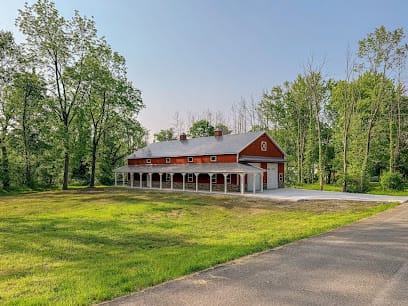
Photo: Fingerlakes Construction
Three listings is a thin bench for a state this size, and two of the three build shells only, so many New York owners hire a shell crew and a separate finish contractor. PCS Structures carries the most reviews of our New York listings. Pennsylvania post-frame builders also work across the line, and Fetterville publishes a building guide for New York and New Jersey; see our Pennsylvania builders for more options. Comparing kit suppliers instead? Our barndominium kits guide prices the national brands.
Whoever you hire, ask what ground snow load they designed their last three New York homes to, who stamps the drawings, and for proof of workers compensation and liability insurance.
Ready to price your build? Request quotes from builders who serve your county, and compare every number to our cost table.
Updated October 2026 · Barndo Finder research
Building in New York: common questions
Do you need a permit to build a barndominium in New York?
Yes. Outside New York City, every home falls under the Uniform Fire Prevention and Building Code, enforced by the city, town or village, or by the county or the Department of State where a town has opted out. You also need septic approval from the county health department on rural land, and inside the Adirondack Park an Agency permit may apply.
How much does a barndominium cost in New York?
Our directory estimate for New York is $160 to $240 per square foot turnkey and $50 to $85 per square foot for a shell. A 2,400 square foot turnkey build works out to about $384,000 to $576,000 before land, well, septic, driveway and site work. Those are estimates from our state table, not quotes, and they run above the national median.
What snow load does a New York barndominium need?
It depends on the exact site. The 2025 Building Code of New York State replaced the old state snow map with ASCE 7-22 maps, so engineers now pull ground snow loads from the ASCE Hazard Tool. Lake-effect areas east of Lakes Erie and Ontario and the higher Adirondack and Catskill elevations carry much heavier loads than New York City's suburbs.
Does a New York barndominium builder need a license?
There is no statewide contractor license in New York. The Attorney General notes that home improvement contractors must be licensed in New York City, Suffolk, Nassau, Westchester, Putnam and Rockland counties and the City of Buffalo. Upstate, most towns require nothing beyond insurance, so check references, completed builds and proof of workers compensation coverage.
Can you build a barndominium in the Adirondack Park?
Often, but plan for a second layer of review. The Adirondack Park Agency regulates private land in the Park, and a single-family dwelling needs an Agency permit in some land use areas, including Resource Management, where the density guideline is about 42.7 acres per principal building. Call the Agency with the tax parcel number before you buy.
Which lenders finance barndominiums in New York?
Farm Credit East serves New York through its Country Living mortgage arm, which offers a single closing for construction-to-permanent financing with the rate fixed at closing for the life of the loan. Community banks in the Finger Lakes, Southern Tier and North Country also write construction loans when they know local appraisers.