Builders / Montana
Barndominium builders in Montana
Planning a build? Read our guide to building a barndominium in Montana.
Builders tracked
Barndominium-specific, deduplicated
Turnkey
Per sqft, directory estimate
Shell only
Per sqft, directory estimate
Permits and codes in Montana
Montana adopts statewide building codes through the Department of Labor and Industry, but enforcement depends on where you build. Inside a certified city or county jurisdiction you pull local permits. Outside one, no building permit is required for a single-family home, though state electrical and plumbing permits still apply. Since January 1, 2026, contractors need a Construction Contractor License from DLI (it replaced the old registration), verifiable online. It is not a competency exam, so check references. Engineering is real here: a 30 psf state minimum roof snow load and far higher loads in the mountains, 4 foot frost depth, and seismic design west of the Continental Divide. Septic runs through county sanitarians under DEQ Circular 4 rules; a site evaluation, and often a seasonal water table check, comes first.
Financing a barndominium in Montana
AgWest Farm Credit, formed by the 2023 merger of Northwest Farm Credit Services and Farm Credit West, covers Montana with branches in Billings, Missoula, Miles City and other towns. It closes construction loans on rural acreage and knows post-frame homes. Stockman Bank and First Interstate also do construction-to-perm. Comps are thin outside Billings, Bozeman and Missoula, and appraisals in remote counties often lag build cost. Expect 20-25 percent down on remote parcels.
The list (5)
Sorted by review count. Featured listings are labeled.
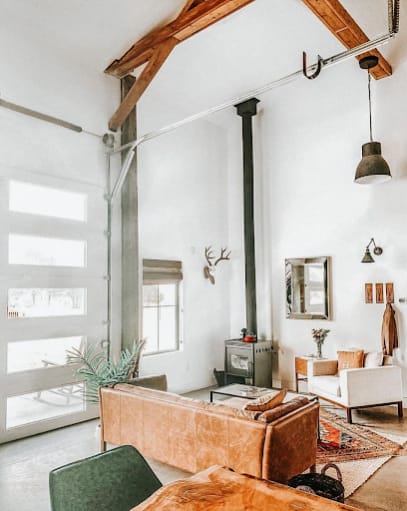
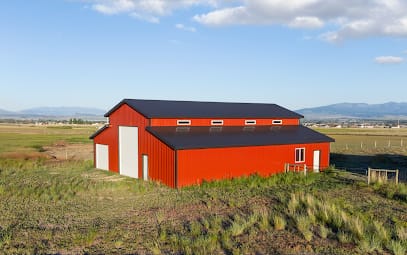
East Helena, MT
Ad space available
Your barndo business can be here
Builders, lenders, kit makers and suppliers: put your company in front of people planning a barndominium in Montana.
Get the deck and pricingBuilding a barndominium in Montana
A finished barndominium in Montana runs about $150 to $230 per square foot turnkey, or $50 to $85 per square foot for a shell, by our directory estimates. That puts a 2,400 square foot home at roughly $360,000 to $552,000 before land and site work, above the national medians in our data. We list 5 Montana builders.
Montana's rules split sharply at the edge of a certified jurisdiction. Inside a city like Bozeman or Missoula, you get plan review and inspections. Outside, the state exempts single-family homes from a building permit entirely. What follows you everywhere is the land itself: DEQ sanitation approval on lots under 20 acres, a water right for your well, a state electrical inspection, and snow and seismic loads that change by the valley.
Land, zoning and deed restrictions
Start with the sanitation history of the lot, not the zoning. DEQ's subdivision program reviews divisions of land creating parcels under 20 acres, and the result is a Certificate of Subdivision Approval (COSA) that describes the water source, wastewater disposal and stormwater plan. DEQ says that if a lot was created after 1961 and is under 20 acres, it will usually have either a COSA or sanitary restrictions. Lots with restrictions, or lots excluded from review as having "no facilities," need a COSA before you can develop a well or septic. Changing a lot from one living unit to two takes a COSA rewrite.
That makes the COSA a buying document. Ask the county environmental health office for the COSA and lot layout before you make an offer, and check that the approved drainfield and well locations leave room for a long barndo with a shop.
Zoning varies county by county. Ask the planning office whether the parcel is zoned at all and what the district allows, then get the recorded covenants from the title company and read them for words like "metal," "exterior materials" and "outbuilding." Our barndominium zoning guide has the full checklist.
Codes, engineering and climate
The Department of Labor and Industry's Building Codes Program adopts a uniform state code, and the current codes list shows the 2024 IRC, the 2024 International Energy Code and the 2023 National Electrical Code all effective September 26, 2026. Cities, counties and towns may enforce codes locally only if the program certifies them. Most certified programs cover city limits, such as Billings, Bozeman, Great Falls, Helena, Kalispell and Missoula; Missoula County and Deer Lodge County are among the few certified countywide.
Outside a certified jurisdiction, state law exempts residential buildings with fewer than five dwelling units, farm and ranch buildings, and private garages and storage buildings for the owner's use from a state building permit. Nobody reviews your plans. The code still sets the standard your lender, insurer and future buyer will measure against, so build to it.
Electrical is not exempt. A homeowner may wire their own home, garage and premises under a state homeowner's electrical permit, inspected by state electrical inspectors; all other wiring needs a licensed electrical contractor and a state permit.
Two loads drive the engineering:
- Snow. Montana law sets a minimum design roof snow load of 30 psf after allowed reductions. Outside certified jurisdictions, the state's snow load guidance says to use the ASCE 7 Hazard Tool for the site. Mountain parcels can need several times the minimum, which changes truss, purlin and post sizes on a post-frame kit.
- Earthquakes. The USGS calls Montana one of the most seismically active States, with activity concentrated in the mountainous western third, in a zone that also covers southeastern Idaho and western Wyoming. West of the Divide, ask the engineer how the design handles seismic bracing, especially around wide shop door openings.
What a barndominium costs in Montana
These figures come from our state table. They are Barndo Finder directory estimates, not transaction data, and exclude land, well, septic, site work and the driveway.
| Size | Shell ($50 to $85/sqft) | Turnkey ($150 to $230/sqft) |
|---|---|---|
| 1,500 sq ft | $75,000 to $127,500 | $225,000 to $345,000 |
| 2,400 sq ft | $120,000 to $204,000 | $360,000 to $552,000 |
| 3,000 sq ft | $150,000 to $255,000 | $450,000 to $690,000 |
Montana sits above the national medians in our data on both ranges (national: shell $45 to $75, turnkey $145 to $215), by $5 to $15 per square foot. We would expect mountain sites with high snow loads, seismic detailing and long delivery hauls to land at the top, and eastern prairie builds nearer the bottom. Compare states on our cost page, with national context in the 2026 cost report.
Financing and insurance in Montana
AgWest Farm Credit is the only Farm Credit association listed for Montana. Its one-step construction loan guide sets clear terms: a maximum loan of 80 percent of the finished property value, reserves of 10 percent of the construction bid plus four months of payments, a nine-month interest-only construction phase, and a licensed general contractor approved by AgWest. It also lists building and septic permits as required before closing. In a county with no building permit, ask the loan officer early what it accepts in place of one. Banks and credit unions also lend; our construction loan guide and financing page compare the options.
On contractors, Montana replaced its registration program with a Construction Contractor License on January 1, 2026. It targets contractors with employees and corporations or manager-managed LLCs regardless of employee count, and the state's FAQ describes its purpose in terms of business registration, workers compensation and unemployment coverage; it does not describe a trade exam. It also protects you: hiring a contractor licensed on the date of the contract keeps you from being liable as their employer for workers compensation. Check the license in the state's license search. For insurance, our insurance guide covers how carriers rate steel and post-frame homes.
Utilities, well and septic
Wells are a water right question first. DNRC says you don't need a permit for a groundwater well using 35 gallons per minute or less, up to 10 acre-feet a year, but you do need paperwork. Since January 1, 2026, some of these wells need a Notice of Intent (Form 602I) authorized by DNRC before the water is put to use. Within 60 days after use begins, you file a Notice of Completion (Form 602) to receive the water right, and your driller files the well log with the Montana Bureau of Mines and Geology.
Septic systems are designed to DEQ rules, including Circular DEQ-4, and permitted through the county or local health department. On lots reviewed for a COSA, DEQ requires four feet of natural soil between the drainfield and a limiting layer such as groundwater, and a sand mound built up above grade cannot be used to manufacture that separation. A high water table can rule out a lot. Budget with published ranges of $3,500 to $8,500 and up for septic and $10,000 to $30,000 for a drilled well from our build process guide, then get local bids.
A realistic timeline in Montana
Plan on 12 to 18 months from design to move-in, the range in our build timeline guide, with altitude setting the season.
- Before you buy: get the COSA or sanitary restriction status, the well plan, and the snow load for the exact site.
- Pre-construction: 3 to 6 months. Engineering, septic permit, loan approval, and a building permit inside certified jurisdictions. A COSA rewrite or new subdivision review adds time.
- Construction: 6 to 12 months. Pour and close in the shell between late spring and fall, then finish inside through winter.
Builders we list in Montana
We list 5 barndominium builders in Montana, including two Morton Buildings locations. Ratings are public Google reviews at the time we indexed them.
| Region | Builder | City | Build type | Rating |
|---|---|---|---|---|
| Bitterroot | Back Forty Building Co. | Florence | Shell | 4.8 (55 reviews) |
| Bitterroot | Modern Barn Supply | Hamilton | Shell | Not yet rated |
| Helena area | H&H Custom Buildings | East Helena | Turnkey | 4.8 (17 reviews) |
| Gallatin Valley | Morton Buildings, Inc. | Belgrade | Turnkey, Morton kits | 4.3 (4 reviews) |
| Billings area | Morton Buildings, Inc. | Laurel | Shell and turnkey, Morton kits | Not yet rated |
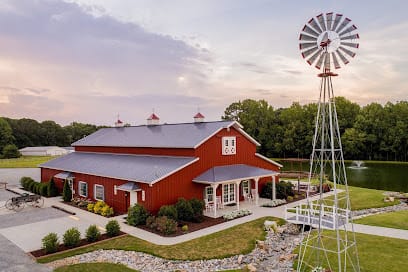
Photo: Morton Buildings, Inc.
Back Forty Building Co. has the most public reviews in our Montana data. For the Morton option, read our Morton Buildings barndominium review. Ask every builder the snow load and seismic category on their last three stamped drawings and for their Construction Contractor License number.
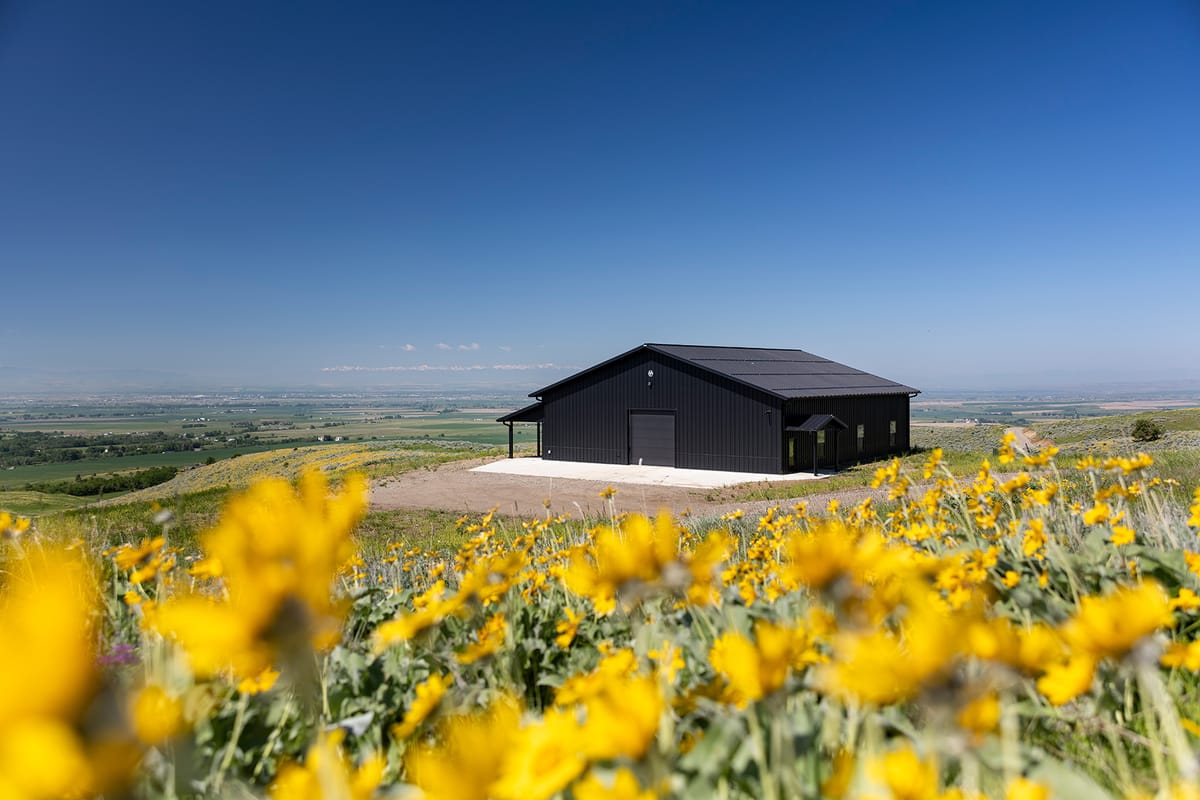
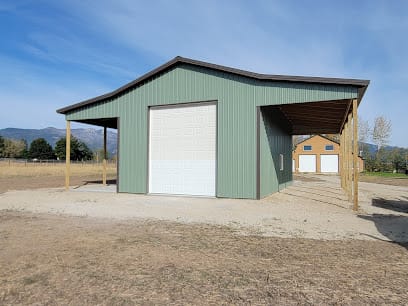
Photo: Back Forty Building Co.
Eastern Montana buyers can also check our North Dakota and Wyoming pages, and Bitterroot and Flathead buyers our Idaho page. When you are ready, request quotes from Montana builders who serve your county, and check each one against our cost table.
Updated October 2026 · Barndo Finder research
Building in Montana: common questions
Do you need a building permit for a barndominium in Montana?
Inside a certified city, town or county building program, yes. Outside one, state law exempts residential buildings with fewer than five dwelling units from a state building permit. You still need a state electrical permit and inspection, septic approval through the county, and, on many lots under 20 acres, a DEQ sanitation approval before water or sewer can go in.
How much does a barndominium cost in Montana?
Our directory estimate for Montana is $150 to $230 per square foot turnkey and $50 to $85 per square foot for a shell, above the national medians in our data. A 2,400 square foot turnkey home works out to about $360,000 to $552,000 before land, well, septic and site work. These are estimates, not quotes.
What is a COSA and why does it matter for a Montana barndominium?
A Certificate of Subdivision Approval is DEQ's sanitation approval for a parcel, covering the water source, wastewater and stormwater. DEQ says most lots under 20 acres created after 1961 have either a COSA or sanitary restrictions. If the lot has restrictions, a COSA must be issued before you develop a well or septic, so check before you buy.
Does a contractor need a license in Montana?
Since January 1, 2026, Montana requires a Construction Contractor License under MCA Title 37, chapter 45, replacing the old registration. It targets contractors with employees and corporations or manager-managed LLCs. The state FAQ ties it to business, workers compensation and unemployment coverage compliance. Hiring a licensed contractor also shields you from being treated as their employer for workers compensation.
What snow load should a Montana barndominium be designed for?
State law sets a minimum design roof snow load of 30 psf after allowed reductions. Inside a certified jurisdiction, the local building official sets the number. Outside one, the state Building Codes Program says ground snow load should come from the ASCE 7 Hazard Tool for the exact site, which can be far higher in the mountains.
Can you get a loan for a barndominium in Montana?
Yes. AgWest Farm Credit is the Farm Credit association for Montana and offers one-step construction loans up to 80 percent of the finished property value. It requires an approved licensed general contractor, building and septic permits before closing, and reserves of 10 percent of the bid plus four months of payments. Banks and credit unions also lend.