Builders / Idaho
Barndominium builders in Idaho
Planning a build? Read our guide to building a barndominium in Idaho.
Builders tracked
Barndominium-specific, deduplicated
Turnkey
Per sqft, directory estimate
Shell only
Per sqft, directory estimate
Permits and codes in Idaho
Idaho has no state-run residential permit: each city or county decides whether to run a building code program, and if it does it must use the codes adopted by the Idaho Building Code Board. Several rural counties run no building department at all. In those counties you may only need electrical, plumbing, HVAC and septic permits. General contractors register with DOPL rather than hold a license. There is no exam, so registration proves little; check references and insurance yourself. Electricians, plumbers and HVAC contractors are licensed and verifiable through the DOPL online lookup. Engineering drivers are snow load, which exceeds 100 psf in mountain valleys, seismic design in eastern Idaho, and 24 to 36 inch frost depth. Septic permits run through the 7 regional public health districts, such as Central District Health and Panhandle Health District.
Financing a barndominium in Idaho
AgWest Farm Credit, formed when Northwest Farm Credit Services merged with Farm Credit West in 2023, covers all of Idaho and closes rural construction loans on acreage. Idaho Central Credit Union and community banks handle conventional construction-to-perm where comps exist. Barndominium comparables are now common enough around Boise, Twin Falls and Idaho Falls that appraisals usually survive. Expect 15 to 25 percent down; remote off-grid parcels push lenders toward the higher end.
The list (8)
Sorted by review count. Featured listings are labeled.
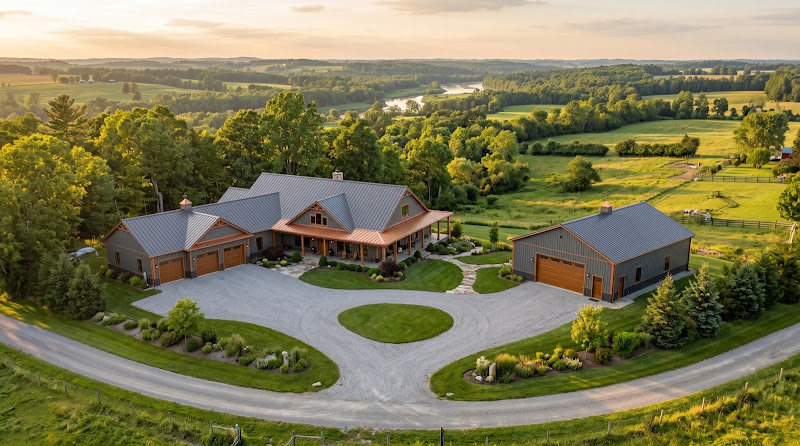

Photos pending
Hayden, ID
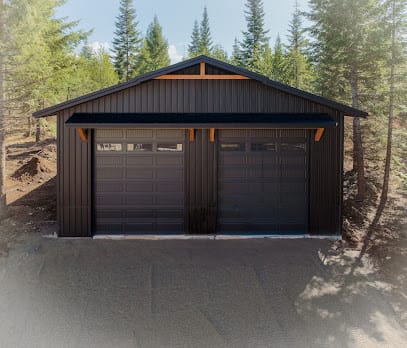
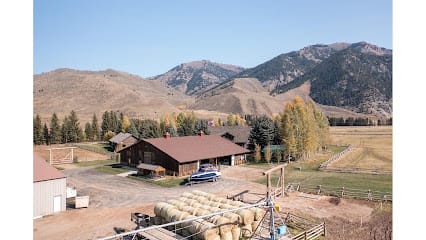
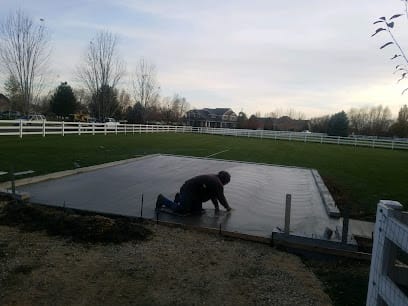
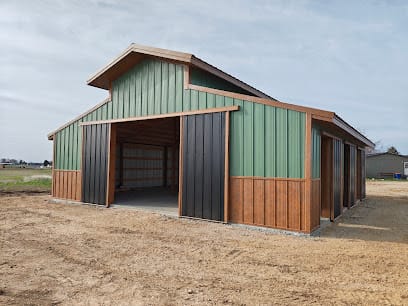
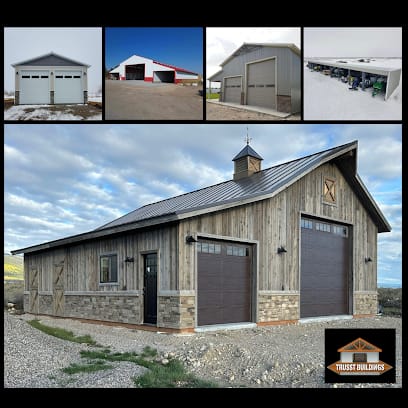
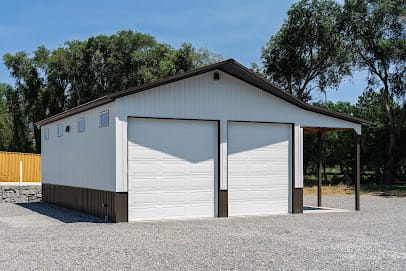
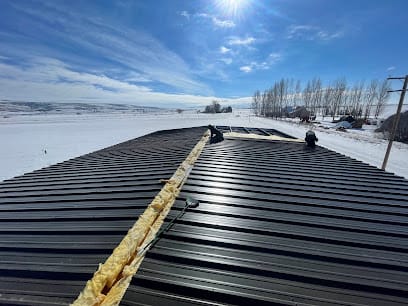
Ad space available
Your barndo business can be here
Builders, lenders, kit makers and suppliers: put your company in front of people planning a barndominium in Idaho.
Get the deck and pricingBuilding a barndominium in Idaho
A finished barndominium in Idaho runs about $150 to $225 per square foot turnkey, or $45 to $80 per square foot for a shell, by our directory estimates. That puts a 2,400 square foot home at roughly $360,000 to $540,000 before land and site work, slightly above the national medians in our data. We list 8 Idaho builders, split between North Idaho, the Treasure Valley and the Upper Snake River.
Three things set Idaho apart. Growth: the Idaho Department of Labor says Ada, Canyon and Kootenai counties added over 109,000 residents from 2020 to 2025, and the counties where barndo buyers want acreage are rewriting their land rules in response. Local-option codes: a county can run a full building department or none at all. And contractor registration is not a license, so checking a builder falls to you.
Land, zoning and deed restrictions
Growth is reshaping the rural edges where most barndos go. Canyon County, which the Department of Labor says had the state's fastest growth rate in 2025 at 2.9 percent, offers a clear example. The county reports that its administrative land division ordinance allowed 379 land divisions in agricultural zones between 2020 and 2025, creating 1,028 new parcels, and it has proposed changes that would define what makes a parcel buildable, add agricultural-only parcels, and require sign-offs from highway, fire and irrigation districts and Southwest District Health. Those changes were scheduled for a Planning and Zoning Commission hearing on August 20, 2026, so check where they stand. If you are buying a split parcel in a growing county, confirm in writing that it is a buildable lot before you close.
Two more checks. Ask whether a home with an attached shop is allowed in the zone, or whether the county treats the shop as an accessory building with its own size limit. And get the recorded covenants for any subdivision lot and read them yourself; restrictions on exterior materials are where a steel-sided barndo usually gets stopped.
Codes, engineering and climate
Idaho's code is set by statute and the Idaho Building Code Board, but adoption is local. Under Idaho Code 39-4116, a local government may elect to run a building code program by ordinance. Once it issues permits, it must adopt the board's codes, including the Idaho Residential Code and the 2018 Idaho Energy Conservation Code, and it cannot pull in newer IRC provisions the board has not adopted. The statute also exempts one- and two-family homes from sprinkler requirements, and it requires counties to exempt agricultural buildings from the codes. That exemption is for barns, not homes; living space in a "farm building" is still a dwelling.
Where a county has no program, there is no state building permit to fall back on: DOPL's building program FAQ limits its own plan review to state buildings. Electrical is different. DOPL issues electrical permits, including homeowner permits for work on your own primary or secondary residence and related outbuildings, and some cities and counties run their own electrical programs, so check which applies to your parcel.
Snow, seismic and frost all vary by county. Kootenai County's residential permit guide shows how specific it gets:
| Kootenai County design criterion | Value |
|---|---|
| Residential code | 2018 IRC |
| Wind | 115 mph ultimate design wind speed |
| Seismic | Zone C |
| Minimum frost depth of footings | 24 inches |
| Flat roof snow load, Zone A / B / C | 40 / 50 / 60 psf minimum, prescriptive |
| Flat roof snow load, Zone D | Idaho licensed engineer calculates and designs |
Zone D engineers work from the University of Idaho's Ground and Roof Snow Loads for Idaho, the study Kootenai County's guide names. Seismic is a real design load in the east too: the USGS places southeastern Idaho in the same seismic zone as western Montana. For a post-frame or steel barndo, a jump from 40 to 60 psf or higher means heavier trusses, tighter purlins and bigger posts. Ask every supplier which zone their quote is engineered to.
What a barndominium costs in Idaho
These figures come from our state table. They are Barndo Finder directory estimates, not transaction data, and exclude land, well, septic, site work and the driveway.
| Size | Shell ($45 to $80/sqft) | Turnkey ($150 to $225/sqft) |
|---|---|---|
| 1,500 sq ft | $67,500 to $120,000 | $225,000 to $337,500 |
| 2,400 sq ft | $108,000 to $192,000 | $360,000 to $540,000 |
| 3,000 sq ft | $135,000 to $240,000 | $450,000 to $675,000 |
Idaho's shell low matches the national median in our data, and the rest of both ranges sits $5 to $10 per square foot above it (national: shell $45 to $75, turnkey $145 to $215). We would expect North Idaho builds in high snow zones to land toward the top and Treasure Valley builds on flat farm ground nearer the middle. Compare states on our cost page, with national context in the 2026 cost report.
Financing and insurance in Idaho
AgWest Farm Credit is the only Farm Credit association listed for Idaho. Its one-step construction loan caps the loan at 80 percent of the finished property value, asks for reserves of 10 percent of the construction bid plus four months of payments, and runs a nine-month interest-only construction phase. It requires a licensed general contractor that AgWest approves, and building and septic permits before closing. In a county with no building department, ask the loan officer early what it will accept in place of a permit. Banks and credit unions round out the market; our construction loan guide and financing page compare them.
Vetting the builder is mostly on you. DOPL's contractor FAQ says the Idaho Contractor Registration Act "requires registration, not licensure." Anyone doing a job over $2,000 must register and show at least $300,000 in general liability coverage, plus workers compensation or an explanation why it is not required. Owners who do their own work on their own land and do not plan to sell within 12 months are exempt. Idaho also requires a general contractor to give you a disclosure before any residential contract over $2,000: your right to lien waivers from subcontractors, proof of liability and workers compensation coverage, the option of extended title insurance, and the option of a surety bond. If a builder does not hand you that form, ask why. Our insurance guide covers coverage for the finished home.
Utilities, well and septic
Most rural Idaho barndos use the domestic water exemption. IDWR says the exemption covers homes, livestock and irrigation of up to half an acre if total use stays under 13,000 gallons per day. Senate Bill 1222, signed February 17, 2026, revised the rules: in new subdivisions of five or more lots filed on or after July 1, 2025, in areas under a moratorium or designated as critical groundwater or groundwater management areas, a permit is now required for domestic uses other than in-home use and livestock. Buying in a new subdivision? Ask whether lawn and garden water is covered.
Septic permits in Idaho come from the public health districts under DEQ's subsurface sewage disposal rules, IDAPA 58.01.03, such as Panhandle Health District in the north and Central District Health around Boise. The district does a site evaluation first, and the results decide whether the lot takes a standard drainfield or an alternative system. Budget with published ranges of $3,500 to $8,500 and up for septic and $10,000 to $30,000 for a drilled well from our build process guide, then get local bids.
A realistic timeline in Idaho
Plan on 12 to 18 months from design to move-in, the range in our build timeline guide.
- Before you buy: confirm the parcel is buildable, the septic site evaluation, the water source and the snow zone.
- Pre-construction: 3 to 6 months. Engineering, the septic permit, the loan, and a building permit where the county runs a program.
- Construction: 6 to 12 months. In the Treasure Valley, crews can work most of the year; in North Idaho and the high valleys of the east, close in the shell before the first heavy snow.
Builders we list in Idaho
We list 8 barndominium builders in Idaho. Here are all of them, by region, with what our data shows. Ratings are public Google reviews at the time we indexed them.
| Region | Builder | City | Build type | Rating |
|---|---|---|---|---|
| North Idaho | Northwest Structures Pole Buildings & Barndominium Builders | Hayden | Shell | 4.6 (53 reviews) |
| North Idaho | Steel Structures America | Post Falls | Turnkey, Mueller kits | 3.9 (45 reviews) |
| Treasure Valley | Morton Buildings, Inc. | Nampa | Turnkey, Morton kits | 4.0 (8 reviews) |
| Treasure Valley | Vassar Enterprises | Nampa | Shell | 5.0 (6 reviews) |
| Treasure Valley | The Wise Man Builds LLC | Caldwell | Turnkey | 5.0 (6 reviews) |
| Treasure Valley | Steel Ridge Construction | Middleton | Shell | Not yet rated |
| Eastern Idaho | Trusst Buildings | Shelley | Shell | 5.0 (4 reviews) |
| Eastern Idaho | Beehive Buildings Idaho | Shelley | Turnkey | 5.0 (1 review) |
Photo: Morton Buildings, Inc.
North Idaho has the deepest review history in our data. For kit context, see our reviews of Mueller Buildings and Morton Buildings. Ask every builder for their DOPL registration number, the snow zone on their last three stamped drawings, and the residential disclosure form.
Photo: Steel Structures America
Panhandle buyers can also check our Montana page, and eastern Idaho buyers our Wyoming page. When you are ready, request quotes from Idaho builders who serve your county, and check each one against our cost table.
Updated October 2026 · Barndo Finder research
Building in Idaho: common questions
Do you need a building permit for a barndominium in Idaho?
Only where a city or county has chosen to enforce a building code. Under Idaho Code 39-4116, local governments may elect to run a code program, and those that issue permits must use the codes adopted by the Idaho Building Code Board. Electrical permits are separate: DOPL issues them where no local program does, and septic permits come from your public health district.
How much does a barndominium cost in Idaho?
Our directory estimate for Idaho is $150 to $225 per square foot turnkey and $45 to $80 per square foot for a shell, slightly above the national medians in our data. A 2,400 square foot turnkey home works out to about $360,000 to $540,000 before land, well, septic and site work. These are estimates, not quotes.
Do Idaho contractors need a license to build a barndominium?
They need a registration, not a license. Under the Idaho Contractor Registration Act, anyone doing a job over $2,000 must register with DOPL and carry at least $300,000 of general liability insurance. Owners building on their own land who do not plan to sell within 12 months are exempt.
Can you drill a well for a barndominium in Idaho without a water right permit?
Usually. Idaho's domestic exemption covers a home, livestock and irrigation of up to half an acre if total use stays under 13,000 gallons per day. Changes signed in February 2026 tightened the rules for new subdivisions of five or more lots in moratorium or critical groundwater areas, where uses beyond in-home and livestock now need a permit.
What snow load does a barndominium need in North Idaho?
Kootenai County uses snow load zones. Zone A requires a minimum 40 psf flat roof snow load, Zone B 50 psf and Zone C 60 psf, all with prescriptive IRC design. In Zone D, an Idaho licensed engineer must calculate the parcel's snow load from the University of Idaho snow load study and design the building to it.
Can you get a loan for a barndominium in Idaho?
Yes. AgWest Farm Credit is the Farm Credit association for Idaho and offers one-step construction loans up to 80 percent of the finished property value. It requires an approved licensed general contractor, building and septic permits before closing, and reserves of 10 percent of the bid plus four months of payments. Banks and credit unions lend too.