Builders / Louisiana
Barndominium builders in Louisiana
Planning a build? Read our guide to building a barndominium in Louisiana.
Builders tracked
Barndominium-specific, deduplicated
Turnkey
Per sqft, directory estimate
Shell only
Per sqft, directory estimate
Permits and codes in Louisiana
Louisiana runs a mandatory statewide code, the Louisiana State Uniform Construction Code, adopted after Katrina and enforced in every parish, so there is no permit-free rural build here. Residential work of $50,000 or more requires a residential license from the Louisiana State Licensing Board for Contractors, verifiable online at lslbc.louisiana.gov. Engineering is wind and water: 130-150 mph design speeds in southern parishes, engineered uplift connections on post-frame buildings, and flood zone elevation requirements with FEMA elevation certificates on much of the buildable land. Frost depth is negligible; expansive soils and slab moisture control matter more. Septic systems need a permit from the Louisiana Department of Health, and high water tables push many sites to aerobic treatment units instead of conventional fields.
Financing a barndominium in Louisiana
Louisiana Land Bank lends on farmland, timberland and recreational land, and Southern AgCredit also lends in the state. Both are Farm Credit associations built for acreage deals that conventional lenders decline; ask each which home construction products it offers in your parish. Flood zone status drives everything: mandatory flood insurance changes the payment math, so pull the FEMA map before applying. Comps are workable in most parishes. Expect 15-20 percent down.
The list (2)
Sorted by review count. Featured listings are labeled.

Ad space available
Your barndo business can be here
Builders, lenders, kit makers and suppliers: put your company in front of people planning a barndominium in Louisiana.
Get the deck and pricingBuilding a barndominium in Louisiana
A finished barndominium in Louisiana runs about $145 to $215 per square foot turnkey, or $45 to $75 per square foot for a shell, by our directory estimates. That puts a 2,400 square foot home at roughly $348,000 to $516,000 before land and site work, right at the national median. We list 2 Louisiana builders, both in the north of the state.
Louisiana is the strictest state in this part of the South for a barndo, and that is mostly good news for the owner. Every parish enforces the same statewide code, so there is no permit-free rural build. A builder license kicks in at $50,000. And the two forces that shape the design, wind and water, are also what drive your insurance bill, which is why the FORTIFIED standard matters more here than almost anywhere.
Land, zoning and deed restrictions
Rural parishes zone lightly or not at all, while cities and the suburban parishes around Baton Rouge, Lafayette and the Northshore zone like any metro. Subdivision covenants are the common blocker: many ban metal siding or require brick or other masonry on the front. Get every recorded restriction from the title company before you close and search it for "metal" and "exterior."
The bigger land question in Louisiana is water. Pull the lot up on the FEMA Flood Map Service Center before you make an offer. A mapped flood zone means the parish floodplain ordinance sets how high the slab or floor must sit, your lender will require flood insurance, and the cost of fill or a raised foundation lands on your budget, not the builder's square foot price.
Codes, engineering and climate
Louisiana adopted a mandatory statewide code after the 2005 hurricanes. The Louisiana Uniform Construction Code Commission currently enforces the 2021 International Residential Code with Louisiana amendments, effective January 1, 2023, and the 2024 ICC editions are scheduled to take effect January 1, 2027. Ask your parish which edition applies to a permit filed on your date.
Enforcement is local but not optional. Under R.S. 40:1730.23, all municipalities and parishes must enforce the code using building code enforcement officers or certified third-party providers, and that enforcement includes plan review, inspections and permits. Small rural parishes often contract the work to a third-party provider, so your inspector may be a private firm working for the parish.
Licensing is statewide too. The current statute defines a residential contractor as anyone building a home for another when the project value is $50,000 or more; the older $75,000 threshold you may see quoted has been lowered. Home improvement work needs registration from $7,500. Check any builder on the board's contractor search before you sign.
What drives the engineering in Louisiana:
- Hurricane wind. Design wind speeds rise toward the Gulf, and the engineer sets yours from the ASCE 7 map for the exact site. In south Louisiana that number drives the frame, the roof-to-wall and wall-to-slab connections, and whether doors and windows need impact protection. Large overhead shop doors are a weak point; ask for their wind rating. Our storm safety guide covers the details.
- Flood elevation. A slab-on-grade barndo is cheap only where the lot is high enough. Where it is not, budget for fill, a stem wall or piers, and an elevation certificate.
- Soft, wet soils. Clay that shrinks and swells and a high water table are common. A geotechnical report before the slab design is money well spent; see our barndominium foundation guide.
- Humidity. Condensation under a metal roof is the top barndo complaint in the Gulf South. Plan the vapor control and insulation up front with our insulation guide.
What a barndominium costs in Louisiana
Here is the math from our state table. These are Barndo Finder directory estimates, not transaction data, and they exclude land, well, septic, site work, fill or elevation, and the driveway.
| Size | Shell ($45 to $75/sqft) | Turnkey ($145 to $215/sqft) |
|---|---|---|
| 1,500 sq ft | $67,500 to $112,500 | $217,500 to $322,500 |
| 2,400 sq ft | $108,000 to $180,000 | $348,000 to $516,000 |
| 3,000 sq ft | $135,000 to $225,000 | $435,000 to $645,000 |
Louisiana matches the national medians in our data exactly (shell $45 to $75, turnkey $145 to $215), and it runs $20 to $25 per square foot above Mississippi and Arkansas on turnkey work. Coastal parishes cost more than the table suggests because wind engineering, opening protection and elevation are real line items. The 2026 cost report has the national picture, and every state is on the cost page.
Financing and insurance in Louisiana
Read the Farm Credit field carefully. Louisiana Land Bank is the one Farm Credit association serving the whole state, but its loan menu lists farmland, timberland, recreational and hunting land, not home loans, so it is a land lender for most barndo buyers. Southern AgCredit, with Louisiana branches in Ruston and Shreveport, finances the construction of a home on existing rural property in Louisiana and Mississippi. First South Farm Credit lends in Alabama, Mississippi and Louisiana, and its country home loans cover construction. Community banks fill in the rest; our construction loan guide and the financing page explain the process.
Insurance is where Louisiana differs most. State law requires insurers to offer a discount for FORTIFIED homes, and the Louisiana Legislative Auditor cites an actuarially justified discount of 7 to 24 percent for a FORTIFIED Roof, smaller inland and larger on the coast. The Louisiana Fortify Homes Program grants of up to $10,000 help existing homeowners re-roof, but its FAQ says new construction is not eligible. For a new barndo, the cheaper move is to design to FORTIFIED from the first drawing and hire a certified evaluator before the building is ordered. If no private carrier will write the policy, Louisiana Citizens is the insurer of last resort. Flood coverage is separate from homeowners in every case. Our barndominium insurance guide covers carrier types.
Utilities, well and septic
The Louisiana Department of Health's Onsite Wastewater Program licenses installers, and sanitarians in each parish health unit run the permitting. On low, wet or tight lots a gravity septic field may not work, and the Department publishes a separate applicant packet for mechanical treatment systems: you hire a licensed installer, submit plans to the health unit, and a sanitarian surveys the site before the system goes in. Mechanical units also need ongoing maintenance, so factor in a service contract.
For budgeting, published estimates run $3,500 to $8,500 and up for a conventional septic system and $10,000 to $30,000 for a drilled well, per our build process guide. Many rural roads in Louisiana have a water system line, so ask about a tap before pricing a well.
A realistic timeline in Louisiana
Plan on 12 to 18 months from design to move-in, the national range from our build timeline guide.
- Before you buy: flood zone, elevation, covenants and a sewage answer from the parish health unit.
- Pre-construction: 3 to 6 months. Wind and foundation engineering, plan review by the parish or its third-party provider, the loan and the sewage permit. Add FORTIFIED design review if you want the discount.
- Construction: 6 to 12 months for a turnkey home. Hurricane season (June through November) can stall exterior work on the coast, so try to have the shell dried in before it.
Builders we list in Louisiana
We list 2 barndominium builders in Louisiana, both shell builders in the north of the state. Ratings are public Google reviews at the time we indexed them.
| Region | Builder | City | Build type | Rating |
|---|---|---|---|---|
| Northwest | Ark-La-Tex Shop Builders | Haughton | Shell | 4.5 (60 reviews) |
| Central | Black Bayou Metals | Jena | Shell | No reviews indexed |
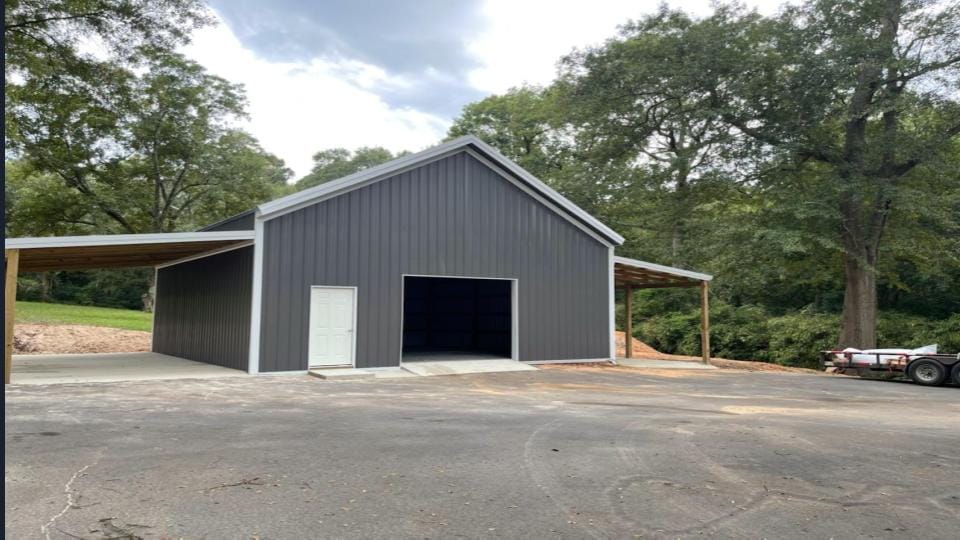
Photo: Ark-La-Tex Shop Builders
That is a thin list, and we list no builder in south Louisiana. The nearest listings by city are in East Texas: 1845 Barndominiums in Hallsville and two Waskom builders sit a short drive from Shreveport (see our 1845 Barndominiums review and the East Texas builder guide), and VTX Builders in Orange, Texas is close to Lake Charles. Cooper Contracting in Perkinston and two Hattiesburg suppliers are on our Mississippi page. We do not know their service areas; ask each one whether they build in your parish and whether they have built to FORTIFIED.
With only shell builders listed in-state, most Louisiana buyers will need a separate contractor for the interior. Read our shell vs turnkey guide before you sign.
Ready to price your build? Request quotes from builders who serve your parish, and check every number against our cost table.
Updated October 2026 · Barndo Finder research
Building in Louisiana: common questions
Do you need a building permit for a barndominium in Louisiana?
Yes, everywhere. Louisiana law requires every parish and municipality to enforce the state uniform construction code, either with its own building officials or through certified third-party providers. That means plan review, inspections and a permit even on rural land. You also need a sewage permit from the parish health unit if the lot is not on a public sewer.
How much does a barndominium cost in Louisiana?
Our directory estimate for Louisiana is $145 to $215 per square foot turnkey and $45 to $75 per square foot for a shell, which matches the national medians in our state table. A 2,400 square foot turnkey build works out to about $348,000 to $516,000 before land, site work, septic, any fill or elevation, and the driveway. Those are estimates, not quotes.
What contractor license does a Louisiana barndominium builder need?
A residential license with the Residential Construction classification from the Louisiana State Licensing Board for Contractors. Under the current statute, the threshold is a project value of $50,000 or more, which covers every barndominium home. The board's FAQ notes a commercial license does not allow building a single residential home. Search any builder on the board's public contractor lookup.
Does a FORTIFIED roof lower insurance on a Louisiana barndominium?
Yes. State law requires insurers to offer a discount for homes that meet FORTIFIED standards. A Louisiana Legislative Auditor report cites an actuarially justified discount of 7 to 24 percent for a FORTIFIED Roof, smaller inland and larger on the coast. The state's Fortify Homes grants do not apply to new construction, so a new build pays for the upgrade itself.
Can you get a septic system on a low, wet lot in Louisiana?
Often, but not always a conventional one. Sanitarians in each parish health unit run the permit process, and the Louisiana Department of Health publishes a separate applicant packet for individual mechanical treatment systems, which use a licensed installer and a sanitarian site survey. Ask the parish health unit about the lot before you close, not after.