Builders / Delaware
Barndominium builders in Delaware
Planning a build? Read our guide to building a barndominium in Delaware.
Builders tracked
Barndominium-specific, deduplicated
Turnkey
Per sqft, directory estimate
Shell only
Per sqft, directory estimate
Permits and codes in Delaware
Delaware has no single statewide code. New Castle, Kent and Sussex counties each adopt and enforce their own building codes, and incorporated towns run their own permit offices. Sussex County is where most barndominium activity happens. There is no state contractor exam: a general contractor only needs a Delaware Division of Revenue business license, registered through the One Stop portal, and non-resident contractors post a bond. Electricians, plumbers and HVAC techs are licensed by the Division of Professional Regulation and verifiable on DELPROS. Engineering drivers are coastal wind loads in Sussex, flood zones near the Inland Bays, and roughly 24 to 32 inch frost depth. Septic permits run through DNREC, and high seasonal water tables on the coastal plain force mound or pressure-dosed systems on many lots.
Financing a barndominium in Delaware
Horizon Farm Credit covers all three Delaware counties and closes construction loans on rural residential and small-acreage barndominium projects. Pole building comps exist in western Sussex and Kent County farm country, so appraisals are easier than in most mid-Atlantic states. Expect 20-25 percent down. Community banks on the Delmarva peninsula also do construction-to-perm, and some will treat a finished barndominium as a standard single-family appraisal.
The list (2)
Sorted by review count. Featured listings are labeled.
Ad space available
Your barndo business can be here
Builders, lenders, kit makers and suppliers: put your company in front of people planning a barndominium in Delaware.
Get the deck and pricingBuilding a barndominium in Delaware
A finished barndominium in Delaware runs about $145 to $215 per square foot turnkey, or $45 to $75 per square foot for a shell, by our directory estimates. A 2,400 square foot home lands around $348,000 to $516,000 before land and site work, right on the national median. We list 2 Delaware builders, one in Kent County and one in Sussex County.
Delaware is small but not uniform. There is no single statewide residential code; each of the three counties adopts its own, and they are on different editions. Contractors need a business license, not a competency license. The state's real gatekeeper for rural land is DNREC, which licenses the soil scientists, designers and installers who must handle every septic system, and permits every well.
Land, zoning and deed restrictions
Counties zone unincorporated land in Delaware, and towns zone inside their limits. In agricultural and rural residential districts in Kent and Sussex, a post-frame home is generally a single-family dwelling. The bigger constraint is often private: many Sussex County lots sit in subdivisions with recorded restrictions on exterior materials and outbuildings. Read every restriction on a lot before you buy, and if you want a large attached shop, ask the county how it will classify it. Our barndominium zoning guide has the questions to ask.
Kent County added a rule on small lots: since December 1, 2025, lines and grade surveys are required for development on lots smaller than half an acre. Most barndo lots are bigger, but it matters on a town-edge parcel.
Codes, engineering and climate
Each county runs its own building code office, and the editions differ:
| County | Residential code | Source |
|---|---|---|
| New Castle | 2021 IRC with county amendments, adopted 2023 | County Ordinance 23-121 |
| Kent | 2018 IRC with county amendments, effective October 5, 2020 | Kent County Levy Court |
| Sussex | 2021 IRC, chapters 1 through 10, effective January 1, 2023 | ICC NTA summary |
Some codes are set by the state rather than the county. Kent County's code page lists the 2018 International Energy Conservation Code and the 2021 International Plumbing Code among the state-mandated codes. Sussex County's 2021 adoption exempts single-family homes from fire sprinklers and requires a Delaware-registered architect's or engineer's seal on sealed drawings, signed and dated with the license expiration.
Licensing is light. Any contractor doing business in Delaware must register with and get a business license from the Division of Revenue, and out-of-state contractors file a non-resident package that includes a bond. There is no exam, so the license proves registration, not skill. Search the state's business license database, then check completed homes and insurance certificates. Electricians and plumbers are licensed separately.
The engineering drivers are coastal, not snow:
- Wind. Design wind speeds rise toward the Atlantic and Delaware Bay. Have the engineer pull the site's wind speed from the ASCE Hazard Tool and size the overhead doors and their framing for it. Our storm safety guide covers the details.
- Flood. Kent County requires permits for any work in flood plain areas. Low ground near the Inland Bays and the bay shore can sit in a mapped flood zone, which changes the foundation and the insurance.
- Soils and frost. Kent's amendments note a 2,000 pounds per square foot soil bearing value in the design table. Get the frost depth from the county office and put both on the stamped drawings.
What a barndominium costs in Delaware
These figures come from our state table. They are Barndo Finder directory estimates, not transaction data, and they exclude land, well, septic, site work and the driveway.
| Size | Shell ($45 to $75/sqft) | Turnkey ($145 to $215/sqft) |
|---|---|---|
| 1,500 sq ft | $67,500 to $112,500 | $217,500 to $322,500 |
| 2,400 sq ft | $108,000 to $180,000 | $348,000 to $516,000 |
| 3,000 sq ft | $135,000 to $225,000 | $435,000 to $645,000 |
Delaware matches the national median in our data and matches Pennsylvania. It runs $10 to $15 per square foot below Maryland on turnkey work and $30 to $45 below New Jersey. Coastal lots that need engineered septic, flood-zone foundations or higher wind design will land toward the top of the range. The 2026 cost report has national context, and every state is on the cost page.
Financing and insurance in Delaware
Horizon Farm Credit is the Farm Credit association for Delaware. Its published construction terms include a 12-month interest-only building period, a one-time close loan fixed for up to 30 years, and financing for properties with excess acreage and additional buildings. Ask how it underwrites post-frame homes before you commit to a design, since its product page lists stick-built, modular and log homes. Community banks on the Delmarva Peninsula also make construction loans, and farm country in Kent and western Sussex has more post-frame buildings for appraisers to reference than the beach towns. Our construction loan guide and the financing page explain the options.
For insurance, get a quote with flood and wind on the specific parcel before you close. Our barndominium insurance guide covers which carriers write post-frame homes.
Utilities, well and septic
DNREC's septic approval is a three-step process, and each step needs a licensed professional:
- Site evaluation by a licensed Class D soil scientist, who files a report for DNREC approval stating what system the parcel can support.
- System design and permit by a licensed designer: Class B for gravity systems, Class C for engineered or pressure-dosed systems.
- Installation by a licensed Class E system contractor.
On much of the coastal plain, a high seasonal water table rules out a simple gravity system, so budget for the engineered options until the site evaluation says otherwise. DNREC lets you search approved site evaluation reports online, which is a useful check on a lot before you buy.
Wells need a permit too: DNREC's Well Permits Program issues construction permits for wells withdrawing 50,000 gallons a day or less, and drillers are licensed through the state's Water Well Licensing program. For budgeting, published estimates run $3,500 to $8,500 and up for septic and $10,000 to $30,000 for a drilled well, per our build process guide.
A realistic timeline in Delaware
Plan on 12 to 18 months from design to move-in, the national range in our build timeline guide. Delaware tends toward the shorter end when the soils cooperate.
- Before you buy: zoning, deed restrictions, flood zone and the Class D site evaluation.
- Pre-construction: 3 to 5 months. Septic design and permit, well permit, stamped drawings, the loan and the county building permit.
- Construction: 6 to 12 months. Winters are milder than in Pennsylvania, but coastal storms can still delay a dry-in.
Builders we list in Delaware
We list 2 barndominium builders in Delaware. Here are both, with what our data shows. Ratings are public Google reviews at the time we indexed them.
| Region | Builder | City | Build type | Rating |
|---|---|---|---|---|
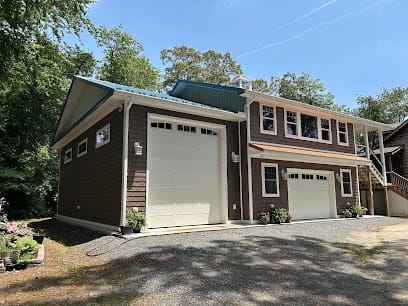
| Kent County | Delmarva Buildings | Wyoming | Turnkey | 4.5 (453 reviews) |
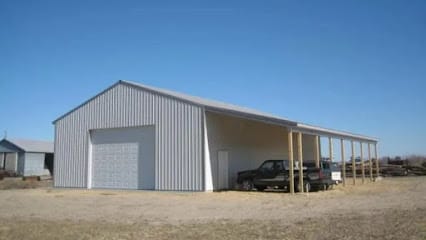
| Sussex County | The Amish Tradesmen | Seaford | Turnkey | 4.6 (36 reviews) |
Photo: Delmarva Buildings
Delmarva Buildings has the second-largest review count of any mid-Atlantic builder we list, behind Pennsylvania's Pioneer Pole Buildings. With only two in-state options, it is worth comparing quotes from Lancaster County post-frame crews on our Pennsylvania builders page. Ask every builder what wind speed and exposure they designed to, who stamps their drawings, and for their Delaware business license number.
Ready to price your build? Request quotes from builders who serve your county, and compare every number to our cost table.
Updated October 2026 · Barndo Finder research
Building in Delaware: common questions
Do you need a permit to build a barndominium in Delaware?
Yes. Delaware has no single statewide residential code, but New Castle, Kent and Sussex counties each adopt and enforce one, and incorporated towns run their own permit offices. On rural land you also need a DNREC-approved septic permit and a DNREC well permit before the house can be finished.
How much does a barndominium cost in Delaware?
Our directory estimate for Delaware is $145 to $215 per square foot turnkey and $45 to $75 per square foot for a shell, the same as the national median. A 2,400 square foot turnkey home works out to about $348,000 to $516,000 before land, well, septic, driveway and site work. These are estimates from our state table, not quotes.
Does a Delaware barndominium builder need a license?
Delaware has no state competency license or exam for general contractors. Every contractor working in the state must hold a business license from the Division of Revenue, and non-resident contractors must also post a bond on larger contracts. You can search the state's business license database by name before you sign, and ask for proof of insurance.
What kind of septic system does a Delaware barndominium need?
It depends on the soils. A licensed Class D soil scientist evaluates the parcel and DNREC approves the report, then a licensed designer draws the system: Class B for gravity systems and Class C for engineered or pressure-dosed systems. High water tables on the coastal plain push many lots toward the engineered options, which cost more.
Which lenders finance barndominiums in Delaware?
Horizon Farm Credit serves Delaware along with Pennsylvania, Maryland, Virginia and West Virginia. It offers one-time close construction loans with a 12-month interest-only building period and fixed rates for up to 30 years, and it finances properties with extra acreage and outbuildings. Community banks on the Delmarva Peninsula also make construction loans.