
Resources / Costs
Barndominium Well and Septic: Costs by System Type and Permits
Updated November 2026 · Barndo Finder research
Quick answer
A 200 foot well plus a conventional septic system costs about $9,500 to $24,500, per HomeGuide's national ranges. If the soil fails and you need an aerobic unit or a mound, well and septic together run $26,000 to $74,000 or more. The soil test, not the house, sets the number, and on rural land the septic permit is often the first permit you need.
A barndominium well and septic system costs about $9,500 to $24,500 for the common case: a 200 foot drilled well with a pump and a conventional gravity septic system. When the soil fails a perc test and you need an aerobic unit or a mound, the total climbs to roughly $26,000 to $74,000 or more, and none of it is in our per-square-foot cost estimates.
This page breaks that range down by septic system type and well depth, runs the math against our Texas cost estimates for a 2,000 square foot build, and shows how septic and water permits gate the rest of the project, state by state, from our state permit research.
Key takeaways
- Conventional septic costs $3,500 to $8,500 installed, per HomeGuide's septic cost guide (September 2025). Aerobic units run $20,000 to $40,000+ and mounds $25,000 to $50,000+ on the same guide.
- A drilled well costs $30 to $80+ per foot complete, or $6,000 to $16,000 at 200 feet, per HomeGuide's well drilling guide (July 2025).
- On a 2,000 square foot barndo, well and septic add $4.75 to $37 per square foot depending on soil and depth. Texas turnkey estimates in our data are $140 to $210 per square foot before that.
- The soil test decides the septic type, and the septic type is the biggest swing in the budget. Test before you buy the land.
- Septic is sized by bedrooms, not square feet. A barndo with a big shop and 3 bedrooms needs a 3 bedroom system.
- In many rural counties the septic permit is the main approval. Our state guides for Texas, Tennessee, Oklahoma and Arkansas all note rural counties with no residential building permit but a required septic permit.
How much does a septic system cost for a barndominium, by type?
The type is set by your soil, lot size and water table, not by your preference. Here are the installed ranges from two national cost guides, with the conditions the EPA's septic system guide says each type is used for.
| System type | HomeGuide (Sep 2025) | LawnStarter (Aug 2023) | Where it fits, per EPA |
|---|---|---|---|
| Conventional (gravity, anaerobic) | $3,500 to $8,500 | $2,500 to $6,000 | Soil passes the perc test and there is room for a drain field |
| Chamber (gravelless) | $4,000 to $11,000 | $3,500 to $8,500 | High groundwater tables, or where gravel is scarce |
| Drip distribution | $6,500 to $15,000 | $6,000 to $14,000 | Laterals sit in the top 6 to 12 inches of soil, no mound; needs a large dose tank and power |
| Constructed wetland | $7,000 to $14,000 | $7,000 to $12,500 | Mimics a natural wetland: lined cell, gravel and sand fill, wetland plants |
| Evapotranspiration | $10,000 to $15,000 | $10,000 to $15,000 | Arid climates only |
| Sand filter (HomeGuide: recirculating) | $15,000 to $25,000+ | $6,500 to $14,000 | High water table, sites near water |
| Aerobic treatment unit (ATU) | $20,000 to $40,000+ | $10,200 to $18,300 | Small lots, poor soil, high water table |
| Mound | $25,000 to $50,000+ | $10,000 to $20,000 | Shallow soil, high groundwater, shallow bedrock |
Sources: HomeGuide and LawnStarter, each guide's published date shown.
The two guides agree on simple systems and split badly on engineered ones: LawnStarter's aerobic and mound ranges top out below where HomeGuide's start. Get two local bids before you budget off either column.
HomeGuide breaks the conventional figure down as a 1,000 gallon tank ($1,000 to $1,500), a distribution box ($500 to $1,000), site prep and installation labor ($1,000 to $4,500), and engineering, permits and inspections ($1,000 to $1,500). Testing comes on top in some counties: HomeGuide lists a soil test at $250 to $700 and a deep hole percolation test by an engineer at up to $2,000.
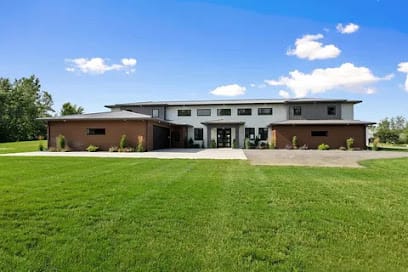 Photo: Bob Walters Builders LLC
Open ground like this lawn is what keeps a septic system cheap: room for a drain field set back from the house, the well and the driveway. A small or wet lot is where the engineered systems at the bottom of the table come in.
How much does a well cost, by depth?
Depth drives the price, and you will not know your depth until a local driller tells you what neighboring wells hit. HomeGuide's July 2025 figures:
| Well depth | Complete installation | Drilling only |
|---|---|---|
| 100 ft | $3,000 to $8,000+ | $2,000 to $3,000 |
| 150 ft | $4,500 to $12,000+ | $3,000 to $4,500 |
| 200 ft | $6,000 to $16,000+ | $4,000 to $6,000 |
| 300 ft | $9,000 to $24,000+ | $6,000 to $9,000 |
| 400 ft | $12,000 to $32,000 | $8,000 to $12,000 |
| 500 ft | $15,000 to $40,000 | $10,000 to $15,000 |
Source: HomeGuide well drilling cost. HomeGuide puts typical residential wells at 100 to 300 feet, with arid regions sometimes needing 300 to 600 feet or more.
Watch what a per-foot quote leaves out. HomeGuide notes the pump, pressure tank and electrical connections are "not always included in the quoted cost per foot," and lists them separately:
| Add-on | HomeGuide range |
|---|---|
| Well pump | $400 to $2,500 |
| Pressure tank | $800 to $1,500 |
| Electrical wiring and connections | $1,000 to $3,000 |
| Well permit | $350 to $700+ |
| Professional well inspection | $250 to $550 |
| Lab water test | $100 to $350 |
HomeGuide's drilling-only rate is $20 to $30 per foot; its complete-system rate is $30 to $80+ per foot. A per-foot quote near the low number is probably for the hole alone, so ask the driller which one you are looking at.
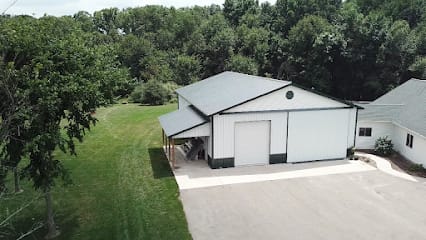 Photo: 42 Parallel Construction
Distance matters too: HomeGuide notes that the farther the well sits from the house, the more you pay for water and electrical lines. Ask the driller for local well logs, and ask the seller whether any existing well on the parcel has a permit and a recent water test.
What do well and septic add to a barndominium budget?
We ran five combinations against a 2,000 square foot, 3 bedroom barndominium in Texas. Our Texas directory estimates are $140 to $210 per square foot turnkey, so the house alone is $280,000 to $420,000. Those are Barndo Finder estimates from our cost table, not quotes, and they exclude land, well, septic and site work. The well and septic ranges are HomeGuide's.
| Scenario | Well | Septic | Well + septic | Per sq ft on 2,000 sq ft |
|---|---|---|---|---|
| Good soil, average depth | 200 ft: $6,000 to $16,000 | Conventional: $3,500 to $8,500 | $9,500 to $24,500 | $4.75 to $12.25 |
| High groundwater | 200 ft: $6,000 to $16,000 | Chamber: $4,000 to $11,000 | $10,000 to $27,000 | $5.00 to $13.50 |
| Shallow soil | 200 ft: $6,000 to $16,000 | Drip: $6,500 to $15,000 | $12,500 to $31,000 | $6.25 to $15.50 |
| Small lot or poor soil | 200 ft: $6,000 to $16,000 | Aerobic: $20,000 to $40,000+ | $26,000 to $56,000+ | $13.00 to $28.00 |
| Poor soil, deep water | 300 ft: $9,000 to $24,000+ | Mound: $25,000 to $50,000+ | $34,000 to $74,000+ | $17.00 to $37.00 |
The spread between the first and last rows is the point. On the same house, the ground under it can move the well and septic bill from under $10,000 to over $70,000. At the top end that is about a quarter of the low-end Texas house price, before land, driveway, power or clearing. Our guide to the hidden costs of building a barndominium lists the other site lines that stack on top.
The budget lesson: carry the engineered-system number until the soil test comes back. If you budget $9,500 and the test calls for an aerobic unit, the low end of the bill jumps to $26,000, and the extra $16,500 or more comes out of your finishes or your contingency.
What size septic system does a barndominium need?
Septic systems are sized by bedrooms, because bedrooms predict how many people live in the house. Square footage, shop bays and lofts do not count unless the county decides a room is a bedroom.
| Bedrooms | Typical tank (HomeGuide) | Tank only, before labor | Tennessee minimum capacity |
|---|---|---|---|
| 1 to 2 | 750 gal | $700 to $1,200 | 750 gal |
| 3 | 1,000 gal | $1,000 to $1,500 | 900 gal |
| 4 | 1,250 gal | $1,200 to $1,800 | 1,000 gal |
| 5 | 1,500 gal | $1,500 to $2,500 | 1,250 gal |
| 6+ | 1,750 gal | $2,000 to $3,000 | 1,500 gal (6) |
Tennessee figures are from Tenn. Comp. R. & Regs. 0400-48-01-.08, which sets 750, 900 and 1,000 gallons for up to 2, 3 and 4 bedrooms and adds 250 gallons per extra bedroom.
Barndominiums trip this rule in three ways:
- The office or bonus room. A room with a closet and a window may be counted as a bedroom. Ask before the septic design.
- The future bedroom. If you plan to finish a loft or shop corner into bedrooms later, size the system for the final count now.
- The shop. A wash bay, shop sink or floor drain adds flow, and how shop drains may connect is a local rule. Bring the shop plan to the septic designer.
How do septic and water permits gate a barndominium build?
On rural land, the septic permit is often the first approval and sometimes the only one. Our state guides track who issues it and what tends to hold projects up. A selection:
| State | Who permits septic | What it means for a barndo |
|---|---|---|
| Texas | TCEQ rules (OSSF), often through a county authorized agent | Outside city limits there is usually no county building permit, but you still need the septic permit, floodplain clearance where it applies, and often a driveway permit |
| Tennessee | TDEC | Usually what sets the schedule on rural land; opt-out counties require only electrical and septic permits |
| Oklahoma | DEQ (Authorization to Construct) | Many rural counties have no residential permit program, but the septic authorization is still required |
| Georgia | County environmental health office | Needs a soil report from a certified soil classifier; usually decides the rural schedule |
| Louisiana | Parish health unit sanitarians (Louisiana Department of Health) | Low, wet lots often cannot take a conventional system; mechanical treatment systems have their own permit packet |
| Arkansas | Arkansas Department of Health | A certified Designated Representative tests the soil and designs the system; the permit comes before construction |
| Kansas | County, under the county sanitary code and state minimum standards | Ask the county for the minimum lot size for a home on septic before you buy |
| Delaware | DNREC | High seasonal water tables on the coastal plain push many lots to engineered or pressure-dosed systems; DNREC also permits every well |
| Utah | Local health department, plus the Division of Water Rights | Culinary water and septic approvals come before the building permit, and a well needs a valid water right |
| New Mexico | Environment Department (liquid waste permit) | The domestic well needs its own permit from the Office of the State Engineer |
The order that keeps a rural build moving:
- Soil evaluation or perc test before you close on the land. It tells you which row of the cost table you are in. Our guide to buying land for a barndominium covers what to put in the purchase contract.
- Water source confirmed. A well permit or water rights where your state requires them, plus local well depths from a driller.
- Septic design and permit, sized to your final bedroom count.
- Building permit, where your county has one. Check zoning and permit rules for the parcel at the same time.
- Site plan locked before the slab. The sewer line leaves the slab at a fixed point, and every drain under the slab is permanent once the concrete goes in. Our barndominium foundation guide covers what goes in before the pour.
- System installed and approved. In Texas, systems that need a maintenance contract, aerobic units included, need a signed initial two-year service policy, with a copy given to the permitting authority before the system is approved for use, under 30 TAC 285.7.
- Water tested before move-in. The EPA recommends testing a private well every year for total coliform bacteria, nitrates, total dissolved solids and pH.
One more sequencing point for steel and post-frame kits: delivery trucks, cranes and concrete trucks should stay off the drain field area. HomeGuide warns against driving or parking on a drain field at all. Mark it with stakes before the kit arrives. Our upcoming barndominium site prep guide covers pad, drive and staging layout.
What does a well and septic cost to keep running?
The install is a one-time cost; these are recurring. Septic and water-test frequencies are from the EPA; replacement intervals and all prices are from HomeGuide.
| Item | How often | Cost |
|---|---|---|
| Septic inspection, conventional | At least every 3 years (EPA) | $150 to $450 |
| Septic inspection, systems with pumps or floats | Generally once a year (EPA) | $150 to $450 |
| Septic pumping | Every 3 to 5 years (EPA) | $300 to $700 |
| Well water lab test | Every year (EPA) | $100 to $350 |
| Well pump replacement | Every 8 to 15 years | $400 to $2,500 |
| Pressure tank replacement | Every 10 to 15 years | $800 to $1,500 |
Aerobic systems carry the most upkeep. TCEQ's maintenance page says maintenance reports go to the permitting authority and owner at least once every four months, or every six months with electronic monitoring. After two years a Texas homeowner may maintain the system personally, though some permitting authorities set stricter rules. Budget the service contract as a recurring cost.
 Photo: The Barndo Co.
A raw yard like this is normal at move-in on a rural build. Final grading and seeding over the tank and field come last, so keep money for them.
Who handles the well and septic on a barndominium build?
Usually separate licensed trades: a well driller and a septic designer and installer, under permits in your name or the builder's. Some turnkey builders coordinate them as subcontractors; others hand you a building and expect the site to be ready.
When you collect quotes from turnkey builders, such as Gateway Builders Metal Buildings in Decatur, Texas (4.9 stars, 43 Google reviews) or The Barn Store in Gallatin, Tennessee (4.6, 115 reviews), ask each one the same four questions:
- Is the well in the contract, and is it priced per foot with a depth allowance or as a fixed price?
- Is the septic in the contract, and what happens to the price if the soil test calls for an aerobic unit or a mound?
- Who pulls the septic and well permits, and who pays for the soil test?
- Are the pump, pressure tank and the electrical run to the well included?
A quote that answers none of those is a building quote, which is fine, as long as you budget the rest yourself. Compare builders on our Texas builder list and Tennessee builder list.
Our take
Until a soil test comes back, budget a barndominium well and septic as if the soil will fail: about $26,000 to $56,000 for a 200 foot well and an aerobic unit. If the test passes and a conventional system is approved, most of that becomes contingency, which a rural build will use. The cheapest move in this whole process is a soil evaluation before you buy land: $250 to $700 on HomeGuide's figures, and it tells you whether the parcel is a $10,000 water and wastewater job or a $70,000 one. After that, size the septic for the bedrooms you will eventually have, keep trucks off the drain field, and test the water every year.
Price the whole build, site included
Start with your state's building estimate on our barndominium cost table, add the well and septic row that matches your soil, then request quotes from barndominium builders and ask each one which of these lines their price covers.
Common questions
How much does a well and septic system cost for a barndominium?
Using HomeGuide's national ranges, a 200 foot well with pump costs $6,000 to $16,000 and a conventional septic system $3,500 to $8,500, so the pair runs about $9,500 to $24,500. Poor soil changes everything: an aerobic treatment unit is $20,000 to $40,000+ and a mound $25,000 to $50,000+. A barndominium costs the same as any house here, because the system is sized by bedrooms, not by the building type.
Do you need a perc test before building a barndominium?
On land without sewer, yes in practice. The septic system cannot be designed or permitted until the soil is evaluated, and several states spell out who does it: Arkansas requires a Designated Representative certified by the Department of Health, Georgia a soil report from a certified soil classifier, and Delaware a licensed soil scientist. Do the test before you close on the land, because a failed test can turn a $3,500 system into a $25,000 one.
What size septic tank does a 3 bedroom barndominium need?
Usually 900 to 1,000 gallons. Tennessee's rule sets 900 gallons for 3 bedrooms and 1,000 for 4, while HomeGuide pairs a 1,000 gallon tank with a typical 3 bedroom home. Your county's rule is the one that counts. Tanks are sized by bedrooms, so a barndo office with a closet may be counted as a bedroom. Settle that before the design.
Why do aerobic septic systems cost more?
They are small treatment plants. An aerobic unit pumps air into the wastewater, needs power, and sometimes adds a disinfection stage before discharge. HomeGuide prices them at $20,000 to $40,000+, while LawnStarter's 2023 guide lists $10,200 to $18,300. They also carry upkeep: Texas requires a signed two-year service policy before a new aerobic system is approved for use, with reports at least every four months.
Does a barndominium builder's price include the well and septic?
Usually not, and our directory estimates never do. Our cost table prices the building only and leaves out land, well, septic and site work. Some turnkey builders coordinate those trades, but you should see each one as a separate line item in the contract with its own allowance. If the quote is silent, assume the well and septic are yours to buy.
Ready to price your build?
Fill out one form. We send it to builders who work in your area. It costs nothing.
Request quotes