
Builders / Virginia
Barndominium builders in Virginia
Planning a build? Read our guide to building a barndominium in Virginia.
Builders tracked
Barndominium-specific, deduplicated
Turnkey
Per sqft, directory estimate
Shell only
Per sqft, directory estimate
Permits and codes in Virginia
The Virginia Uniform Statewide Building Code applies in every locality and contractors must hold a DPOR license (Class A, B or C by project size), which you can verify online in seconds. Post-frame dwellings need sealed engineering. Northern Virginia and coastal localities run slower plan review; the Shenandoah Valley and Southside are faster and cheaper. Land disturbance and erosion control permits apply on sloped parcels.
Financing a barndominium in Virginia
Farm Credit of the Virginias finances post-frame and metal homes across the state. Community banks in the Valley follow suit. Appraisals are the constraint inside the NoVA commuting radius where no comparables exist; west of the Blue Ridge they are routine.
The list (3)
Sorted by review count. Featured listings are labeled.

Harrisonburg, VA
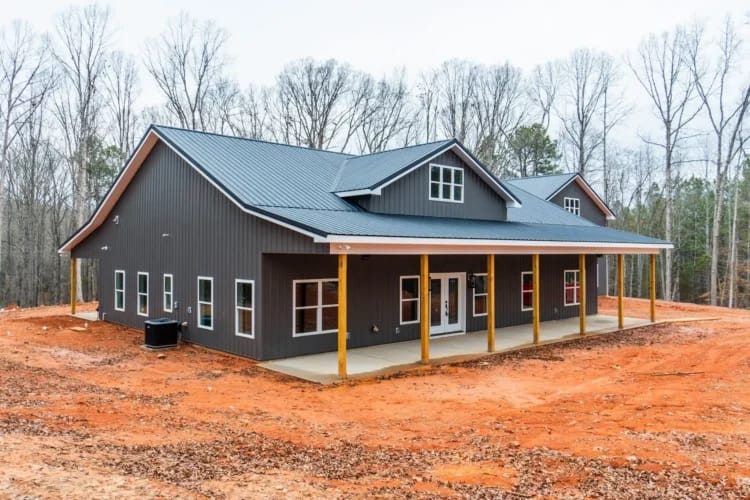
Smithfield, VA

Spotsylvania Courthouse, VA
Ad space available
Your barndo business can be here
Builders, lenders, kit makers and suppliers: put your company in front of people planning a barndominium in Virginia.
Get the deck and pricingBuilding a barndominium in Virginia
A finished barndominium in Virginia runs about $150 to $220 per square foot turnkey, or $45 to $75 per square foot for a shell, by our directory estimates. That puts a 2,400 square foot home at roughly $360,000 to $528,000 before land and site work, the highest turnkey range of any Southern state in our table. We list 3 Virginia builders, in the Shenandoah Valley, Hampton Roads and the Fredericksburg area.
Virginia is the most uniform state in this group. One statewide code, the USBC, applies in every county and city, and every locality enforces it. Contractor licensing is tiered by job size, and a turnkey barndo needs the top tier. The quirk most buyers miss is septic: Virginia expects you to hire a private soil evaluator before the health department will permit the system, and the county will not issue a building permit until that is done.
Land, zoning and deed restrictions
Most Virginia counties and cities zone, and Northern Virginia counties zone tightly. Rural counties in the Valley, Southside and Southwest are more relaxed, but a barndo with a large attached shop can still raise questions about accessory uses or home businesses in a residential district. Ask the zoning office directly and get the answer in writing. Our barndominium zoning guide covers what to ask.
Covenants are the other gate. Subdivisions in growth corridors along I-95, I-81 and around Richmond and Charlottesville often ban metal siding or require architectural review. Read every recorded restriction before you sign. On sloped lots, also ask about the locality's erosion and sediment control rules, which apply once you disturb enough ground.
Codes, engineering and climate
The Virginia Uniform Statewide Building Code is a state regulation that every new building must meet. The current version, the 2021 USBC built on the 2021 International Codes, took effect on January 18, 2024, and the 2024 code cycle is underway. Under 13VAC5-63, enforcement is the responsibility of the local building department; a county or city without one must contract with another locality or an agency DHCD approves, and towns under 3,500 people can leave enforcement to the county. In practice, that means a permit, plan review and inspections on every Virginia barndo, rural or not.
Contractor licensing comes from the Department of Professional and Occupational Regulation. Under Va. Code § 54.1-1100, Class A contractors handle single contracts of $150,000 or more (or $1 million a year), Class B handles $30,000 up to $150,000, and Class C handles jobs over $1,000 and under $30,000. A turnkey barndo almost always needs Class A, while a shell-only contract can fall in Class B. The license also carries classifications, such as residential building, that define the type of work allowed. Check both class and classification on DPOR's license lookup before you sign. Some lists you will find online quote older thresholds of $120,000 and $10,000; the statute has since been raised.
What drives the engineering in Virginia:
- Karst and old mines in the west. Virginia Energy maps karst across western Virginia and lists abandoned coal mines in Buchanan, Dickenson, Lee, Scott, Russell, Tazewell, Wise, Montgomery and Pulaski counties, plus the Richmond coal basin, where mine collapses have damaged homes. A geotechnical look before the slab design is worth it in the Valley and the Southwest.
- Coastal wind in Hampton Roads. Near the Chesapeake Bay and the ocean, design wind speeds and flood elevations both rise. Check the lot on the FEMA flood map before you buy, and ask for site-specific wind engineering. Our storm safety guide covers the details.
- Snow and cold in the mountains. Ground snow loads and frost depth rise with elevation west of the Blue Ridge. The engineer sets both from the local design values, and a long-span metal roof has to carry the snow.
What a barndominium costs in Virginia
Here is the math from our state table. These are Barndo Finder directory estimates, not transaction data, and they exclude land, well, septic, site work and the driveway.
| Size | Shell ($45 to $75/sqft) | Turnkey ($150 to $220/sqft) |
|---|---|---|
| 1,500 sq ft | $67,500 to $112,500 | $225,000 to $330,000 |
| 2,400 sq ft | $108,000 to $180,000 | $360,000 to $528,000 |
| 3,000 sq ft | $135,000 to $225,000 | $450,000 to $660,000 |
Virginia sits $5 per square foot above the national turnkey median in our data (shell $45 to $75, turnkey $145 to $215), and the shell range matches it. Expect Northern Virginia and the outer suburbs to run above the range and the Southside and Southwest to run in the lower half. The 2026 cost report has the national picture, and every state is on the cost page.
Financing and insurance in Virginia
Three Farm Credit associations lend here. Farm Credit of the Virginias, based in Staunton, offers home and construction financing to buy or build in the country. Colonial Farm Credit, based in Mechanicsville, makes rural home loans including new construction. Horizon Farm Credit, headquartered in Mechanicsburg, Pennsylvania, has Virginia locations and lists construction loans. Community banks in the Valley fill in the rest. Our construction loan guide explains draw schedules, and the financing page compares lender types.
Appraisal is the soft spot in the commuter belt, where comparable metal homes are scarce; west of the Blue Ridge they are easier to find. Read our appraisal and taxes guide before you set a budget. Insurance is a standard homeowners policy from an agent who writes post-frame and steel homes; in Hampton Roads, price wind and flood coverage on the specific lot before you close. Our barndominium insurance guide lists carrier types.
Utilities, well and septic
Virginia runs septic and private wells through the Virginia Department of Health, and the order matters. In the Southside district, for example, VDH says the owner must obtain a septic and well permit before the county will issue a building permit, and applications must come with supporting work from a private Onsite Soil Evaluator or Professional Engineer licensed by DPOR. Only owners who petition for services and meet the criteria get evaluation and design from VDH staff. If a conventional drainfield will not fit, an alternative onsite system must be designed by a private evaluator or engineer, and its owner must keep it maintained by a licensed operator.
Hire the soil evaluator during your due diligence period. For budgeting, published estimates run $3,500 to $8,500 and up for a conventional septic system and $10,000 to $30,000 for a drilled well, per our build process guide. Alternative systems cost more and carry ongoing service fees.
A realistic timeline in Virginia
Plan on 12 to 18 months from design to move-in, the national range from our build timeline guide.
- Before you buy: zoning, covenants, flood zone and a private soil evaluation for septic.
- Pre-construction: 3 to 6 months. VDH septic and well permits first, then plan review by the local building department, stamped engineering and the loan. Northern Virginia plan review runs longer than in rural counties.
- Construction: 6 to 12 months for a turnkey home. Mountain winters can stall site work and concrete west of the Blue Ridge.
Builders we list in Virginia
We list 3 barndominium builders in Virginia. Here is all of them, with what our data shows. Ratings are public Google reviews at the time we indexed them.
| Region | Builder | City | Build type | Rating |
|---|---|---|---|---|
| Shenandoah Valley | Superior Buildings | Harrisonburg | Turnkey | 4.9 (111 reviews) |
| Hampton Roads | 757 Building Company | Smithfield | Turnkey | 5.0 (45 reviews) |
| Fredericksburg area | Spear Builders | Spotsylvania Courthouse | Shell and turnkey | 4.0 (10 reviews) |
Photo: 757 Building Company
All three of our Virginia listings offer turnkey work, which is unusual; most Southern states on our list lean toward shell builders. The gaps are Southside and Southwest Virginia. The nearest listings by city for the south of the state are Ridgeline Construction in Hiddenite and Ever Trust Construction in Mocksville on our North Carolina page. We do not know their service areas; ask whether they work in your county and hold a Virginia license.
Photo: Superior Buildings
If you are weighing a shell to save money, read our shell vs turnkey guide first; in a high-cost state the finish-out is where budgets slip.
Ready to price your build? Request quotes from Virginia builders who serve your county, and check every number against our cost table.
Updated October 2026 · Barndo Finder research
Building in Virginia: common questions
Do you need a building permit for a barndominium in Virginia?
Yes, in every locality. The Virginia Uniform Statewide Building Code applies statewide, and enforcement is the job of the local building department; a county or city without one must contract with another locality or an approved agency. Before the county issues a building permit on a lot without public sewer or water, you also need a Virginia Department of Health permit for the septic system and the well.
How much does a barndominium cost in Virginia?
Our directory estimate for Virginia is $150 to $220 per square foot turnkey and $45 to $75 per square foot for a shell, the highest of the Southern states in our table. A 2,400 square foot turnkey build works out to about $360,000 to $528,000 before land, well, septic, driveway and site work. These are directory estimates, not quotes.
What DPOR license class does a Virginia barndominium builder need?
For most turnkey homes, Class A. Under Virginia law, Class A covers a single contract of $150,000 or more or $1 million a year in total work. Class B covers single contracts from $30,000 up to $150,000, and Class C covers jobs over $1,000 and under $30,000. Look the builder up with DPOR and check that the license class fits your contract price.
Does the health department design my septic system in Virginia?
Usually not anymore. Virginia Department of Health districts require septic and well applications to come with supporting work from a private Onsite Soil Evaluator or Professional Engineer licensed by DPOR. The health department reviews, permits and inspects. Only owners who petition for services and meet the criteria get evaluation and design from VDH staff. Alternative systems must be privately designed.
Which Farm Credit lenders make barndominium loans in Virginia?
Three associations lend in Virginia. Farm Credit of the Virginias, based in Staunton, offers home and construction financing. Colonial Farm Credit, based in Mechanicsville, makes rural home loans including new construction. Horizon Farm Credit, headquartered in Pennsylvania, has Virginia locations and lists construction loans. Community banks in the Shenandoah Valley and Southside also lend on post-frame homes.